Finding [urban] Nature | RHS Tatton Park’s F[u]N Garden

If you’re the kind of person who smiles to see plants growing in cracks in (someone else’s) walls and pavements, puzzles over vines emerging from nowhere and loves the summer weeks when Buddleias with masses of arching, lilac-like flowers cling on to ‘seemingly every derelict building‘, this one’s for you.
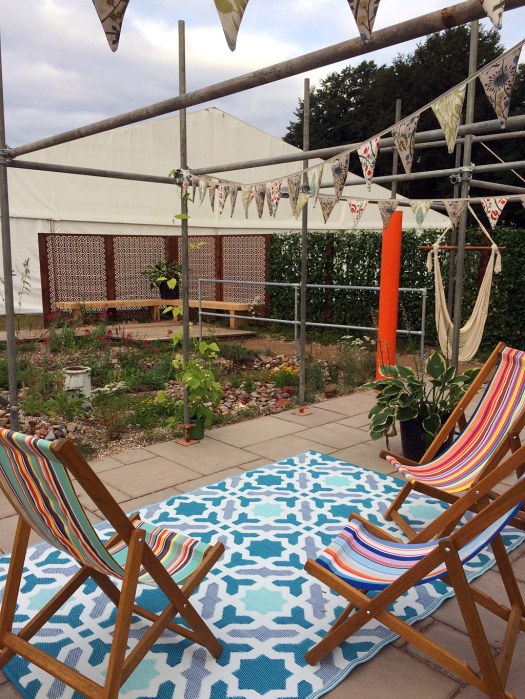
Community garden on a brownfield site with deckchairs and bunting

I spoke to Roy Lancaster (a lovely fellow) at the Chelsea Flower Show years ago. Identifying me as a fellow Lancastrian by my accent, he told me how a local quarry’s unusual and diverse range of plants were brought to light when a schoolchild took a bunch of flowers to school for a nature project.

An abandoned area of disturbed land where people rarely tread is as good a home, if you happen to be a rare orchid, as anywhere else. Nature doesn’t have any concept of location, location, location – or at least not in the human way, where a house is worth ten times more in one place than in another.

Plants poking through layer of broken bricks and concrete

Plants flower where the seeds happen to fall, if they can. We’ve all seen a tangling of nature and building debris like this: we just don’t expect to see it faithfully recreated and offered up for our consideration at a flower show. Eds Higgins’ Finding [urban] Nature garden (hereafter, the F[u]N garden, following the designer’s styling) imagined a brownfield community garden as part of the RHS Young Designer Competition. Continue reading “Finding [urban] Nature | RHS Tatton Park’s F[u]N Garden”
Square In September: ‘Wisley 2008’ Rose

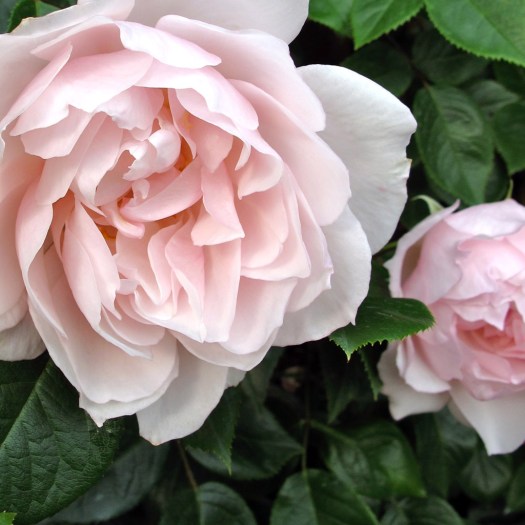
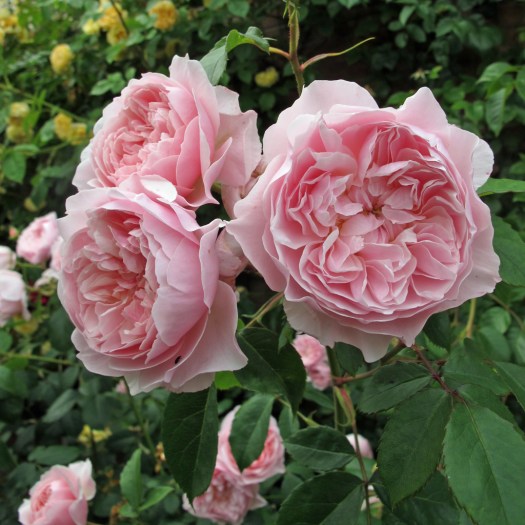
Cluster of pink roses with open rosette shapes

Three, shapely, pure pink rose sisters spent their brief lives bouncing together in a pretty cluster in a rose garden. As you see, I visited them in their prime.

Unlike many of the larger, heavier, multi-petalled varieties, the flowers of Rosa ‘Wisley 2008’ face upwards and outwards to show off their rosette forms. Those who read last Sunday’s post may be disappointed that the leaves are ‘just’ mid green, more remarkable for their tendency to resist disease than for their colour, even when grown in a rose garden where the proximity of others makes it easier for rose nasties to spread and take hold.  Continue reading “Square In September: ‘Wisley 2008’ Rose”

River of Echinaceas at Bressingham

Echinaceas, asters, crocosmia and grasses

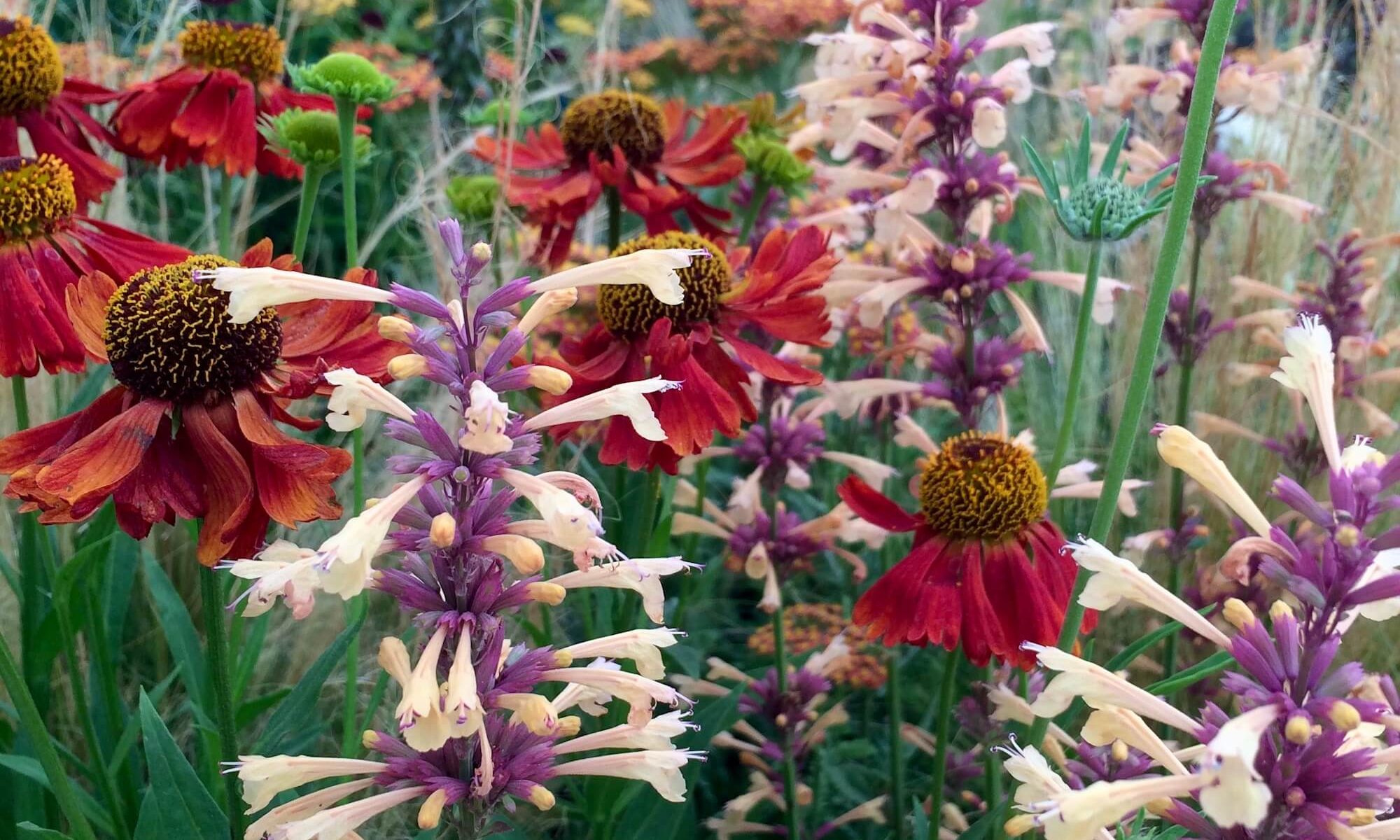
The display gardens at Bressingham inspire gardeners by showing how some of the company’s most popular plants can be grown in a rhythmic style of planting. Here, foliage plants, grasses, crocosmia, aster and eupatorium make lovely companions for pink echinaceas.

Tuesday Ragtag Prompt: Energy

Margaret has set an interesting RagTag challenge, asking us to convey energy through a still picture. Here are my offerings:

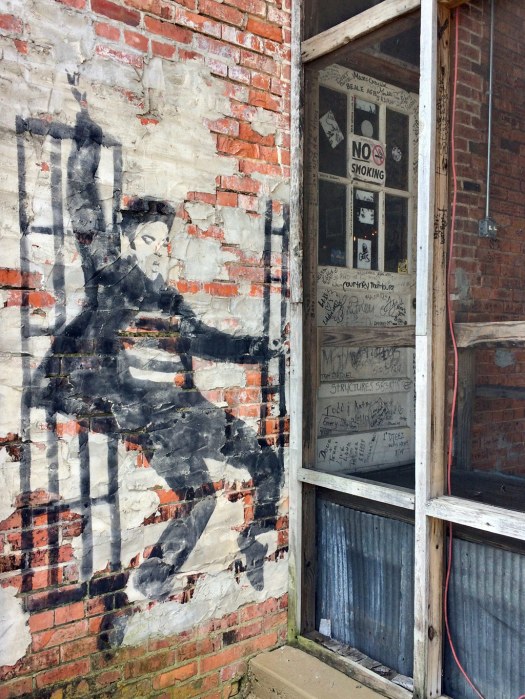
Elvis, dancing alone, with one hand held high

Elvis, faded into a wall in Clarksdale, MS, in a pose that delights in the energy he had in his prime: energy the established order saw as a threat. Layers of lines and textures interested me almost as much as the subject.

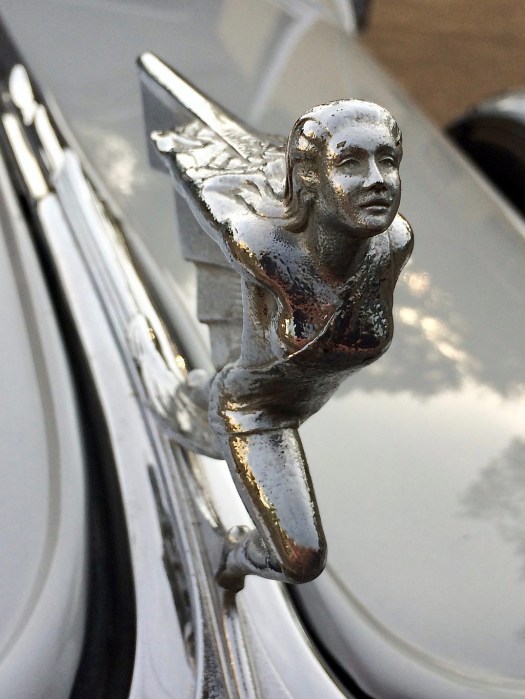
Female hood ornament with graceful posture

Curves rule in this hood ornament that has the energy of a skater, seemingly in motion, even when fixed to a parked car. Flowing lines and an energetic posture reflect the smooth power of the machine, although on a yazoo clay road in Jackson, MS, perhaps not!  Continue reading “Tuesday Ragtag Prompt: Energy”

‘The Generous Gardener’ Rose (Plus A Riff On Leaves)

Pale pink roses with double flowers

‘The Generous Gardener’ rose is one of my favourites. It requires some discipline not to list its selling points, even after so many years, but I’ll confine myself to observing that it is one of the more fragrant English roses, best grown as a short climber against a wall or sturdy pillar. That hardly counts, does it?  Continue reading “‘The Generous Gardener’ Rose (Plus A Riff On Leaves)”

Delphinium ‘Flamenco’ from the Highlander Series

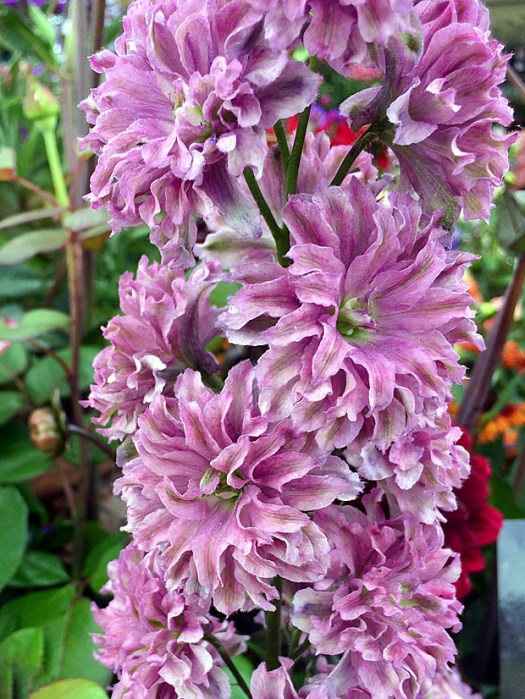
Delphinium with pink double flowers, streaked green

During the summer, I dedicate more time to taking photos than to sharing them. If you’re a flower stalker too, you’ll understand the temptation. After all, a delphinium waits for no man (or woman), blooming in response to triggers we understand at an abstract level rather than feel happening at a cellular one. It’s somewhere between a pleasure and a frenzy to be in full-on photo gathering mode, so, as September taps on the door, it feels good to slow down and enjoy revisiting summer’s photo stash.

This plant wasn’t labelled at RHS Tatton Park, where I saw it, so I’ve had to look it up. Delphinium ‘Flamenco’ is part of the Highlander series of Scottish-bred delphiniums. Continue reading “Delphinium ‘Flamenco’ from the Highlander Series”

Gallery Of Images From The Kettlewell Scarecrow Festival

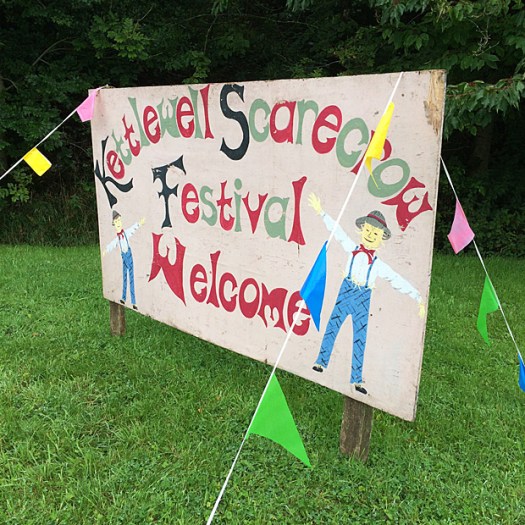
Welcome sign with scarecrows and bunting

Kettlewell villagers organised their first scarecrow festival in 1994 and it has continued as an annual fundraising event ever since, becoming more expansive as each year passes. You don’t have to be particularly perceptive to see how it has helped today’s community make links, attract newcomers and prosper.

The Scarecrow Festival is all the nicer for being in a scenic village of traditional stone-built homes. The church still has the font from the original Norman church, dating back to around 1120, and the tower of the Georgian one that followed it. There’s an Arts and Crafts layer too: I was intrigued to see William Morris’s name in one of the beautiful stained glass windows and later discovered I missed finding a Thompson mouse, and the beaver of one of his protégés, Colin Almack. One for next time! Continue reading “Gallery Of Images From The Kettlewell Scarecrow Festival”