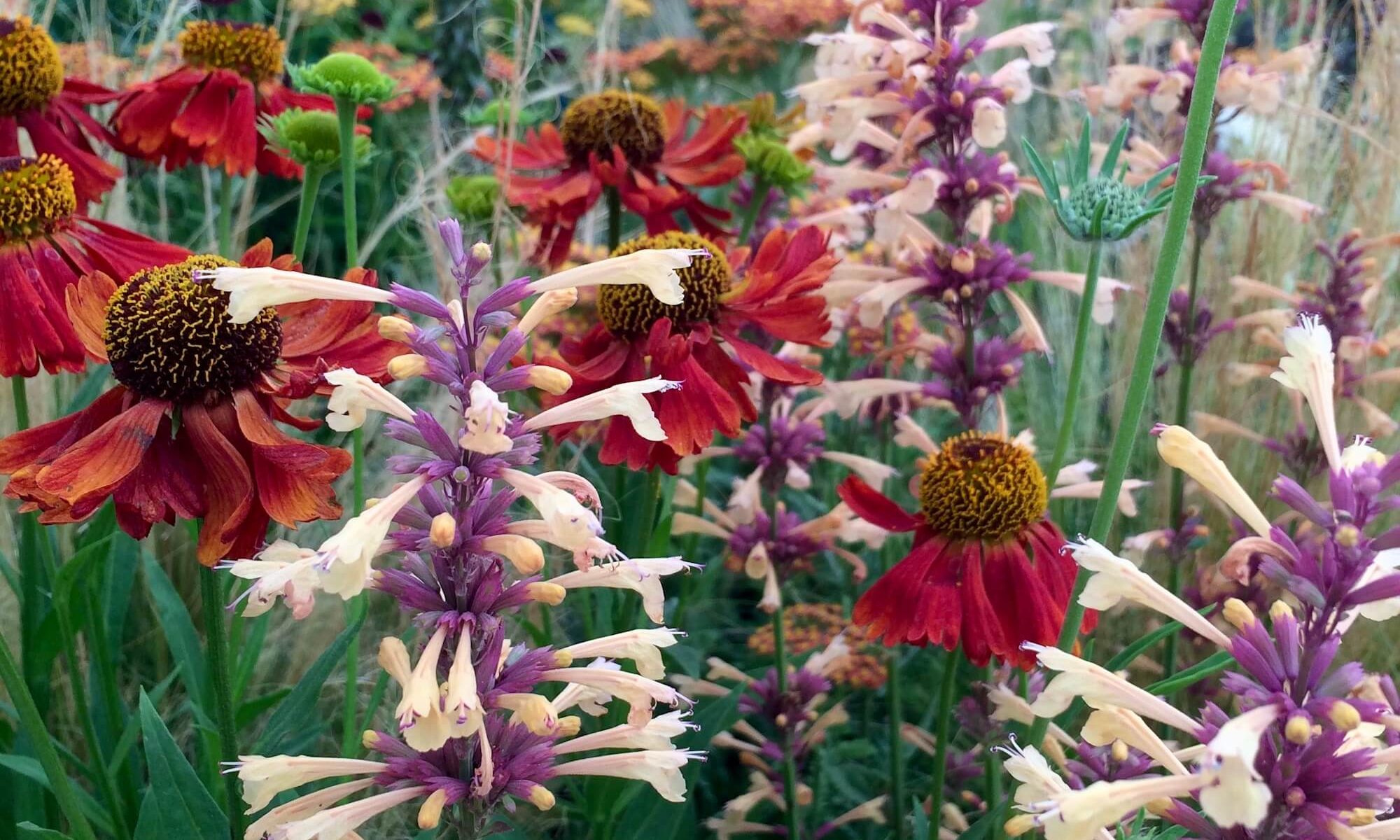
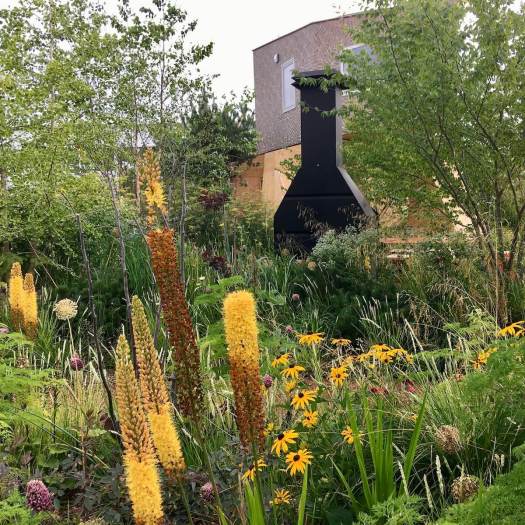
I’m not sure I’d have enjoyed my favourite garden at Floriade as much if I’d seen it in April, soon after Floriade opened to visitors. In pictures of the Europarcs garden taken before the deciduous trees had leafed out, The Rebel House commands the space. A broad, meandering path wraps around the clean, metal-edged outlines of flower beds. Newly-planted perennials are neat, well-spaced and picture perfect, like an architect’s diagram.
Three months later, the plants have bedded in and are relaxing out. Leaves and flowering stems mingle and mesh together, gently spilling over the path. The ‘Within Nature’ theme of the garden is emerging.
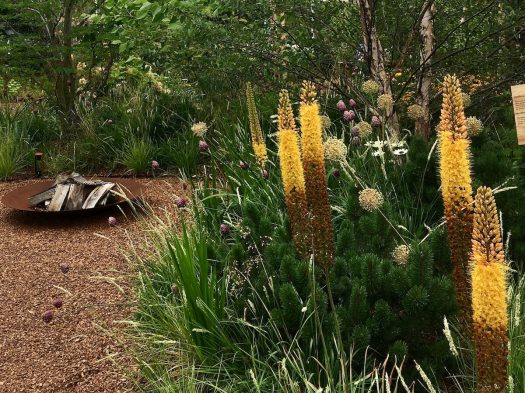
The textural, naturalistic planting isn’t the type we can take in at a glance. Landscape Architects, Stefano Marinaz, emphasise that the longevity and resilience of plant community were foremost in their thoughts.


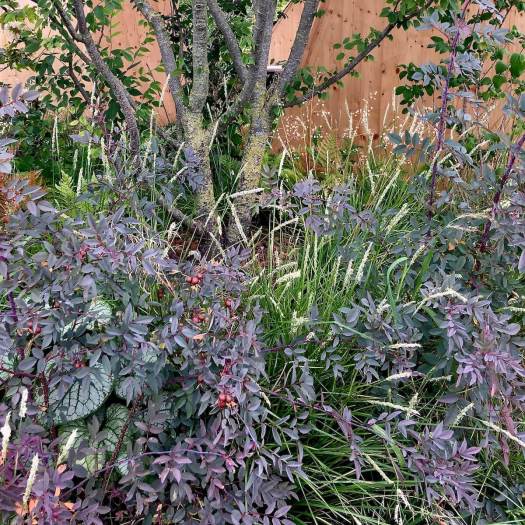
Structural plants and ground covers set the stage for a seasonal mix of flowering perennials and bulbs. A matrix of six grasses fills the gaps and unifies the planting. Echinacea purpurea ‘Virgin’, Rudbeckia ‘Goldsturm’ and eremuses provided colourful highlights, while the seedheads of larger alliums hinted at what we had missed a few weeks earlier.
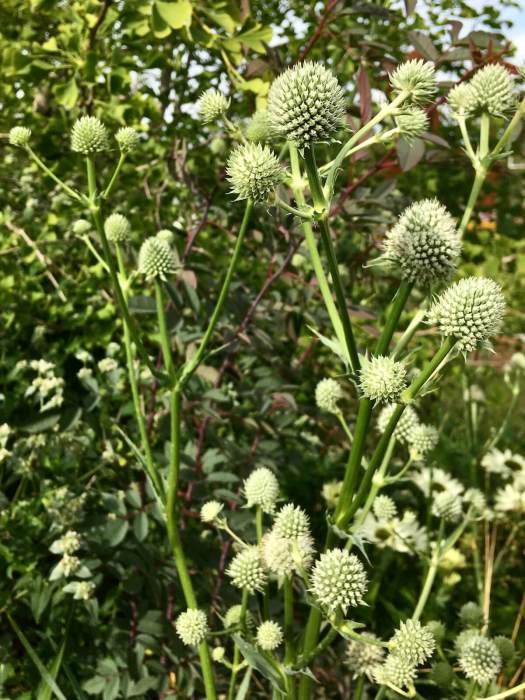
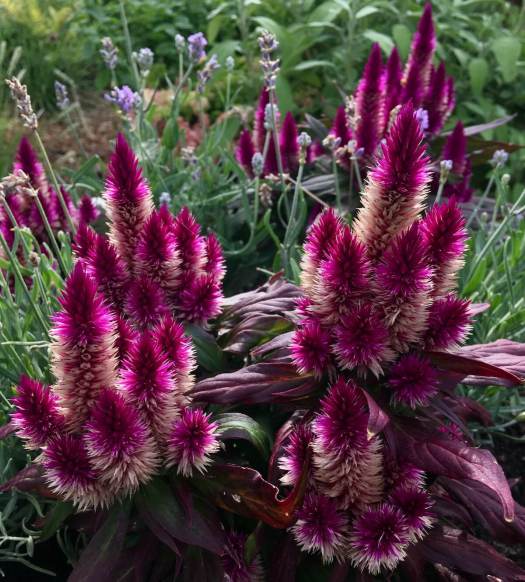
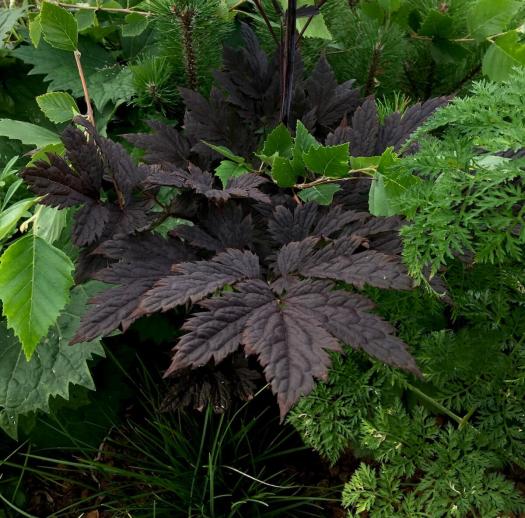
It is a restful planting, but with a lot going on. Visitor’s eyes are constantly challenged by shifting layers as the wind waves the grasses and flowering perennials, and as we move around the space. Beautiful sightlines through the garden tempt us to linger and enjoy the contrasts. Spiky perennials vie for our attention with velvety Celosia grown as a tender annual in containers; simple leaf shapes with lacy ferns; green with dark burgundy. Sunlight plays with shade.
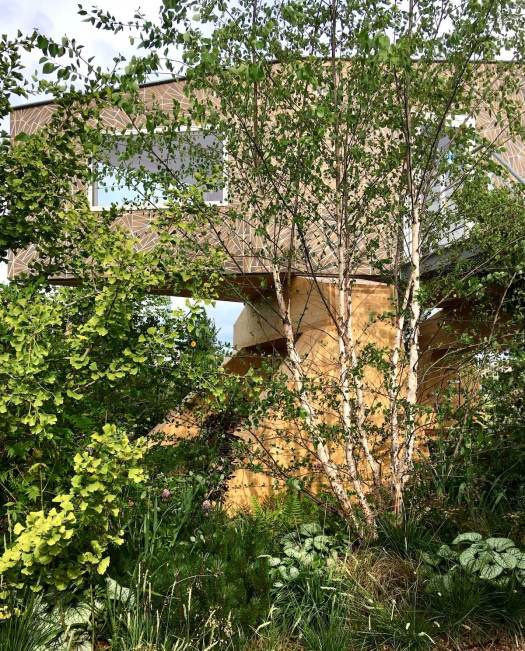
The two CO2 neutral living spaces on the site use new technologies such as sustainable materials and smart home automation. With its log piles and bee hotel, Just Nature House represent Europarcs’ current style of sustainable holiday home. The Rebel House is a more futuristic vision.
When exposed by the young planting, its strange angles and wooden support made The Rebel House look suitably rebellious: jaunty and ungainly at the same time. Those chunky wooden legs have a purpose, housing a heat pump and storage batteries for the energy generated by solar panels, making the house self-sufficient.
By late July, Ginkgo biloba and flaking, multi-stemmed Betula nigra (river birch) form a living, shifting screen of flickering leaves that veil our view of The Rebel House and its overlooking windows.
Patterned tiles with a fine dust glaze are funky and geometric, yet help the house drift into the vegetation (the broken lines made me think of Liverpool’s Dazzle boats).
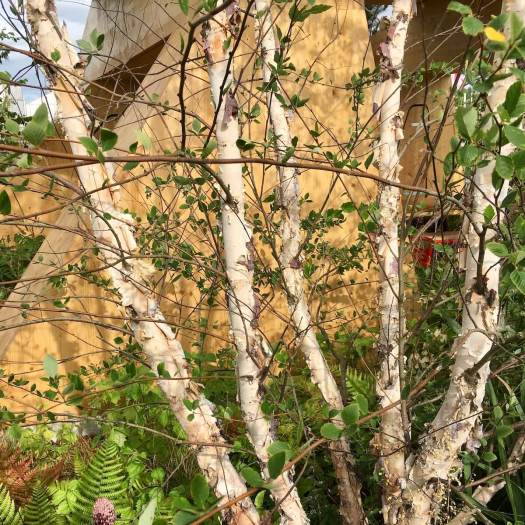
Horizontal stems criss-cross the verticals of the flaking trunks of multi-stemmed trees.
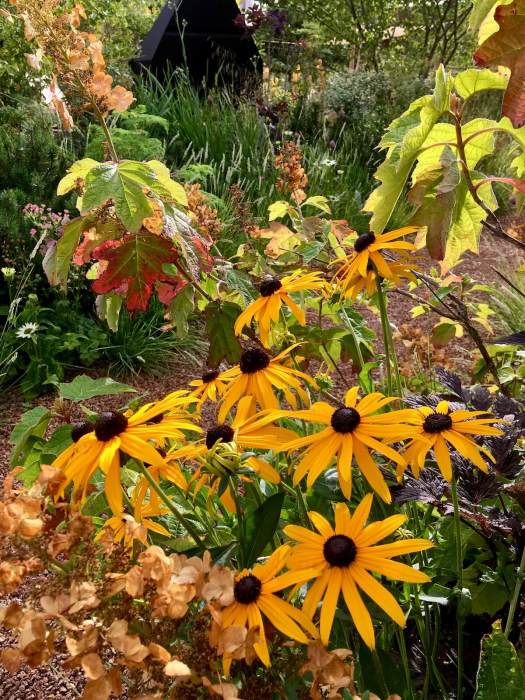
The garden is designed to be circular and includes waste products such as broken peach pits and hazlenut shells used as mulch. It will all be rehomed at one of the EuroParcs sites after the show.
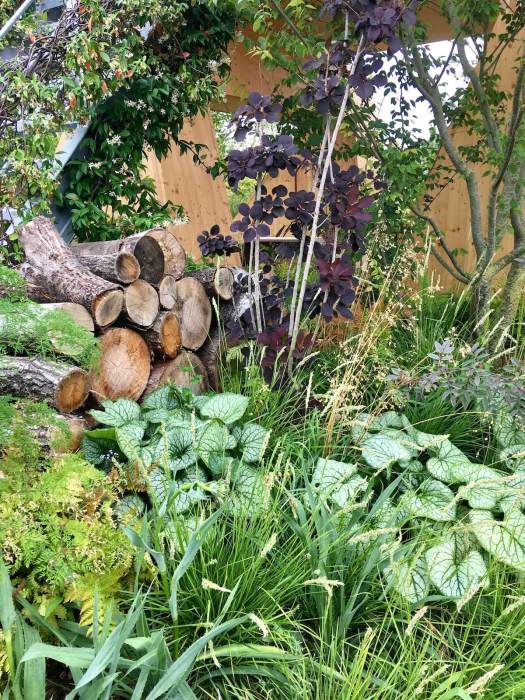
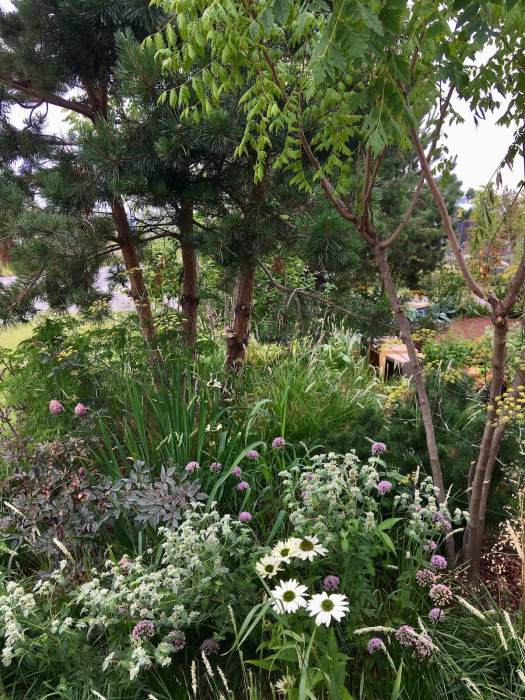
Now your eyes have adjusted, I’ll end with a picture that shows the layers that provide richness and diversity in the garden.
Trachelospermum jasminoides cloaks the steps (and has a heavenly scent while in flower). In the background, a multi-stemmed tree adds movement and height. Cotinus coggygria ‘Royal Purple’, Brunnera macrophylla ‘Jack Frost’ and Rosa glauca grow between ferns and grasses. A log pile acts as an insect hotel and seems to anchor the scene. How lovely!
The EuroParcs garden can be seen to Floriade Expo until 9th October 2022 on plot 126 between the central square and the Hortus Avenue near the conference pavilion.
More Information
For a full plant list (if only all show garden designers made these readily available!) visit the Stefano Marinaz website.
The site also has earlier pictures of the garden when the alliums and irises were in flower.
 Susan Rushton
A very inspirational planting – thanks for sharing 🙂
I’m glad you liked it.