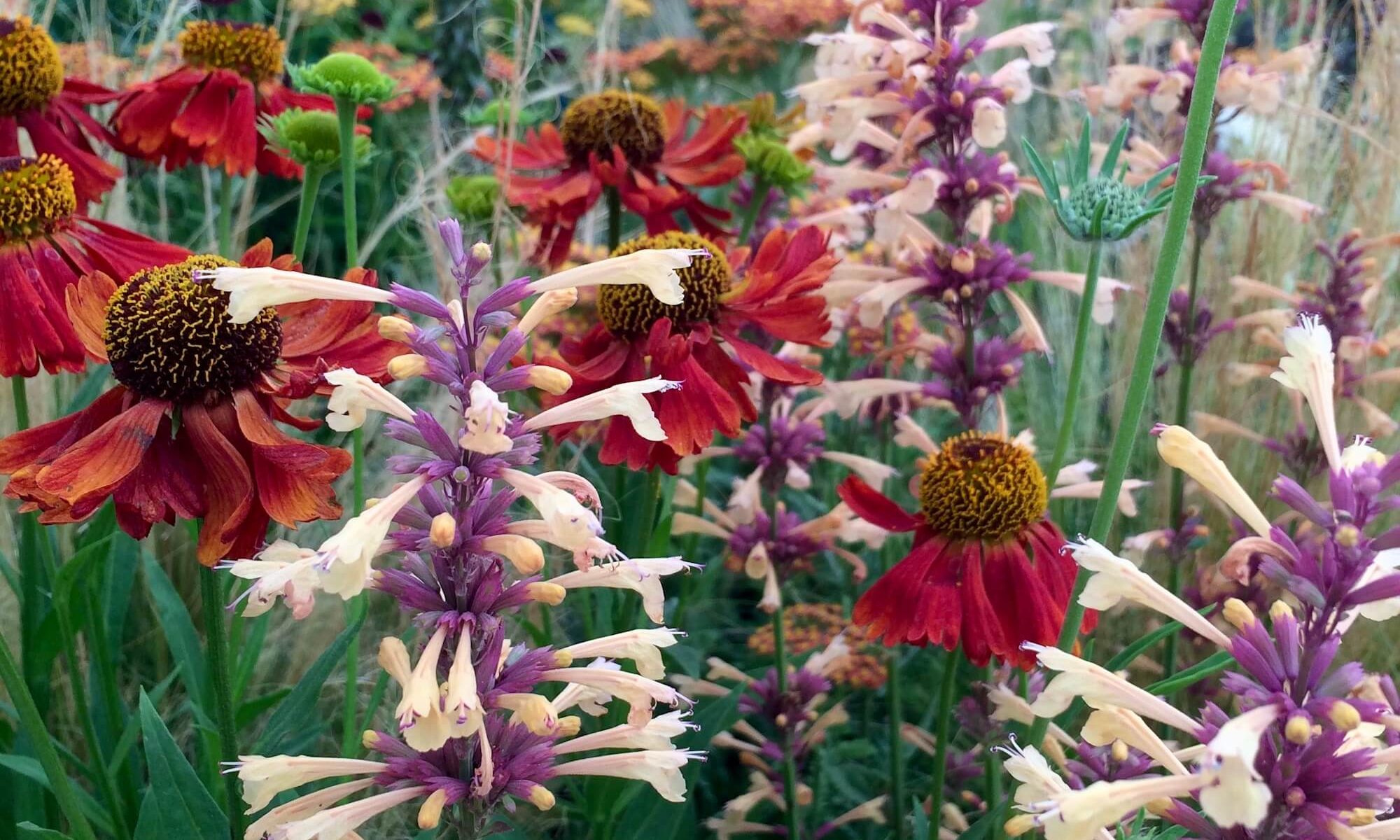


Amsterdam’s tightly packed streets and waterways don’t leave much room for conventional gardens, but its gardeners don’t let their lack of land hold them back. I’m always struck by the number of hollyhocks that grow semi-wild there, any crack along the street providing anchorage.


Some hollyhocks lean so far over they flower barely ankle high, others wave flower-topped towers well over my head.
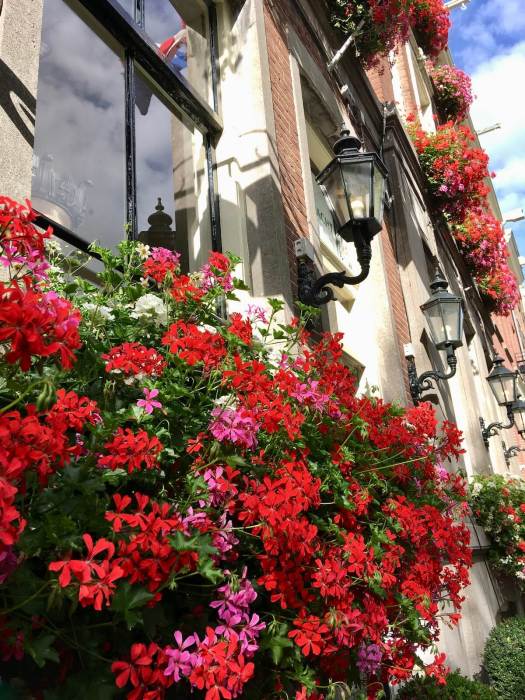
Red and pink pelargoniums cascade from window boxes…

or mingle with petunias and other annuals in paniers on bridges over the canals.

Roses evidently do fine in barely more soil than the hollyhocks.
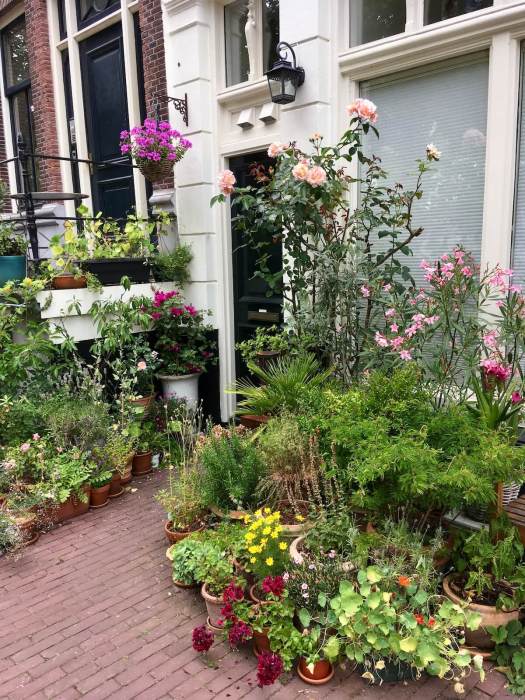
Any patch of pavement means room for a container garden.
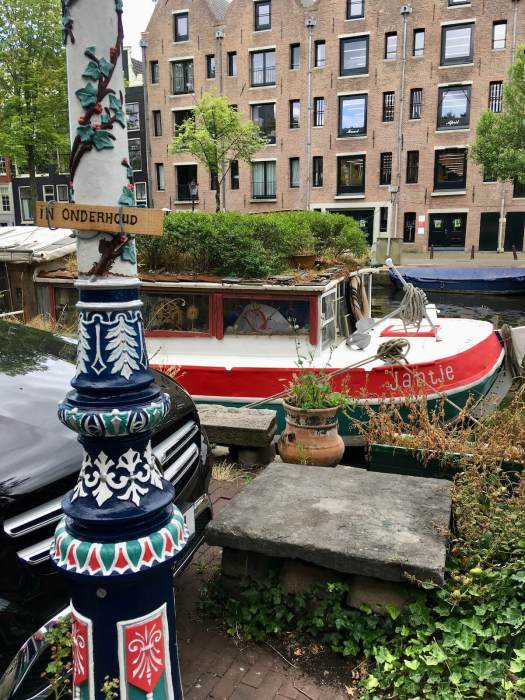
Houseboat owners have floating gardens and/or collections of containers where they moor. We saw many barges with roofs of sedums or other greenery.

This green wall is at the entrance to Hortus Botanicus Amsterdam, one of the oldest botanic gardens in the world. A peep inside? Go on then.

I can’t show you tulips, as they were not in season. Phlox was.

Erythrina crista-galli (cockspur coral tree) was producing its bold, scarlet, beaky flowers.

The botanic garden has a small but colourful butterfly house. One butterfly (possibly a blue moon?) landed on my hand and seemed content to stay there. Butterflies have taste receptors in their feet so it had most likely discovered salts on my hand. I’m happy to be food for a butterfly.

The palm house would provide a great place to sit and read among its wonderful old specimens in wood and metal barrels, but our short time in the city meant we must press on.
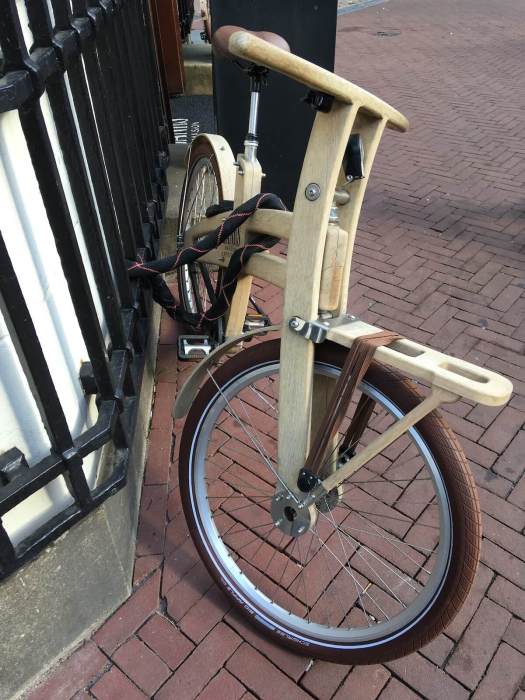
Amsterdam is renowned for its many thousands of bicycles, often discovered speeding directly towards you. The layout of the roads isn’t intuitive, especially for this visitor, used to driving on the left. Amsterdam seems to be designed for boats first; then bicycles; cars, trams, buses, scooters and trains next; last of all pedestrians who skirt edgily along in the gaps.
I’m not sure how practical a wooden bicycle would be, but I liked its brown wheels and chunky style.

A clock hand swinging backwards on one of the splendid clock towers in the front elevation of Amsterdam’s Centraal Railway Station had provided a briefly dislocating welcome. The dial indicates the direction of the wind, useful to know when sail boats travelled the city.

Quirky rooflines are one of the signature sights of Amsterdam. Sailor elephants, less so.
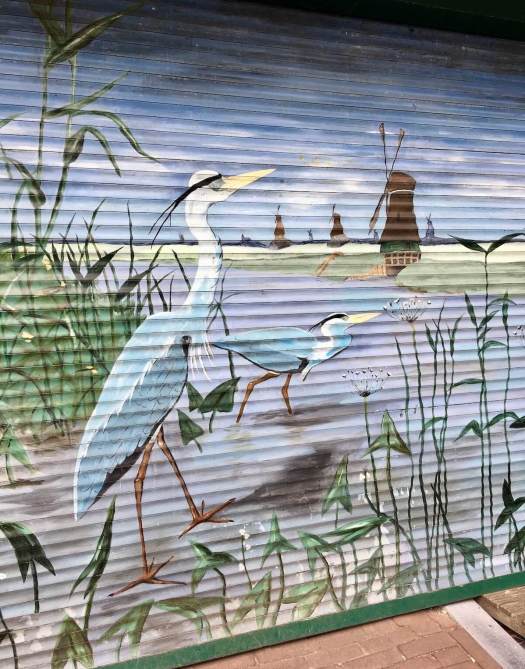
There were windmills to spot, albeit on the closed shutters of a store.

De Pijp in Amsterdam’s Old South is famous for its graffiti and its long street market (Albert Cuyp Market). We happened upon the market by chance and were delighted, although I’ve since seen various Trip Advisor reviewers turning their noses up at it. I’d love to go again and next time, not after a generous continental breakfast, so I could enjoy some of the reasonably priced food and drink on offer. I didn’t take any pictures of the market, usually a sign of being engrossed.

I’ll end with something colourful and leafy to celebrate the atmosphere of this bustling European city.
 Susan Rushton
Fascinating – and so well photographed
Thanks, Derrick. It is a fascinating place.
I would love to visit that city someday, Susan. These photos are wonderful, and reinforce what I have heard about it. Was not aware of the rooflines, but that sailor elephant is cute and has me curious as to what else might be in store “up top.” And I do agree, I would have no problem being food for a butterfly either.
It didn’t even tickle!