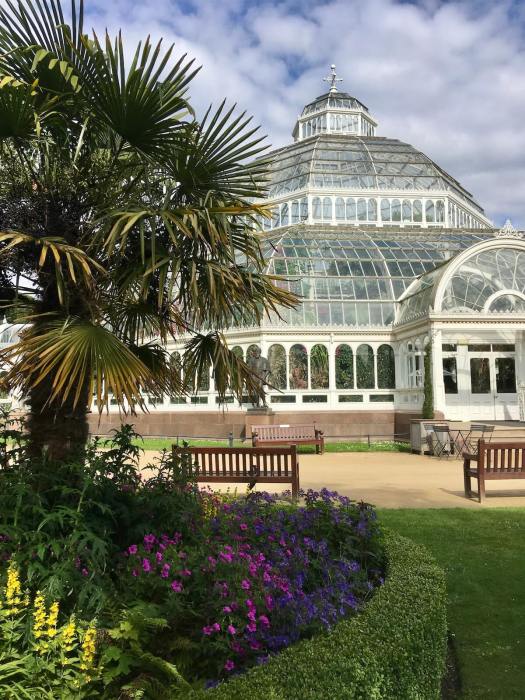
It may not be the first English garden you’d associate with a Palm House, but Sefton Park has one of the prettiest. These tiered buildings hark back to times when palm trees were enough of a curiosity to justify building a magnificent structure to keep palms alive through our winters. Continue reading “Architectural Glasshouses, Greenhouses and Plants”
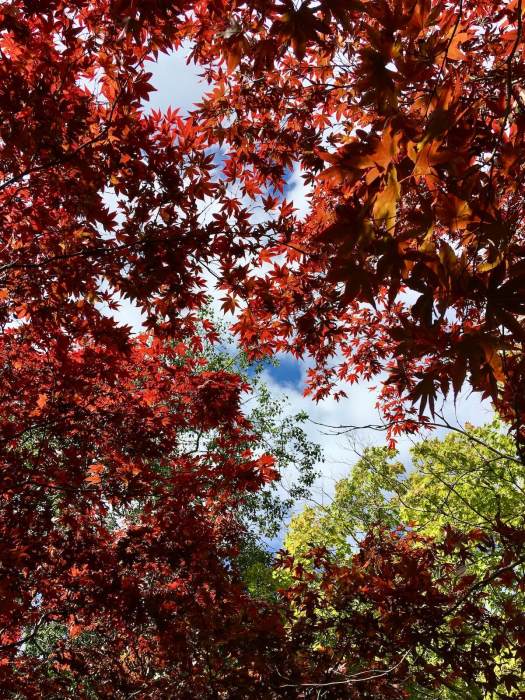
Dawn Miller is hosting a weekly Festival of Leaves challenge to celebrate autumn that will run for the next 10 – 12 weeks. I’d have felt more concerned my first offering might not count, being counterfeit autumn leaves, had Dawn’s first not been chrysanthemums.
I’m sharing pictures from our trip to Bodnant Gardens in the Conwy Valley, Wales about this time last year. Closed at the moment, it’s a natural addition to my Pictures for Dreaming series. Continue reading “Bodnant Gardens In Laburnum Season”
Only last week I was bemoaning the lack of a Tardis to transport me to a snow-covered Bodnant Garden, near Tal-y-Cafn, Conwy, Wales. The universe did not send me a Tardis, but it did the next best thing. A friend asked us to check out the place his family came from – Dolgellau – and Bodnant just happened to be on our way home.
While the snow in the garden had long gone, heavy white shawls on the Snowdonia mountain range opposite gave Bodnant a wintry feeling. The 130 acres of garden give plenty of scope for walking: you really need some form of season ticket* to make the most of it all. Continue reading “Winter Walk Around Bodnant Garden in Wales”
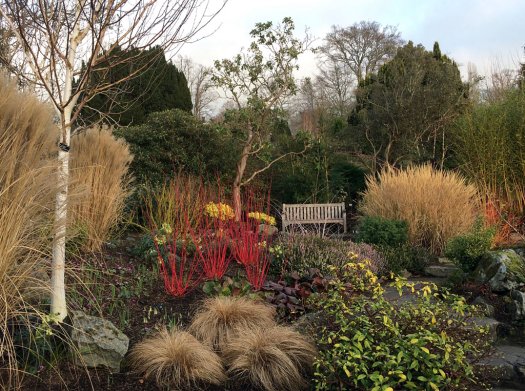
I’m a big fan of winter gardens that make the most of plants that look good when herbaceous borders are expanses of mulch-covered dirt. Trees with white trunks such as this Betula utilis var jacquemontii (Himalayan birch) often feature, together with evergreens, light-reflecting grasses, red stemmed Cornus (dogwood), Skimmia, Hamamelis (witch hazel), flowering heather, hellebores, Bergenia, Cyclamen and winter flowering bulbs.
Plants like this seem to shrug off winter weather, but the current cold spell means that the hardiness of plants of all types is being tested in many UK and American gardens.
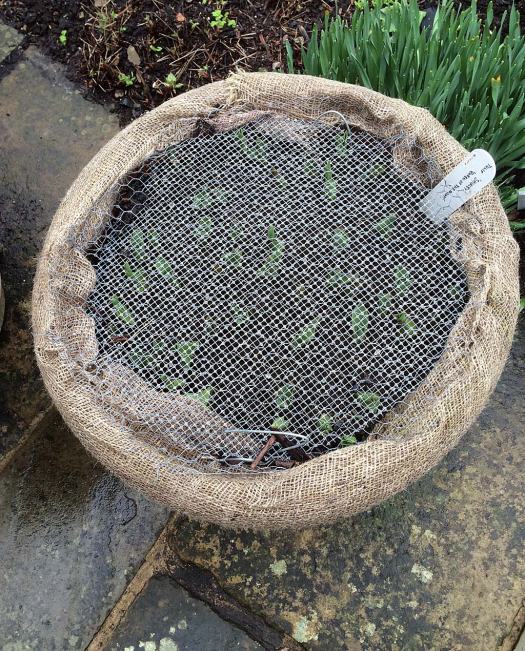
Some gardeners go to great lengths to keep tender plants alive, wrapping their pots up, covering them with some form of plant blanket, or moving them indoors. Others will only plant what grows. Many of us are somewhere in-between, willing to offer our plant treasures a helping hand if conditions are unusually bad, provided we know what to do.
A pot of bulbs wrapped in burlap, with a double layer of netting to deter squirrels




 Susan Rushton