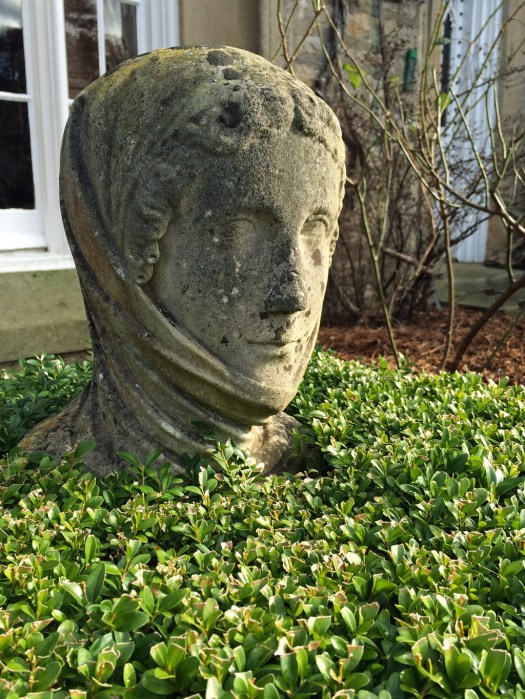
A witty placement of a veiled stone head at Gresgarth Hall Gardens in NW England. She’s ‘clothed’ in box topiary that has been trimmed into a cube.
She’s positioned near the door so it’s easy to imagine her as a kind of guardian angel.
Celebrating gardens, photography and a creative life
A witty placement of a veiled stone head at Gresgarth Hall Gardens in NW England. She’s ‘clothed’ in box topiary that has been trimmed into a cube.
She’s positioned near the door so it’s easy to imagine her as a kind of guardian angel.

I called in at Gresgarth Hall last Sunday for snowdrop day. As expected, the snowdrops were looking fine, but what ought to have been a surprise is that so many hellebores were in full flower too. Hellebore day isn’t scheduled for another month, so it’s perhaps as well that their flowers are so long lasting.
Far from being surprised, I’d been eagerly anticipating the hellebores. After all, I’d have had to have been keeping my head in a bucket not to realise this season is a strange one. Since the start of 2016, gardeners the length and breadth of the country have been marveling out loud on social media at the range of flowers brought out early by the unseasonably warm weather we’ve had this winter. Continue reading “Weekly Photo Challenge: Seasons”
Cee’s recent photo challenge asks us to share two selections of pictures to demonstrate warm and cool colours. My visit to the Dorothy Clive Gardens last May immediately came to mind. At that time of year the gardens were brimming with jewel-like colours: the azaleas and rhododendrons were at their peak and the companion planting sensational.


Continue reading “The Dorothy Clive Garden in Party Girl Season”


I’m fascinated by many petalled roses so I’m indulging myself by sharing these square crops of their floral hearts for HeyJude’s February Challenge: Monochrome.
I think the first one is my favourite – the colours are so dreamy. Jude quotes the line ‘Earth laughs in flowers’ which surely makes each unfurling petal a giggle… or at least a perceptible relaxing of the lips. Continue reading “February: Monochrome | Roses With Many Petals”


I’ve been looking for pictures of plants to bring to life the garden created by Rappaccini, the twisted plant breeder of Nathaniel Hawthorne’s fable, and ‘as true a man of science as ever distilled his own heart in an alembic’. Rappaccini, like Frankenstein, used science to create a monster: his beguiling, innocent, but deadly daughter Beatrice. He and his daughter tend a collection of poisonous plants with heady, intoxicating fragrances that can wither and kill. Continue reading “Recreating Rappaccini’s Garden: an Eden of Poisonous Flowers”

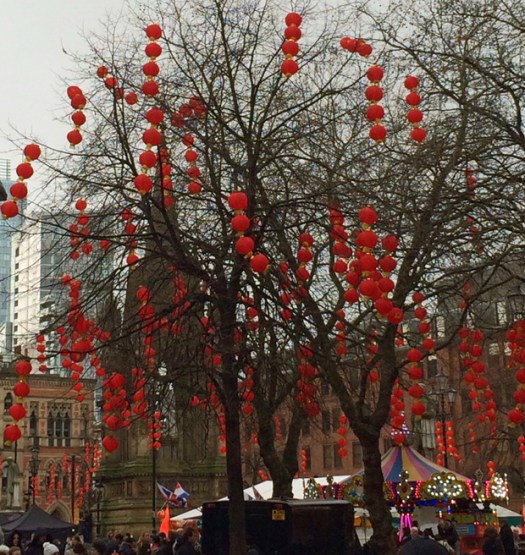
Night was drawing in when I took this photo of the trees and street lights in Albert Square, Manchester, dressed in red lanterns to celebrate Chinese New Year.
The auspicious colour did seem to have mystical properties, glowing even in the dusk as the lanterns danced in the wintry wind. Continue reading “Celebrating Chinese New Year 2016: The Year of the Monkey”
 Susan Rushton