Great Dixter’s spirit is as multifaceted as any fine garden. You’d need to visit, often – or better still, live or work there to understand the effects of sunrise stealing over the garden, those late summer sunsets, and all weathers and seasons playing out.
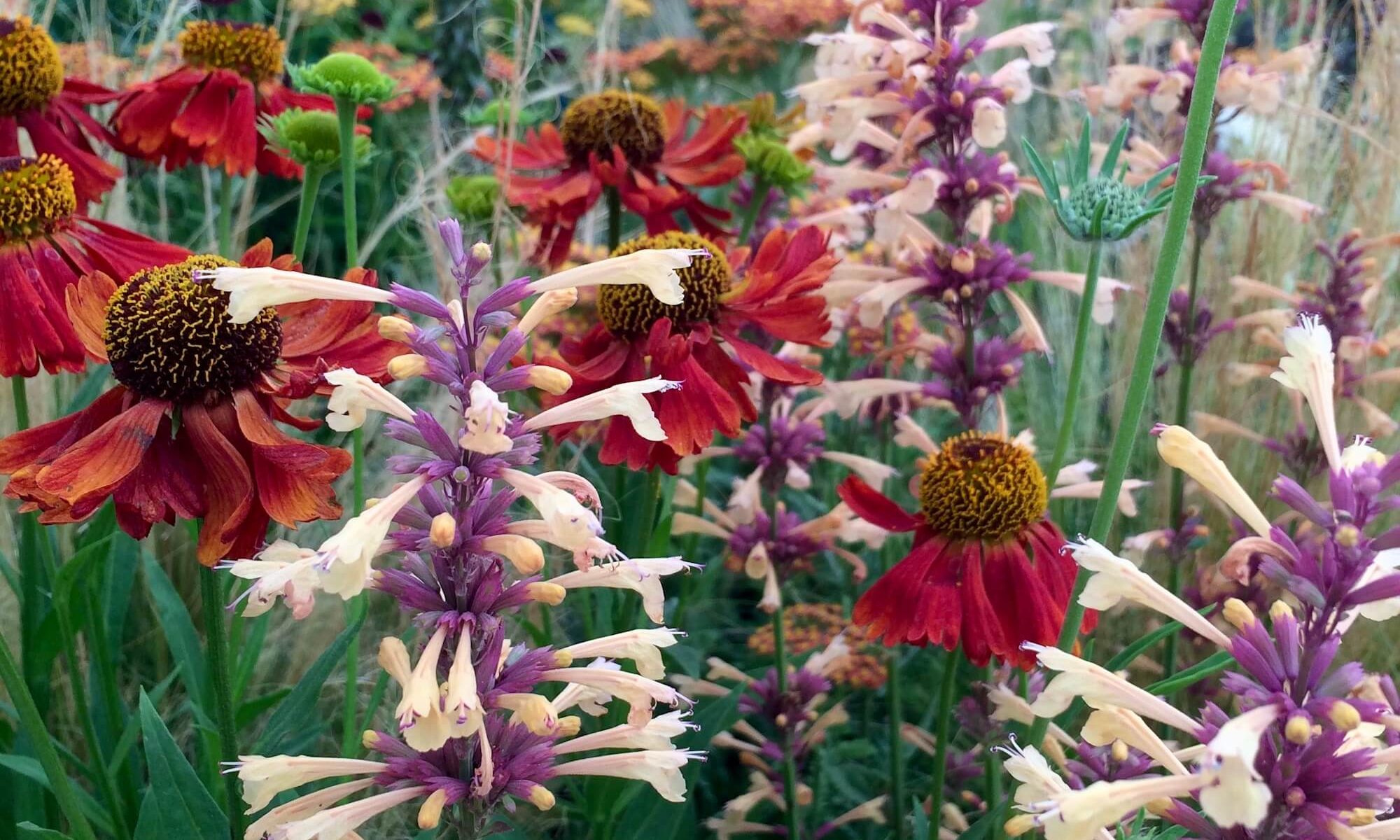
My first timer impressions? Of flowering plants in dazzling, punchy, sheeny colours, chosen and planted to be fantastic.
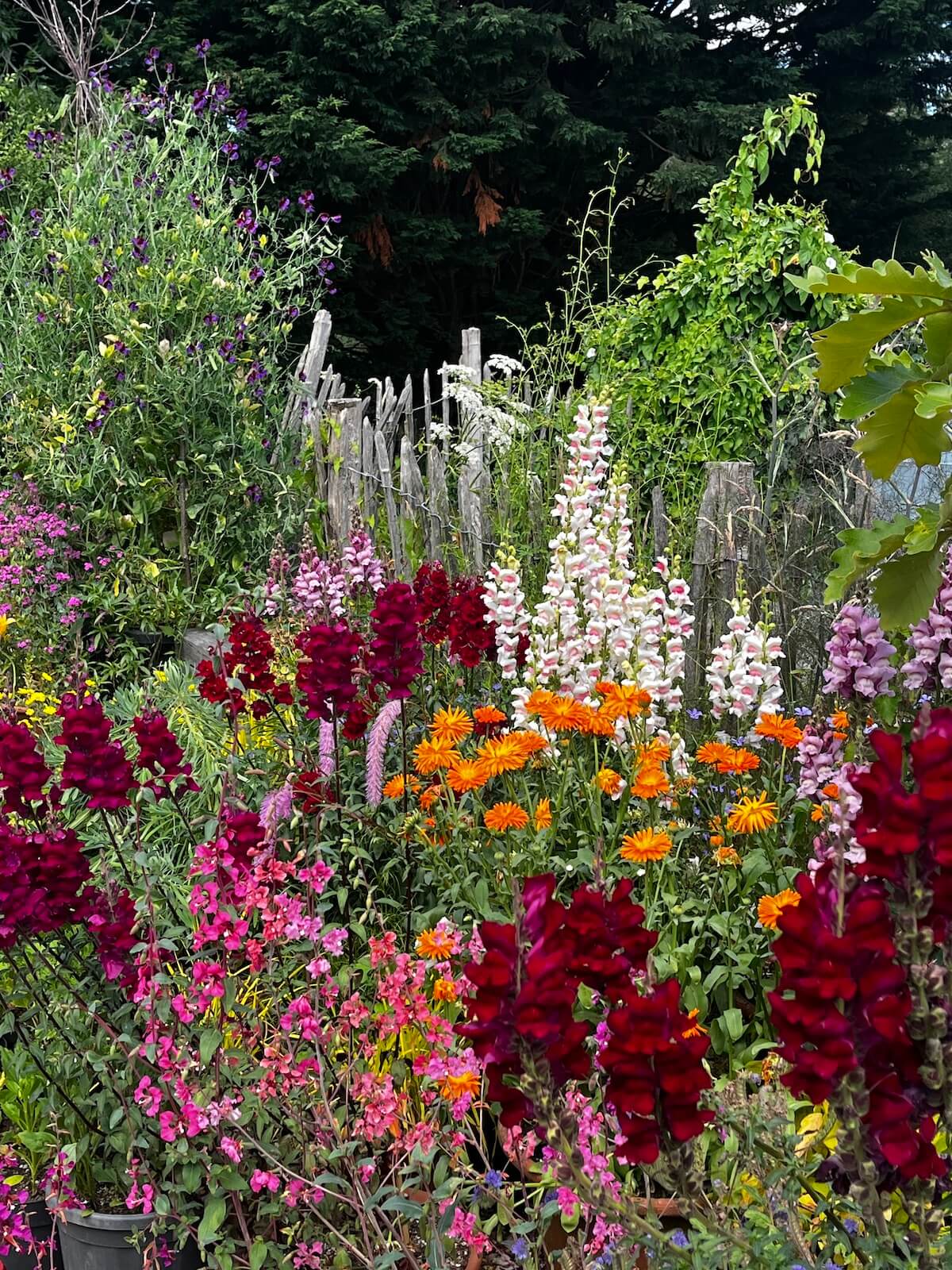
Of smiling to see how gangly plants are allowed to be ungainly, if that’s their style. Of wandering, half-lost, through my choice of garden corridors, neck-high in flowers. Passing a young woman, sitting quietly on the ground in the plant nursery, woven around with a garland of plant tags she was applying. Witnessing Fergus patiently hearing out an elderly visitor who had claimed him in passing to explain how he “knew Christo well”. (I wondered how often that has happened since 2006.)
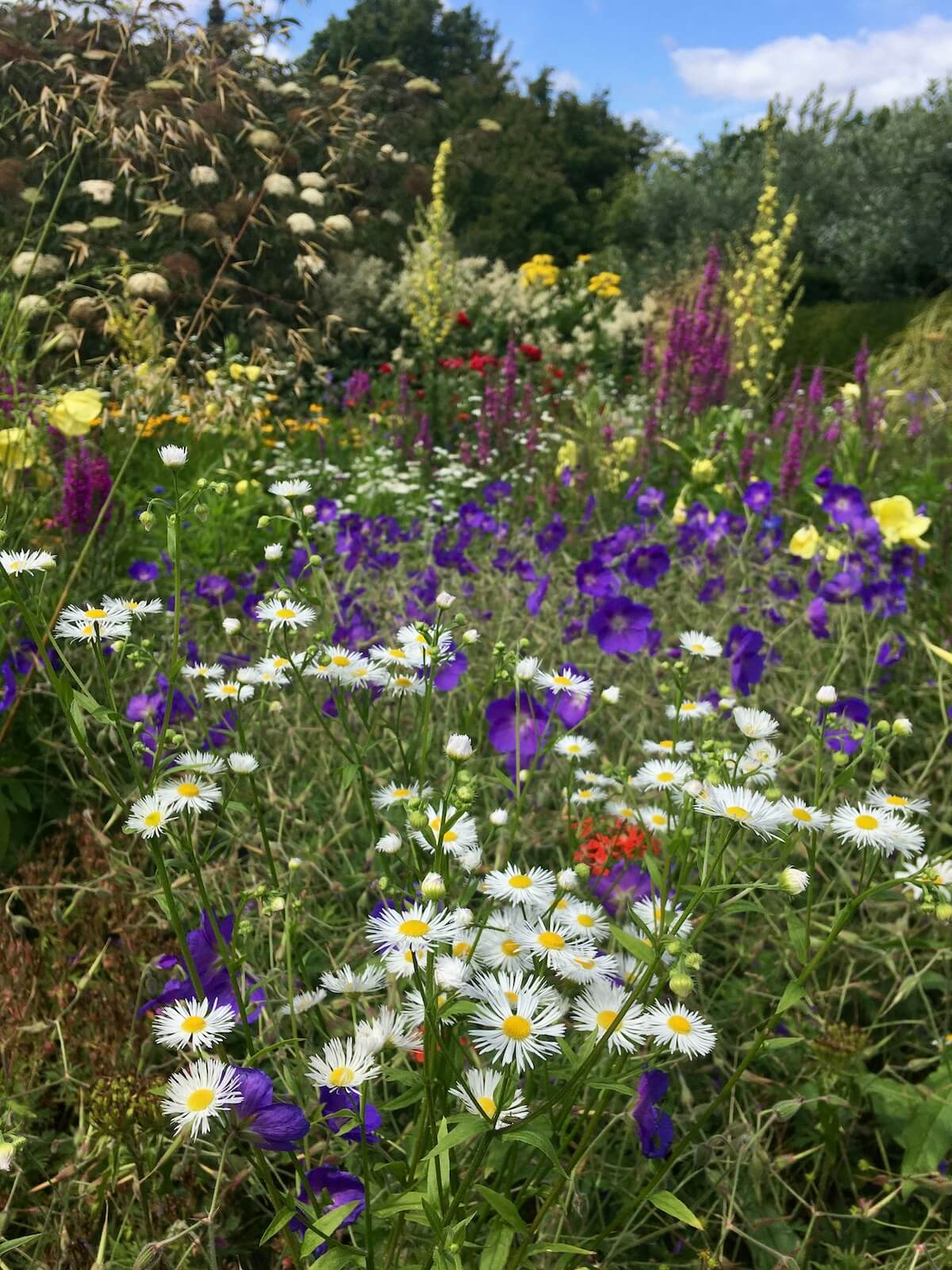
My overall impression was of flowers gardening themselves – an illusion, for here nature is teased by a visible team of gardeners.
Teased, but not tamed. Were it a dog, this garden would not chase and retrieve socks. (Bear with me, while I remember my sweetheart’s old rescue dog, Rusty.) Some visitors apparently consider the garden unruly although I didn’t get that impression. Had we been there while wild, wet, windy weather was thrashing the garden, perhaps, but during our visit in early July, the plants were basking in sunshine. There was not much point in waiting for a cloud.
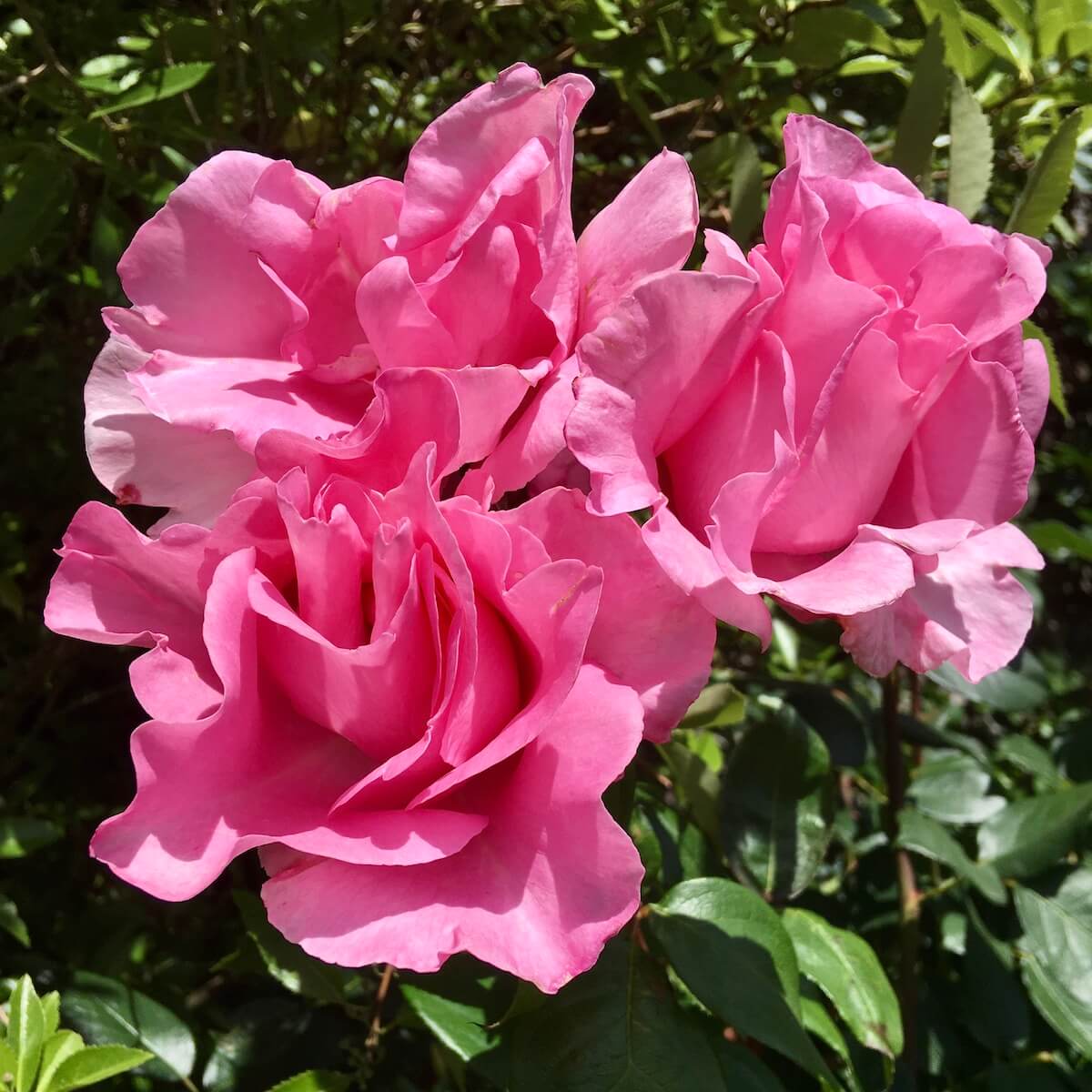
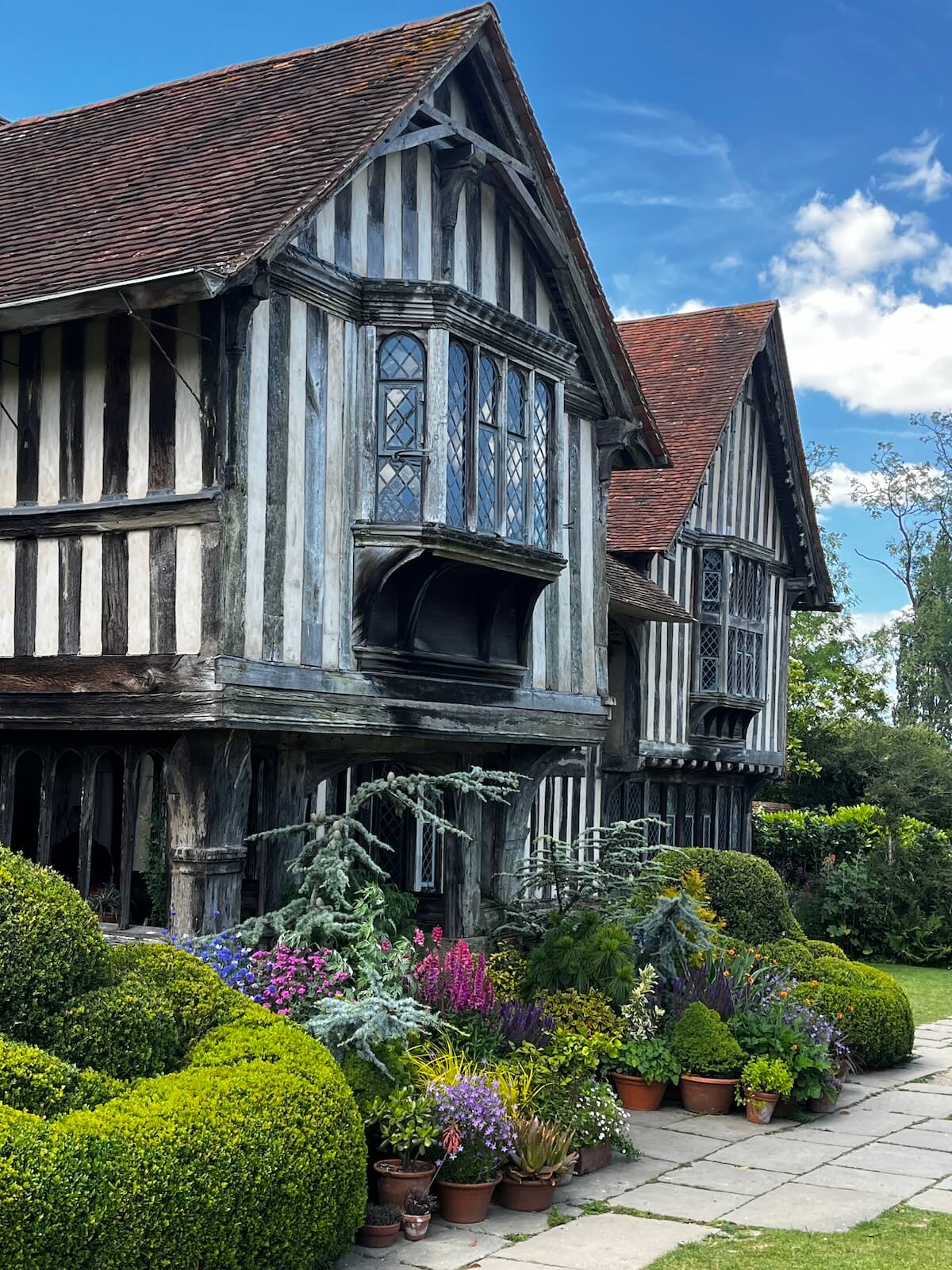
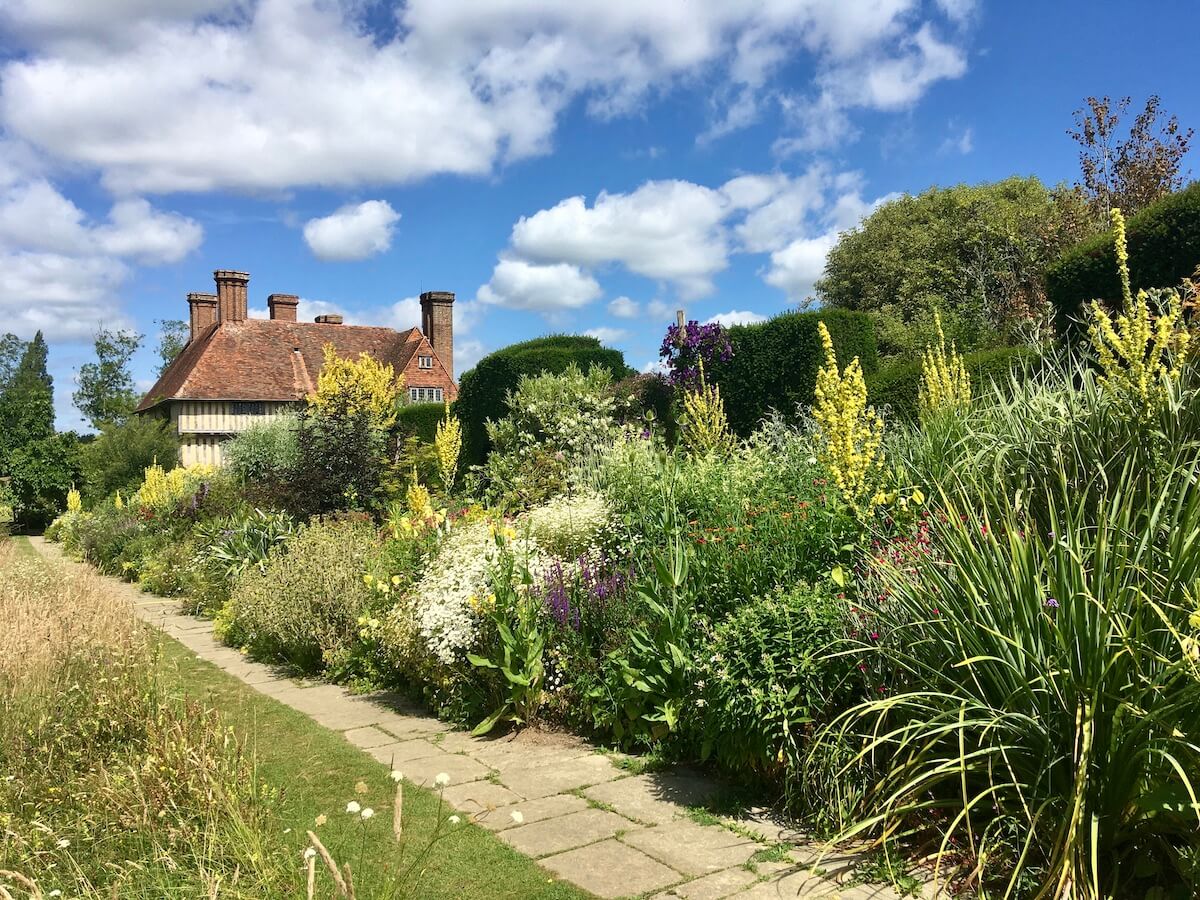
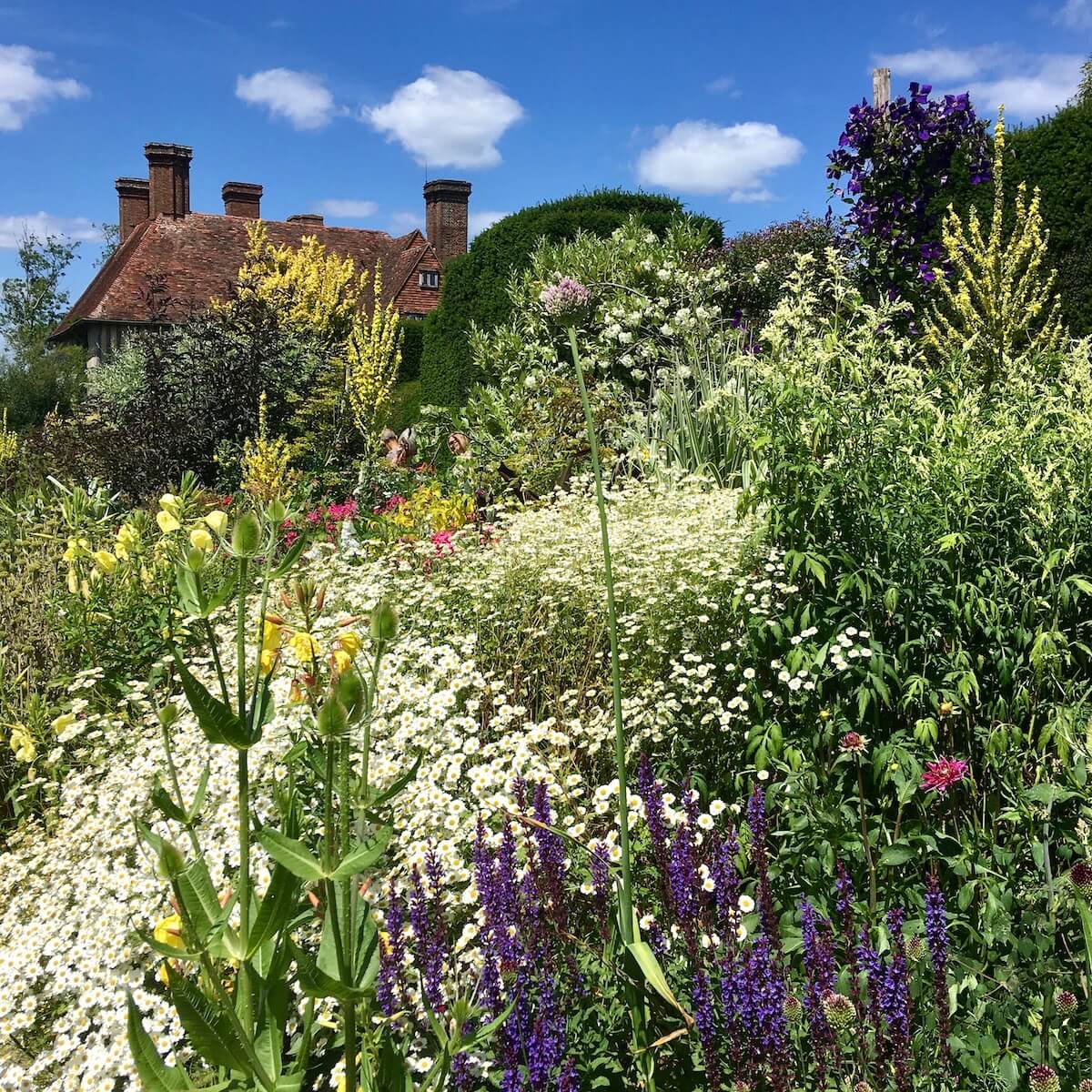
One of the most classic of all English garden pictures was taken at Great Dixter by xxx. Fans of English gardens may know what I mean. The top third shows a wooden-framed Tudor house, the rest is a jostle of flowering plants.
I dare say you read xxx as a blogging blooper and assumed I’d forgotten to insert the name of a renowned photographer. Remarkably, you can insert any number of photographers’ names for xxx, even your own, providing you can find the spot. Any summer the garden is open you’ll have your chance to take that classy picture.
Here’s my attempt:
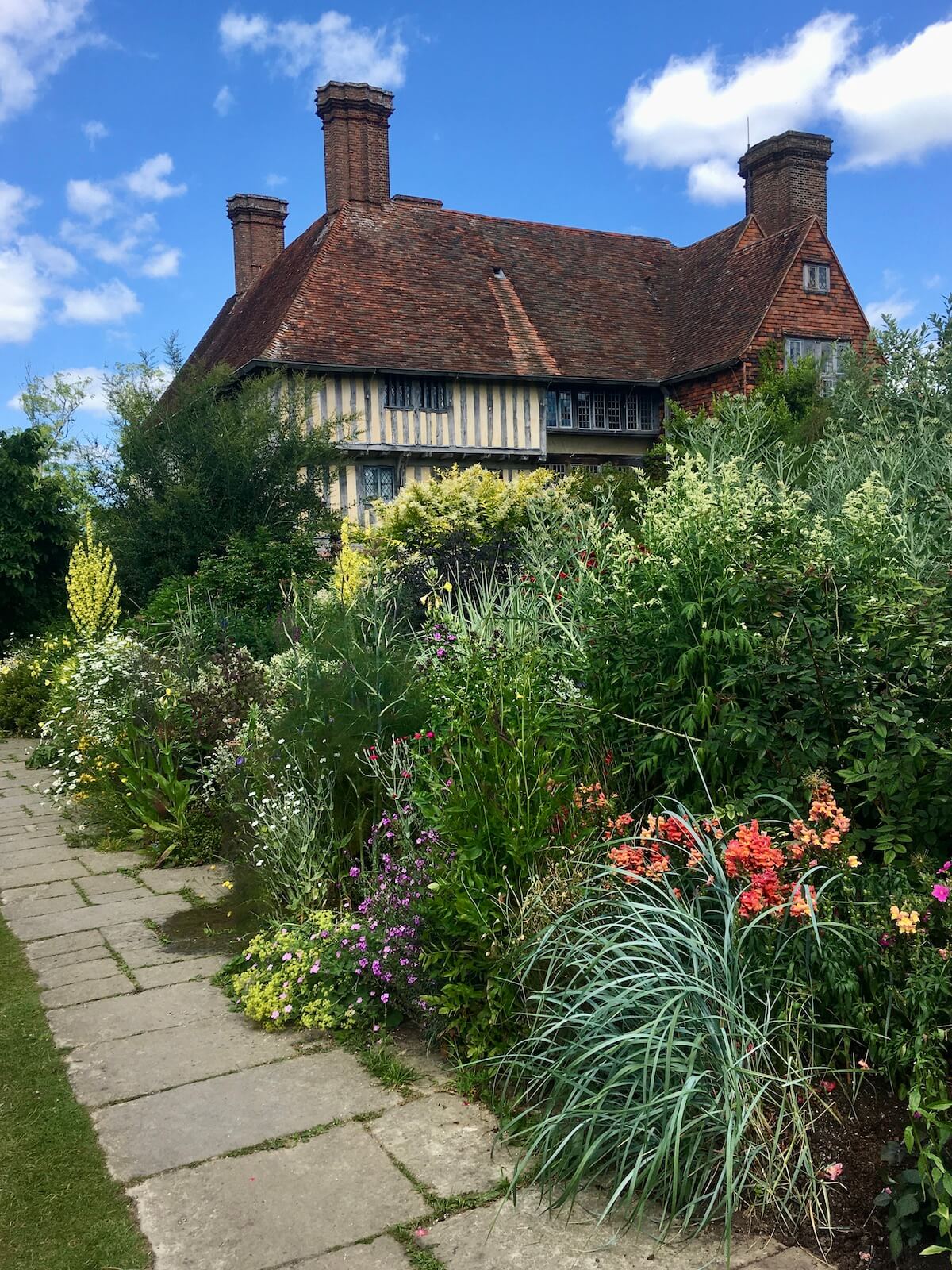
It helps enormously that Great Dixter has its glorious listed buildings, reassembled within a landscape structured by Lutyens. You could empty the garden of flowers, lay lawn and it would still demand inclusion in the English garden anthologies.
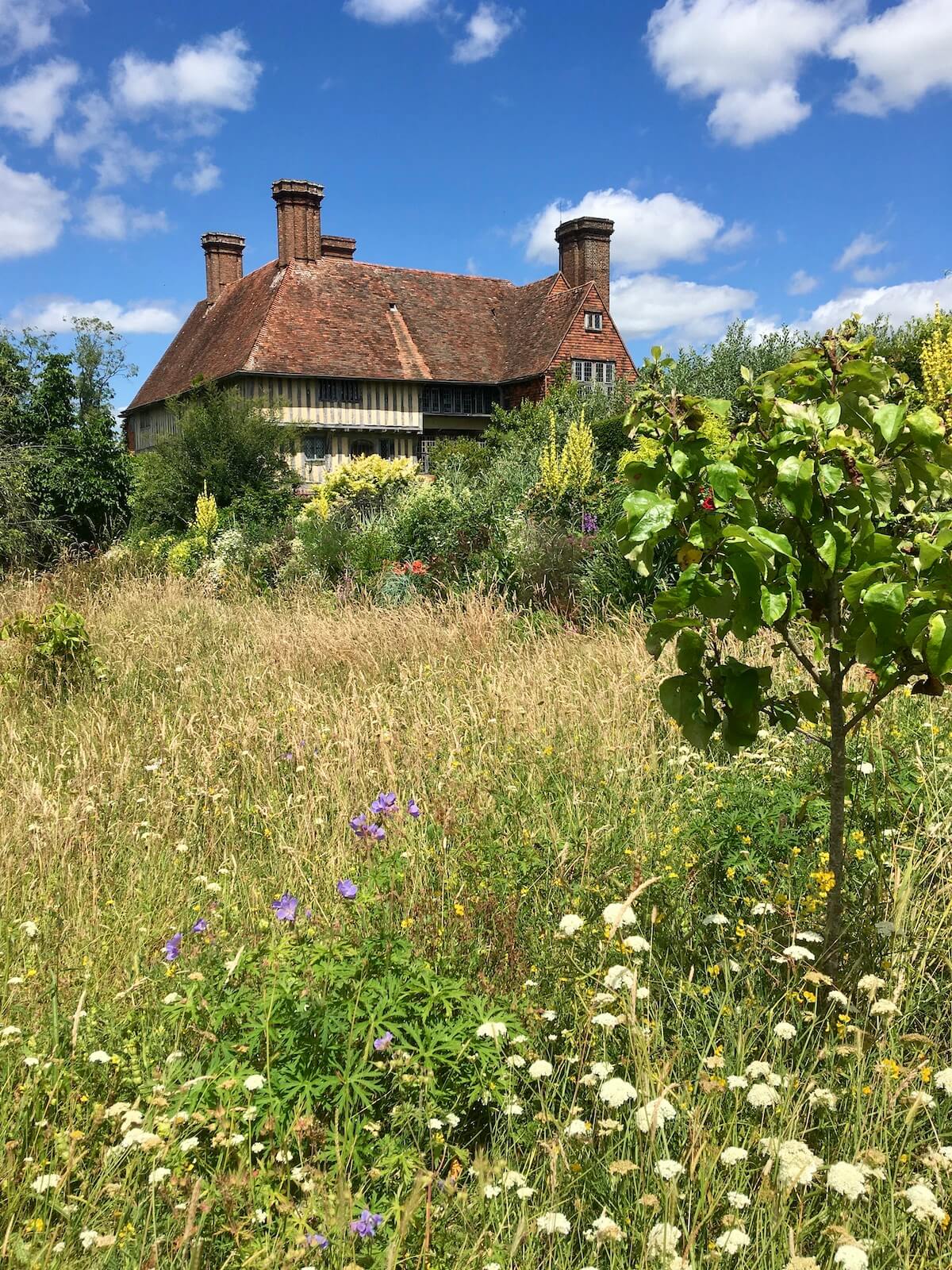
Manicured, chemically treated turf is not this garden’s thing – famously not. For 70 years, Great Dixter has been easing our conceptions about English garden style in the direction of wildflower meadows and a holistic style of planting, showing that ‘good taste’ doesn’t have to be repressive.
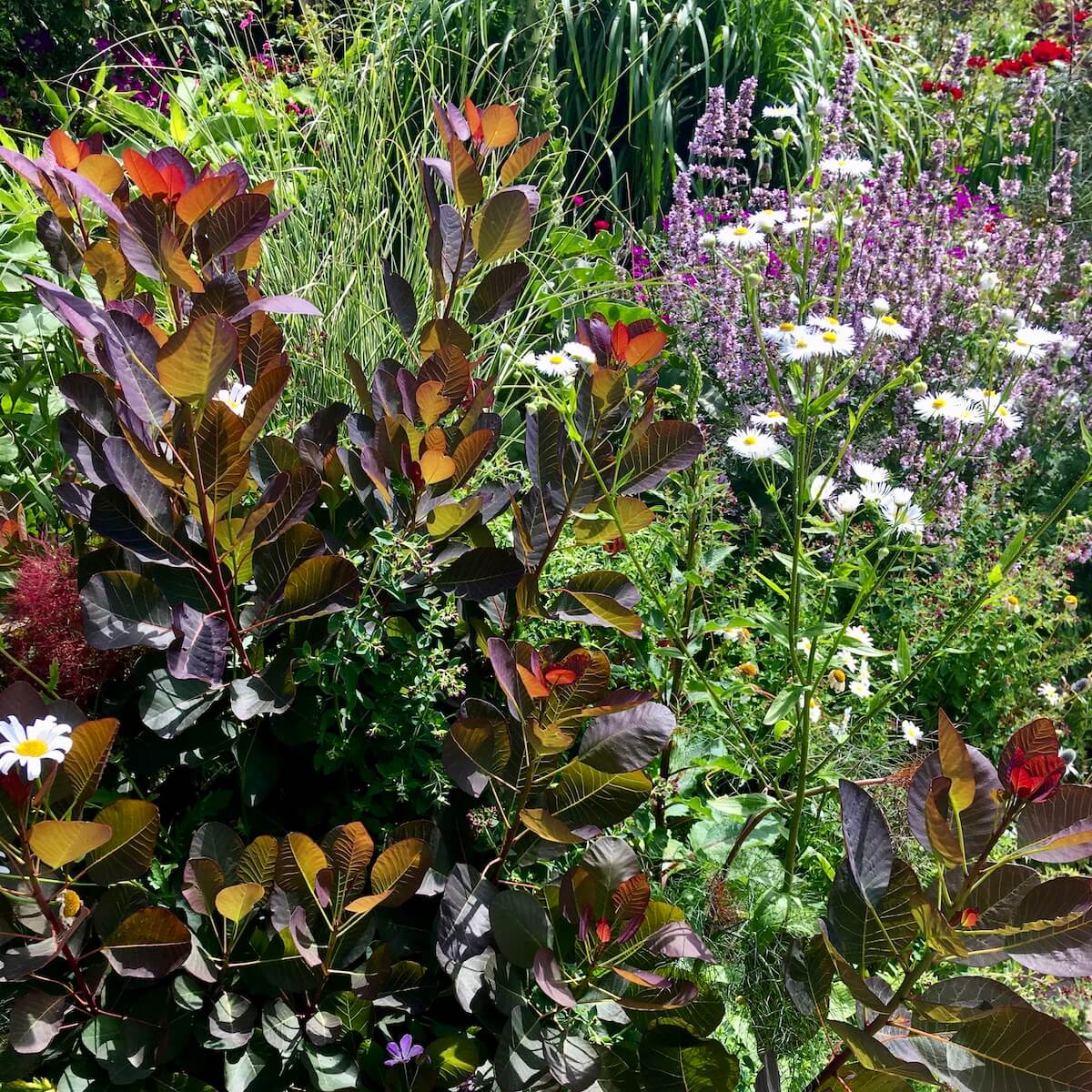
Rather than trying to fix the garden at a historical time, or work within purist plant lists, plants vie in experimental matrices for their continued inclusion next season.
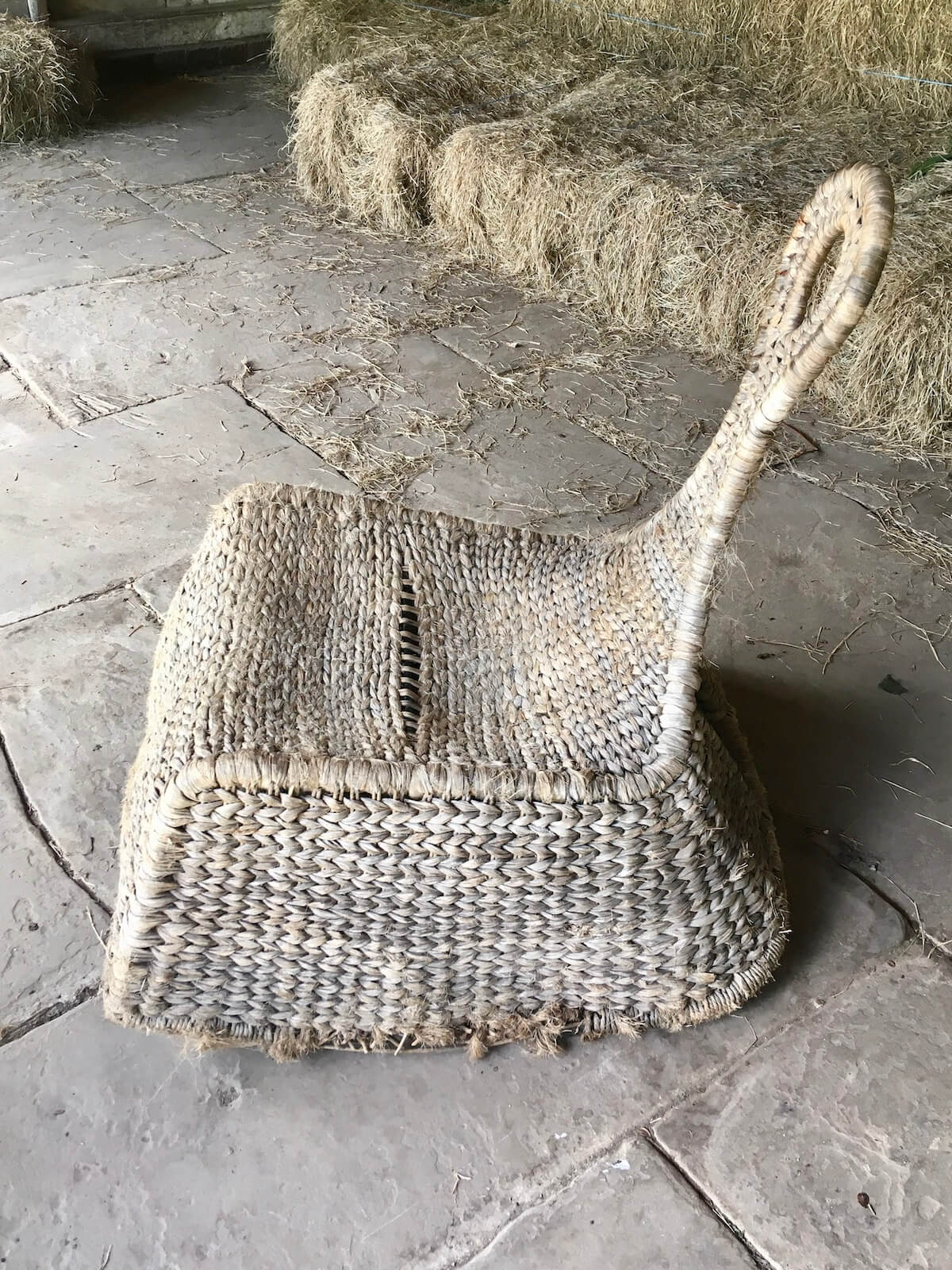
An Arts and Crafts sensibility gives the practicalities grace.
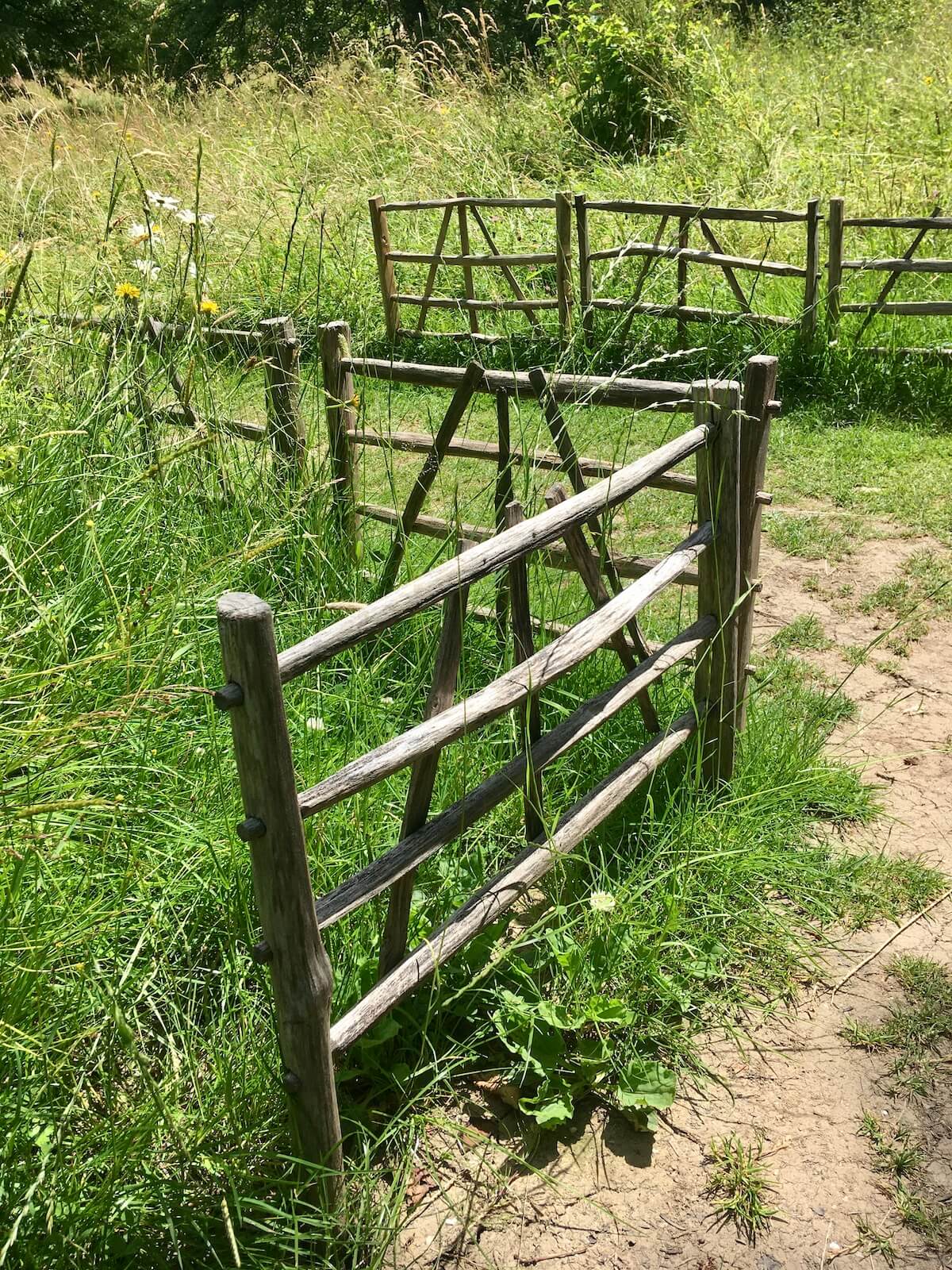
In the meadow, fragments of knee-high fencing mark and protect the path corners and edges at points where desire paths might otherwise emerge in a subtle request that visitors respect the meadow.
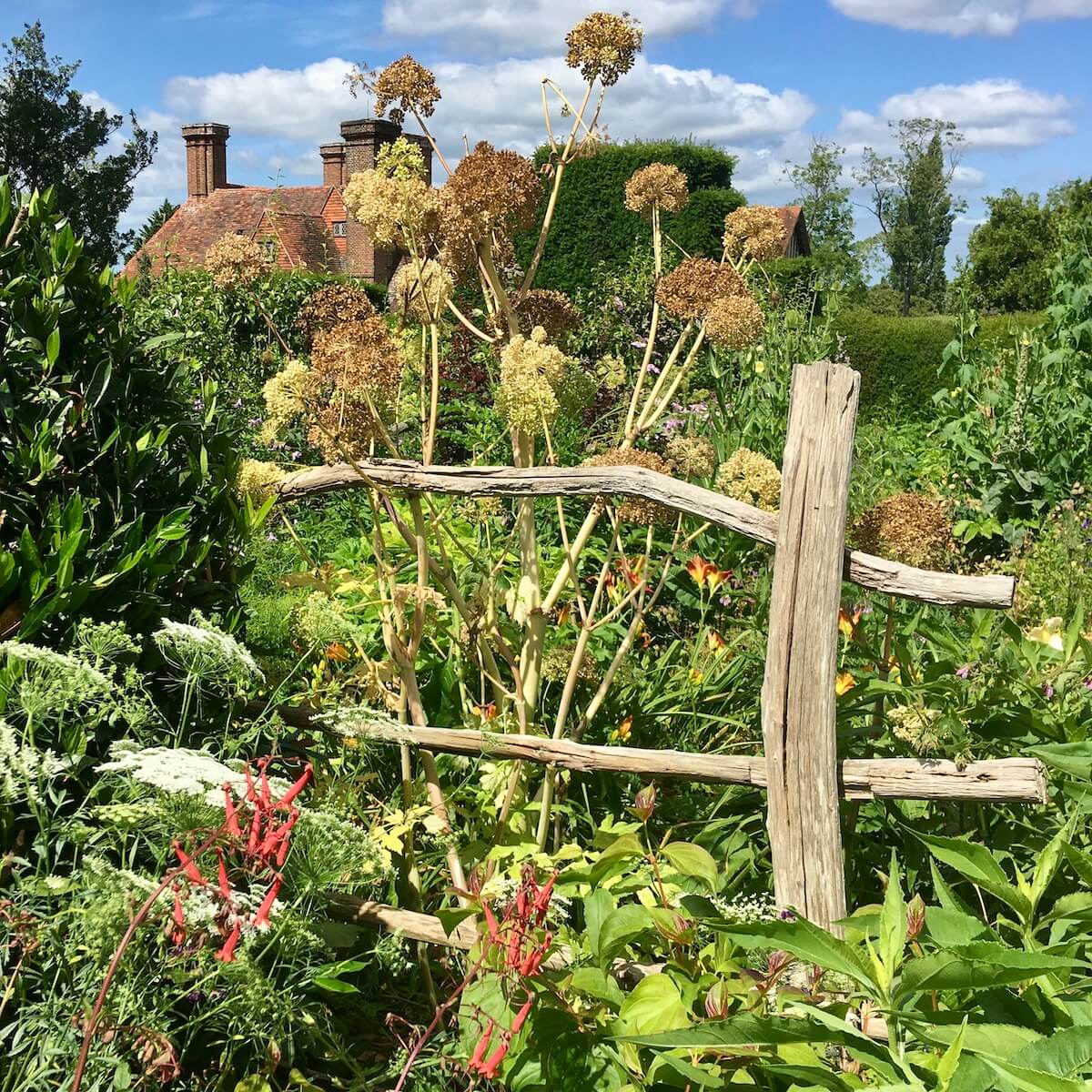
Beloved plants weave through the garden like a refrain, different contexts changing their moods and impressions.
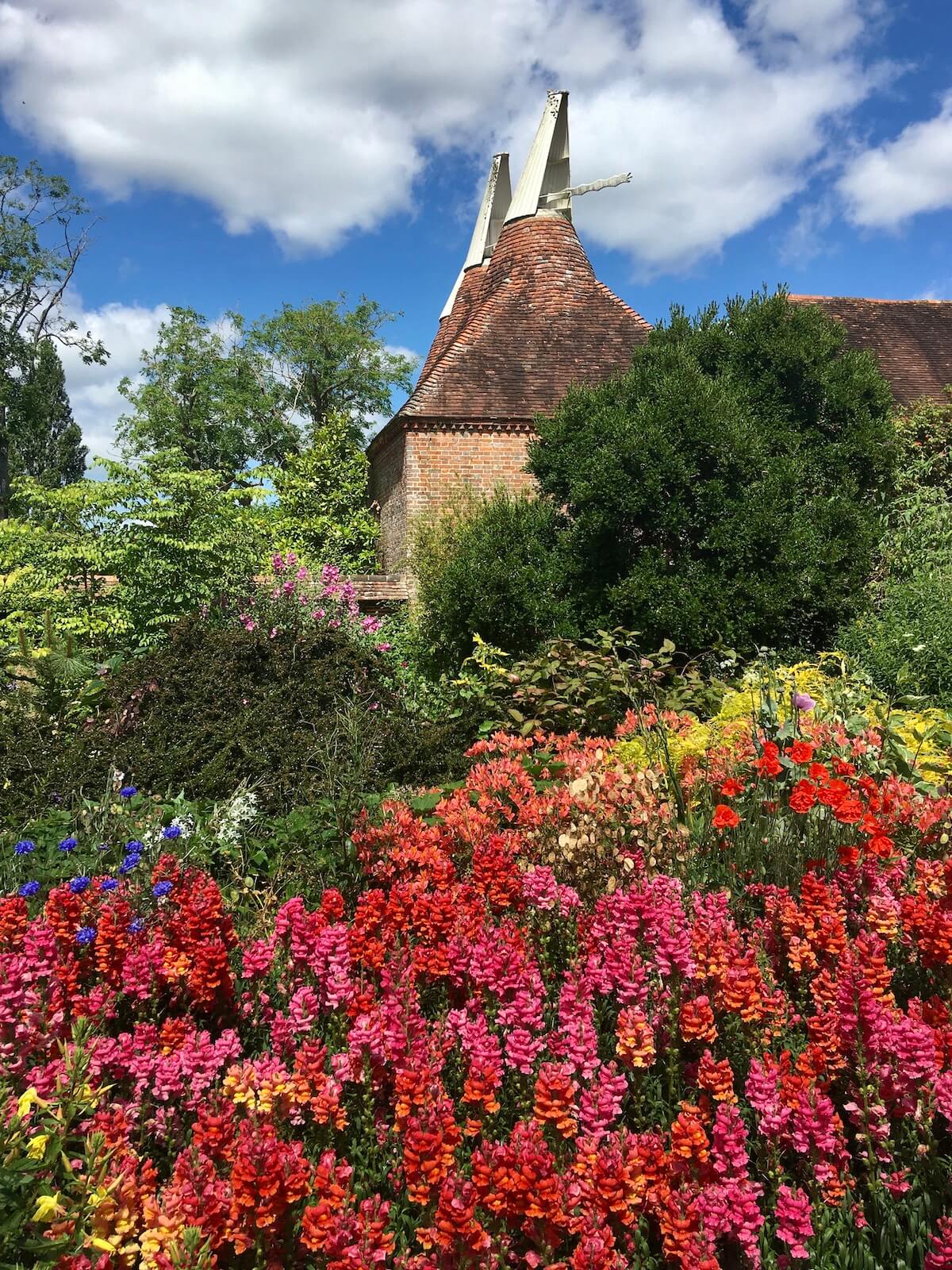
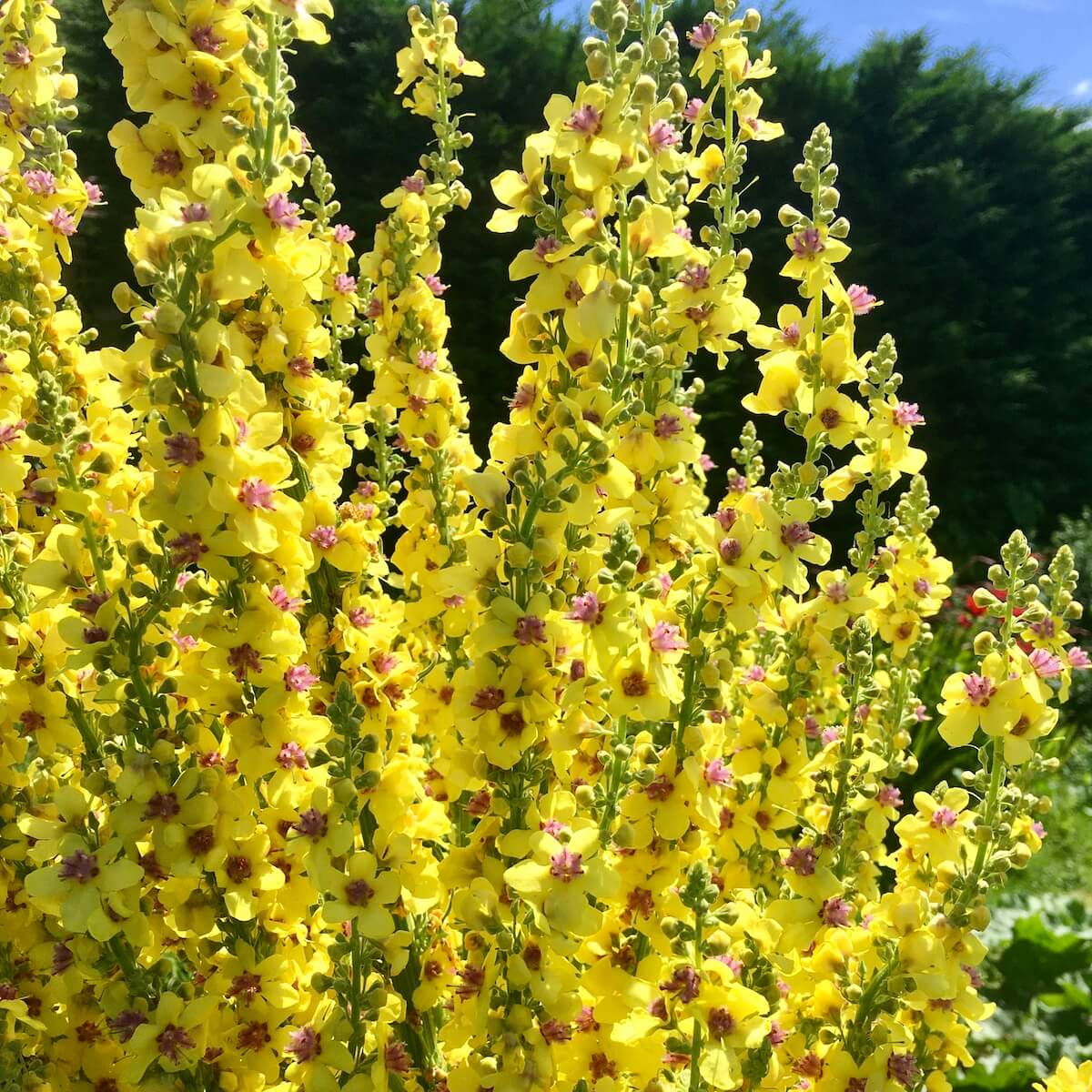
It’s fun to trace Verbascum ‘Christo’s Yellow Lightning’ through these images – one of the standout plants flowering during our visit.


Other favourites include poppies, hollyhocks, geraniums and clematis.


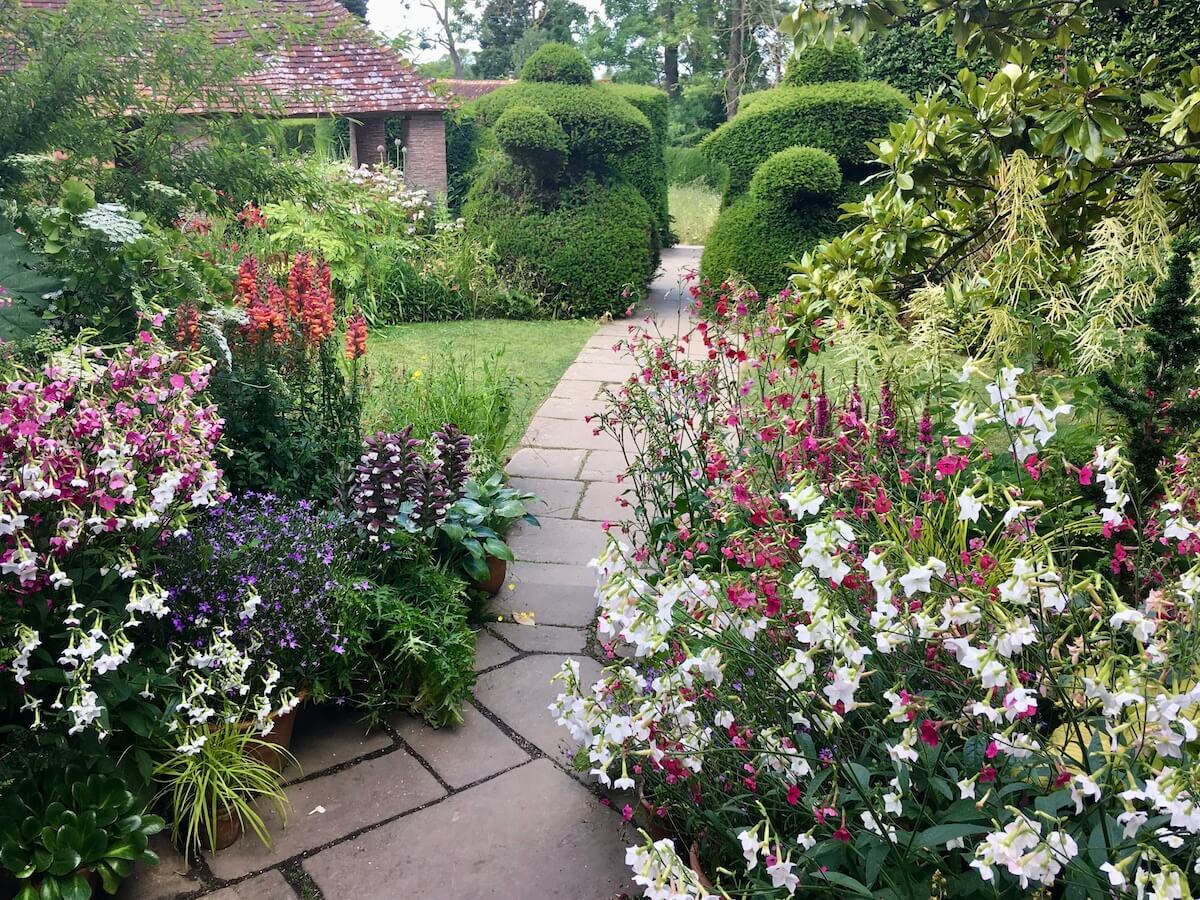
Topiary acts like the buildings, providing dense, decorative blocks.
The whole site includes ancient woodland and hedgerows and is managed in a way that respects the lifecycle of wildlife dependent on it. Whether it is returning sheepwrecked pastures to flower-rich landscapes, treasuring colonies of common spotted orchids, or removing good for pollinator symbols from their catalogue to encourage diverse, mosaic-style plantings, we can feel sure decisions are taken with the long view in mind.
Great Dixter is a great advertisment for going with a blend of what pleases you with what pleases nature in your own garden.
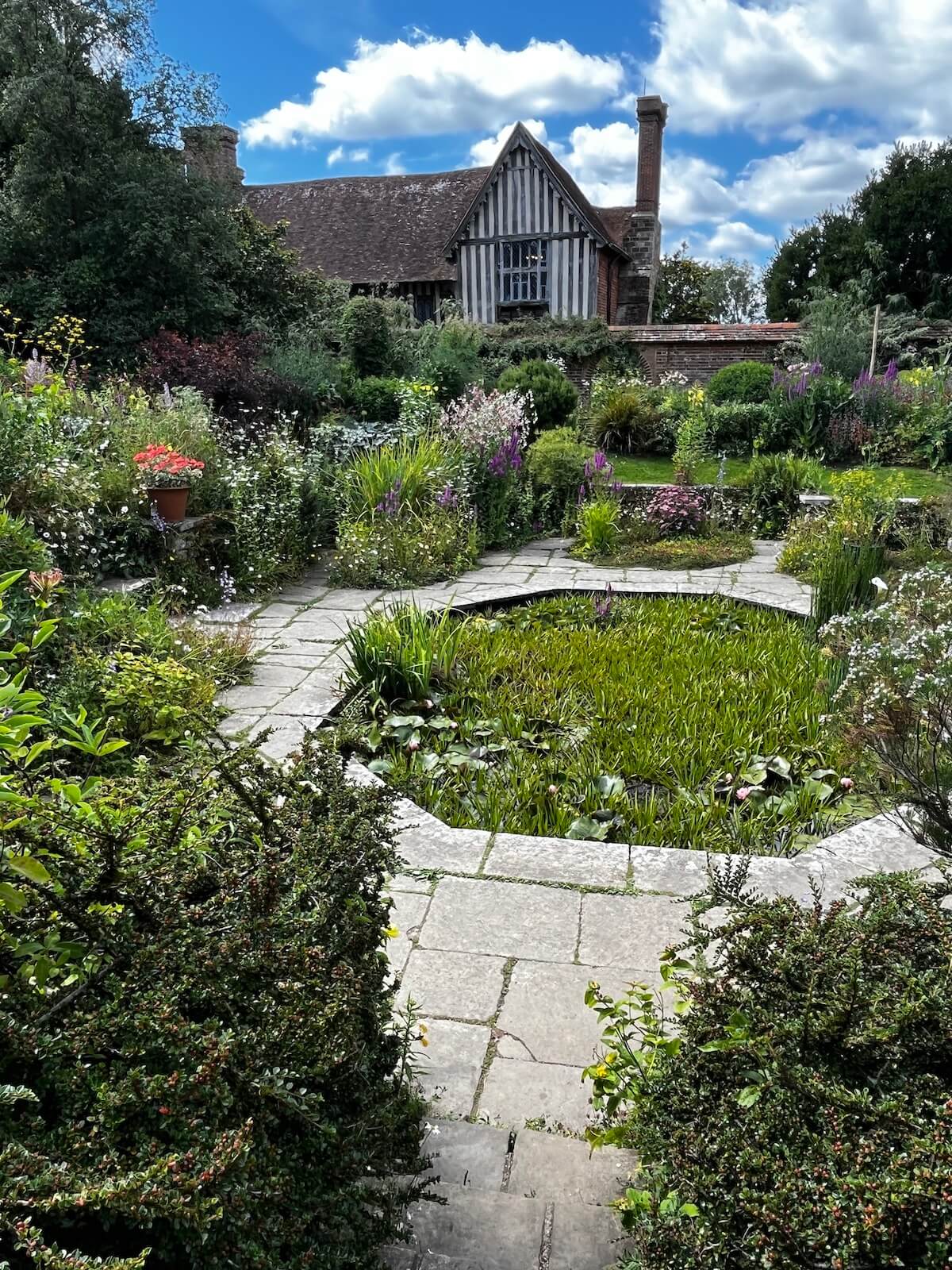
I had been surprised that the nursery was so lightly branded, until I read about Christopher Lloyd’s desire from the first to avoid over commercialisation. Branding is all about details: here the details are taken care of, but refined around a different ethos.
Their artisan mix of homemade soil-based compost is peat-free, easier to rewet, and helps them offer ‘tough, hard little plants’ that should more easily adjust to the conditions in an average garden.
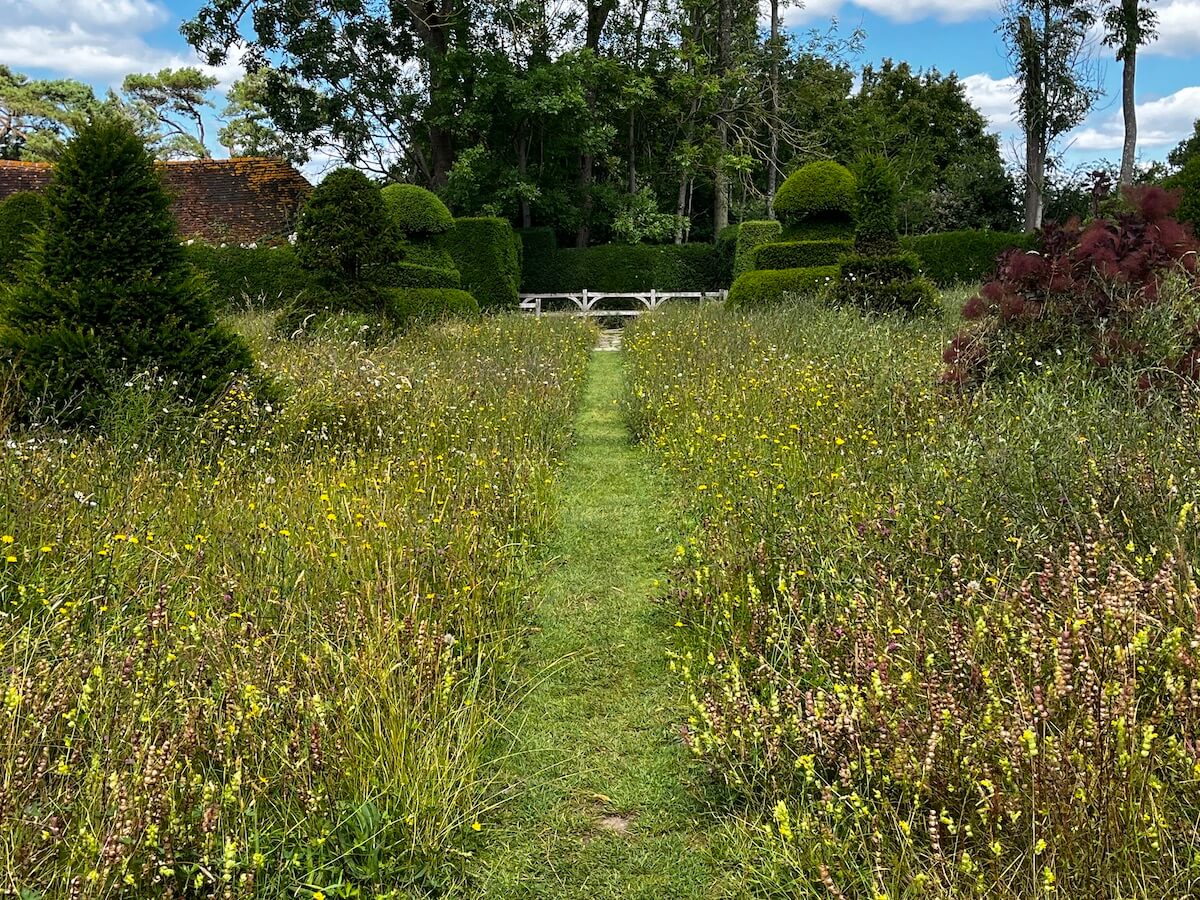
Neighbours wanting to spread locally adaped seed in their own landscapes can apply to collect material cut late from the flower meadows after insect activity has slowed down, but are warned ‘some of our meadow areas do contain exotics such as crocus so cannot be guaranteed as wild.’
Garden historian, Tim Richardson, once said that Lutyens’ designs “seem to suggest both grandeur and humility at the same time – the Holy Grail for the English sensibility.”
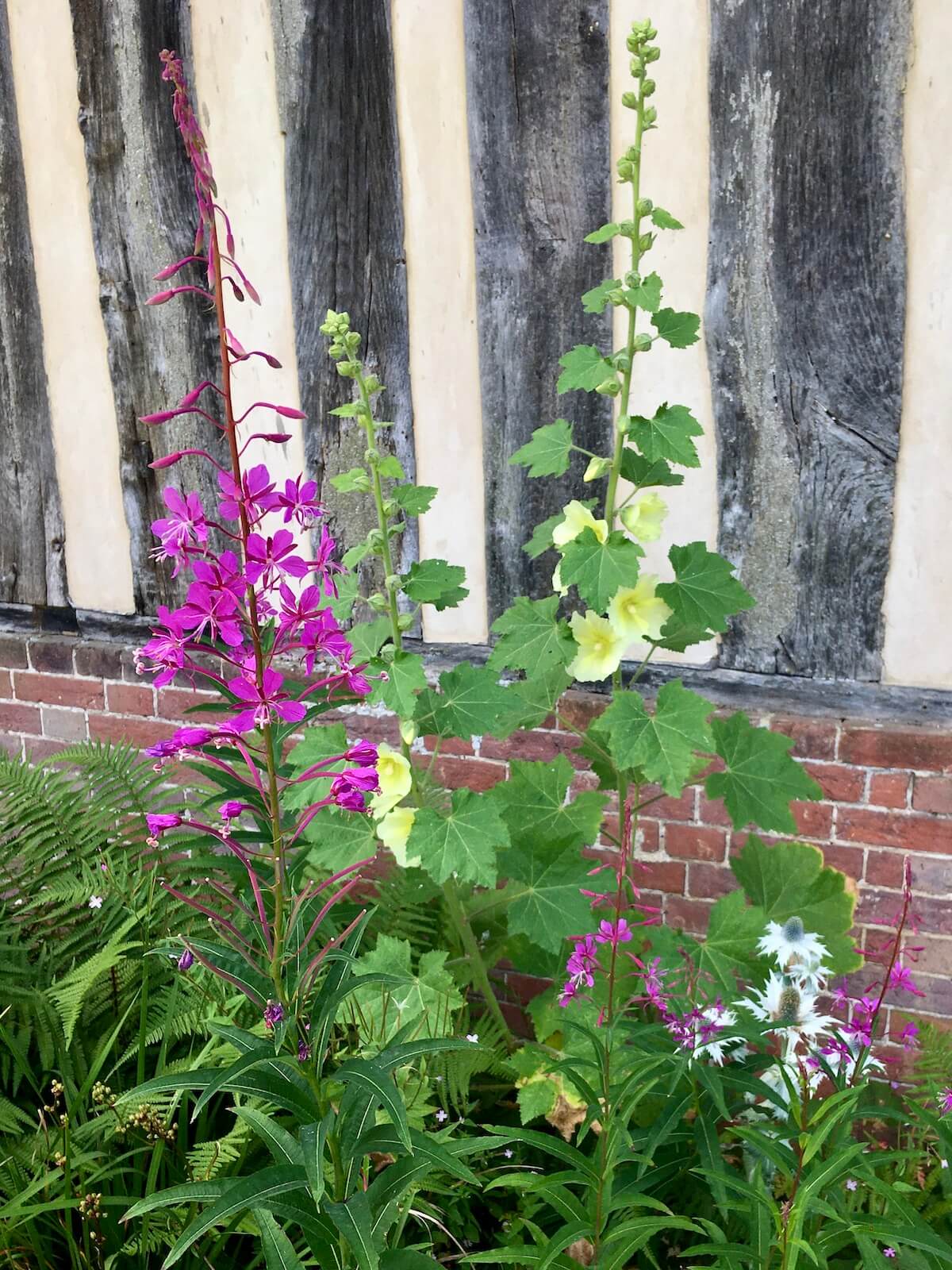
Rosebay willowherb growing peaceably with hollyhocks in a prime position at the front of the house seemed to embody Richardson’s idea in floral form – and to give visitors hints about plant beauty, validity and management.
I hope you’ve had or will get a chance to let your senses enjoy this dynamic, fun-loving garden. In the meanwhile, I’m offering my wafer-thin take on the real-life palimpset that is Great Dixter.
Address:
Great Dixter
Northiam
Sussex
United Kingdom
TN31 6PH
Check the website for details of the garden’s learning programme and up to date visitor information.
 Susan Rushton
Gorgeously written, gorgeously illustrated! Thank you for this — a most welcome surprise! And today, in this country, a most welcome balm.
My pleasure. I should perhaps rename this my surprise, rather than my blog. It does feel that way at the moment.
More of your trademark excellent compositions and excellent informative prose
Thanks, Derrick. It’s the perfect garden to think about and wonder over.
What a fabulous place! I had never heard of Great Dixter. Your writing and pictures are a wonderful introduction to this beautiful garden. What an explosion of color!
It seems to be in most of our garden writers’ top ten English gardens lists, so I have been keen to visit for some time, just never passing. It’s well off the beaten track for a Lancastrian, though I should perhaps not say that to a Mainer.
😉
So wonderful Susan. The flowers, the colour, it is all so you. A fabulous post 🥰
Thanks, Brian. I was like a pig in clover. Although less likely to transform the said field of clover into a field of mud than a pig.
👍😁
A lovely glimpse of the garden and your impressions. I hope to go one day!
Good luck! Its reputation precedes it, but I still found plenty of surprises.
Wow! Just wow! The flowers are amazing. And I love the orchard meadow as well. Spectacular place!
I’m glad you liked it. While it is a flamboyant garden, it’s very practical too.
I would love to have an afternoon tea in the garden 🙂
You’d work up an appetite by roaming through the grounds. We can recommend a Mexican restaurant in Rye too if you’re ever down there!
Thank you, I’m in Latvia.
Thank you for the tour. I do like the less manicured garden.
Thanks for coming along.
I love a burgeoning garden that hardly seems able to contain all it has to offer. I must get to this place!
We found Rye atmospheric too – a good staging post for those of us who have quite a journey to get there. We stayed in an old building and both woke up thinking it was haunted.
Noted. Thanks.
It’s good to see that Lloyd’s garden is in great shape. I agree with letting the plants call the shots, or at least the appearance of that.
He was lucky to be able to leave the garden in such good hands, although it was planned good luck – the best kind?
Very nice photos. I love an unruly garden and I think a good unruly garden (vs unkept) is probably harder to create and maintain than a pristine formal garden even all with symmetrical, trimmed and proper plantings, but I do like both.
Me too. There will be a skill in knowing what not to plant and where. That Rosebay willowherb is where they can keep an eye on it! I like your insight about unruly vs unkept.
Simply fabulous! Ann-Christine (Leya) was there very recently. Her photos and your prose- why aren’t we queuing up at the gates right now? X
Next year, perhaps! I’ll check out her post – thanks for the suggestion.