
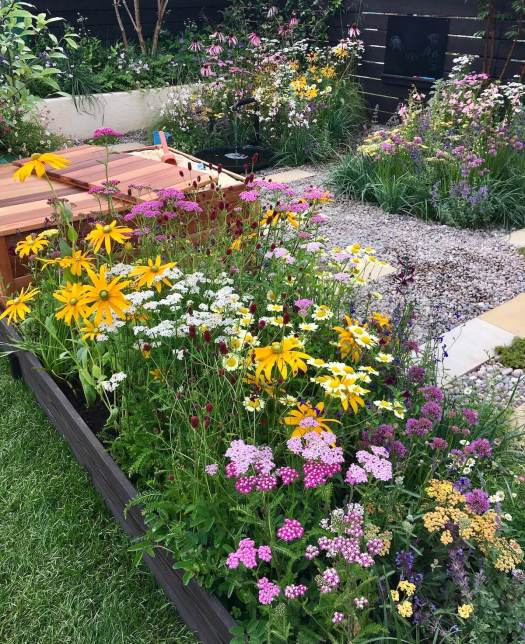
Usually, my posts about flower shows focus on the plants, gardens and planting combinations I enjoyed best, or trends I picked out. Today, I’m taking a step back and illustrating the official trends from this year’s Tatton Park Flower Show.
To be honest, I’d not have guessed all four trends that the Royal Horticulture Society highlighted, but I didn’t have to as the RHS helpfully listed them online.
Trend one: Soft planting
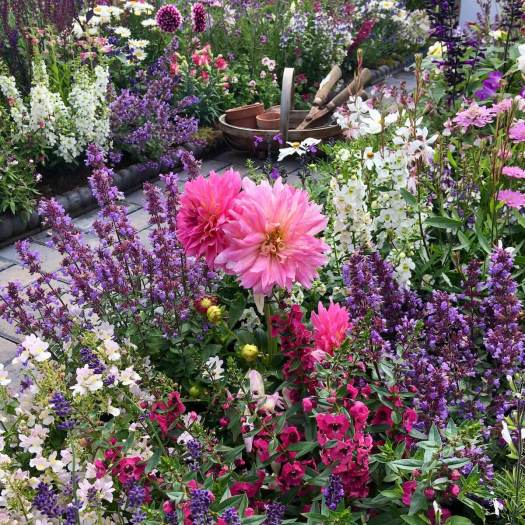
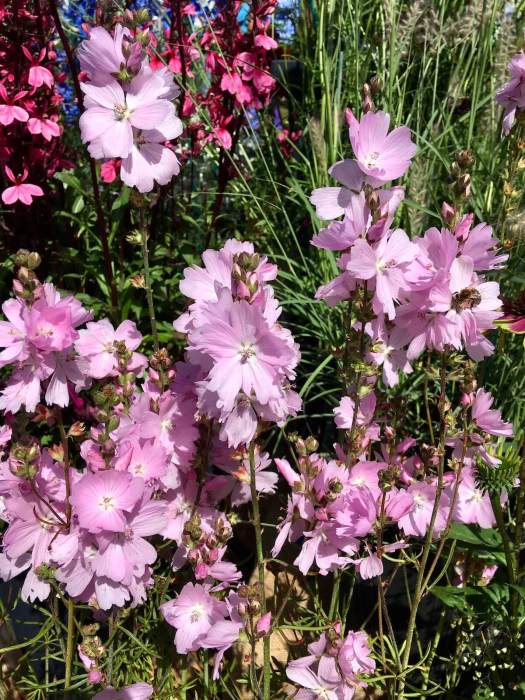
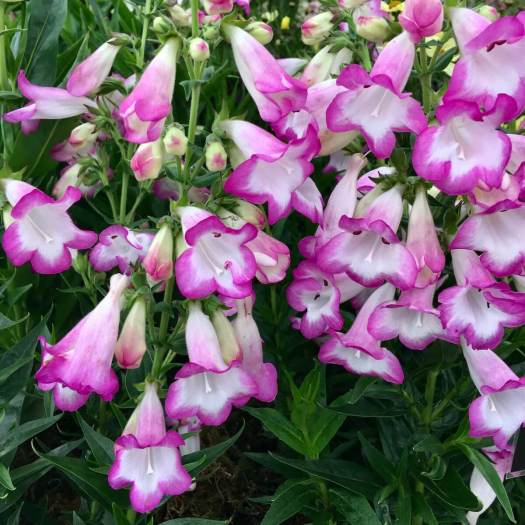
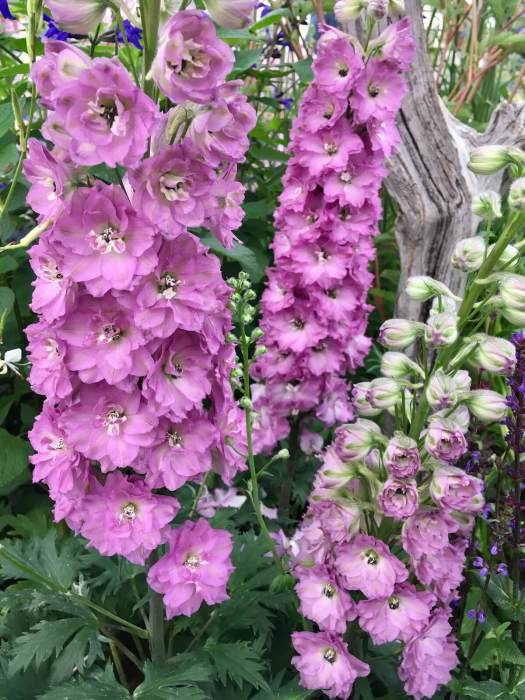
Billowing clouds of grasses and soft pink colour palettes gave the show a romantic feel with plants spilling onto paths and tumbling over the edges of containers.
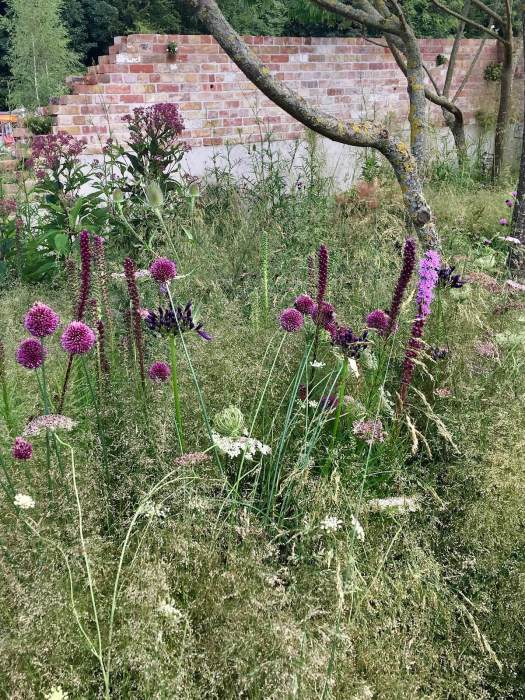
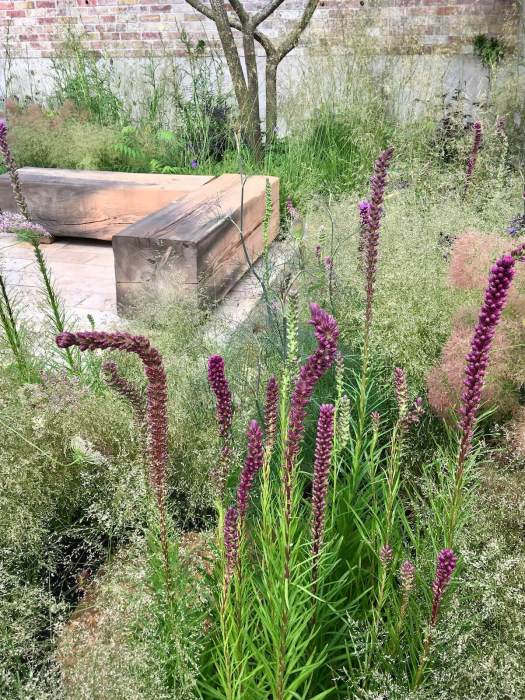

While echinaceas (coneflowers) are commonly pink, it’s less usual to see them in this pastel shade.
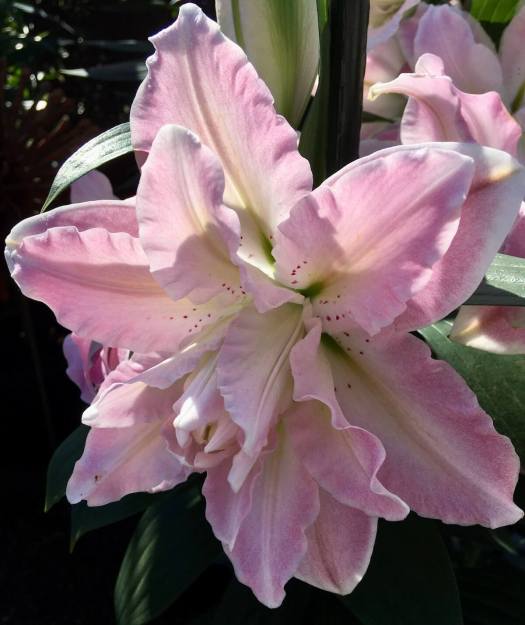
I’ve picked out this powder pink lily to suit the trend from the many scented beauties on display.
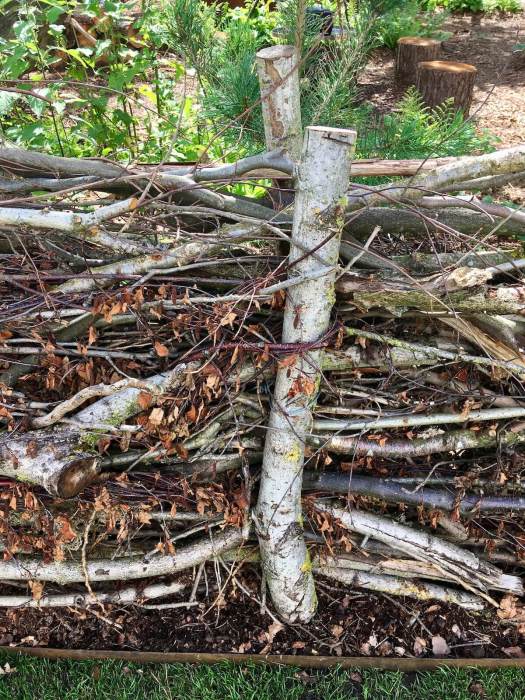
Trend two: Dead wood hedges
Great for wildlife and reusing organic material – dead wood hedges are the ultimate in sustainable landscaping… a great take-home idea for larger gardens.
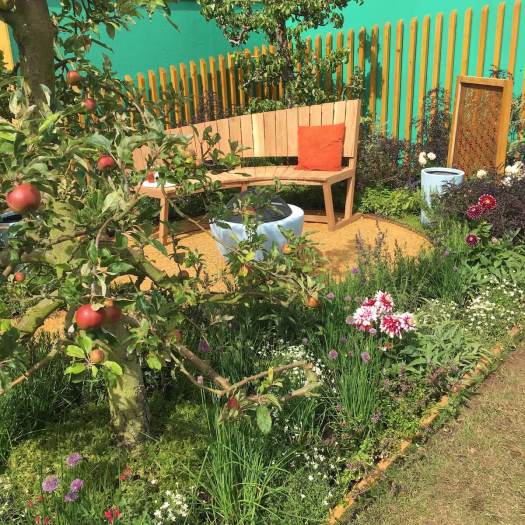
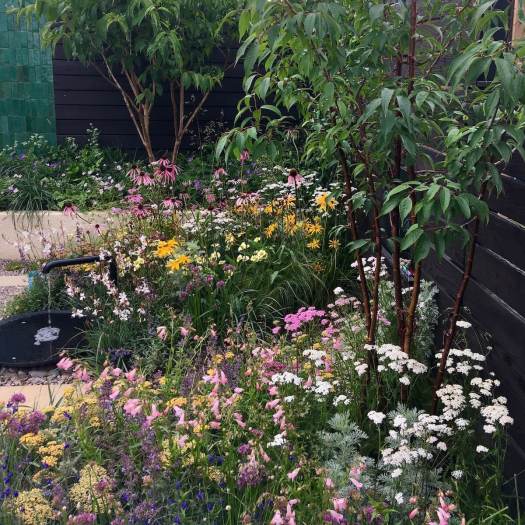
Trend three: Resilient trees
Garden trees on display multi-tasked, providing extras such as fruit (apple and fig), peeling white bark (birch), or colourful berries (rowan).
Trend four: Corten steel
Strong, durable and with great aesthetic appeal, corten steel features included a portico, garden art, a water feature and an arbour.
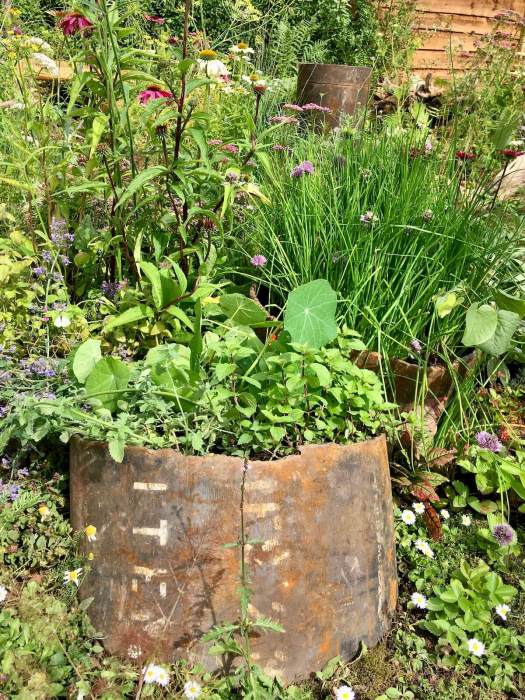
I like the distressed effect you’ll get over time with Corten steel, but neglected to photograph much of it at the show. I doubt this planter is made from Corten steel as it is more roughed up than the steel tends to be, but it took my fancy and is Corten steel-esque.
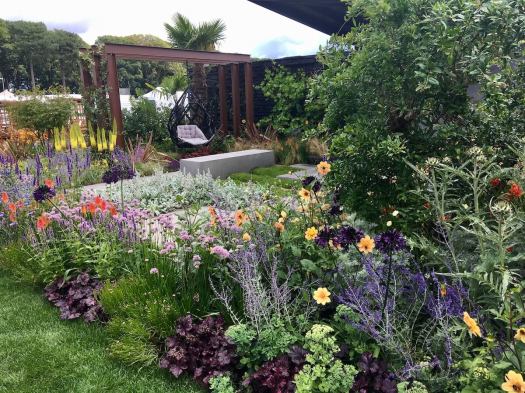
The genuine article appeared in my favourite, flower-filled show garden (see this post for more).
Shared for Ann-Christine’s challenge: On Display.
 Susan Rushton
Beautiful floral displays for the week 😀
Thanks, Cee.
Great ideas if you have a garden.
We only have a balcony 😉
Have a nice day Susan and many greets.
A dead-hedge on a balcony would be a bad combination! But perhaps a pink flower…?
I like every one of these trends: but as tenants, such things aren’t in our gift. Who knows whether changes will appear in the gardens here?
I know you’ll enjoy whatever comes your way.
A well thought out and nicely photographed post. The Soft planting set is my favourite
I’m glad you like that style.
Your posts are the antidote to the chaos happening elsewhere… many thanks Susan.
Thanks, Grace.
The colors and ideas are fabulous. I love seeing the use of natural items like the dead hedge in a garden. Thanks Susan
It makes more sense than growing and shipping planks, even if it needs replacing a bit more often.
Such lovely colours in all the photos but my favourites are the Bridgemere miniature garden and the last one, they look so pretty 🙂
I think you’d like their display gardens in Nantwich if you get a chance to visit. They told me at the show that they’d done quite a lot of work on them recently.
I like the look of ‘cram-scaping,’ but wonder about the long-term degree of work it would entail!
I’d not heard that term before, but it is perfect. Most English cottage gardens are cram-scapes.
I look out over a Vancouver City garden, which, although small, incorporates different plantings every year. I did notice the softness of this year’s plantings although I actually liked 2022’s plantings better. They have been using woven wood barriers and support frames for maybe 5 or 6 years now. It was wonderful to see your display of the RHS prime concepts, and realize what they may have been inspired by.
I’ve never been to Vancouver, but you’re right, the major gardens and shows get and share influence around the world.
I enjoyed the construction of the post and the information is so good Susan. Great photos as usual 🙂
Thanks, Brian – I thought it was worth sharing.
Beautiful.
Thanks, John.
The dead wood hedge resembles the fences that we make with redwood limbs. Redwoods naturally shed lower limbs that are remarkably uniform. Their innate curve weaves splendidly between posts that are made of the larger redwood limbs. They alternate direction to maintain a level top. Redwood is famously resistant to rot, so such fences last a good long time. We can do the same with reed between redwood posts, but the reed needs to be replaced every few years. I do not follow trends, and some, such as dead wood hedges, seem to be taken from our work.
I am sure you’re right. There were several of crafts-based ideas at the show – to make them work in the long term, you often need more skill than first appears. But I enjoyed seeing simple ideas too, such as kids bashing colourful petals against slim slices of tree trunk to make dye patterns.