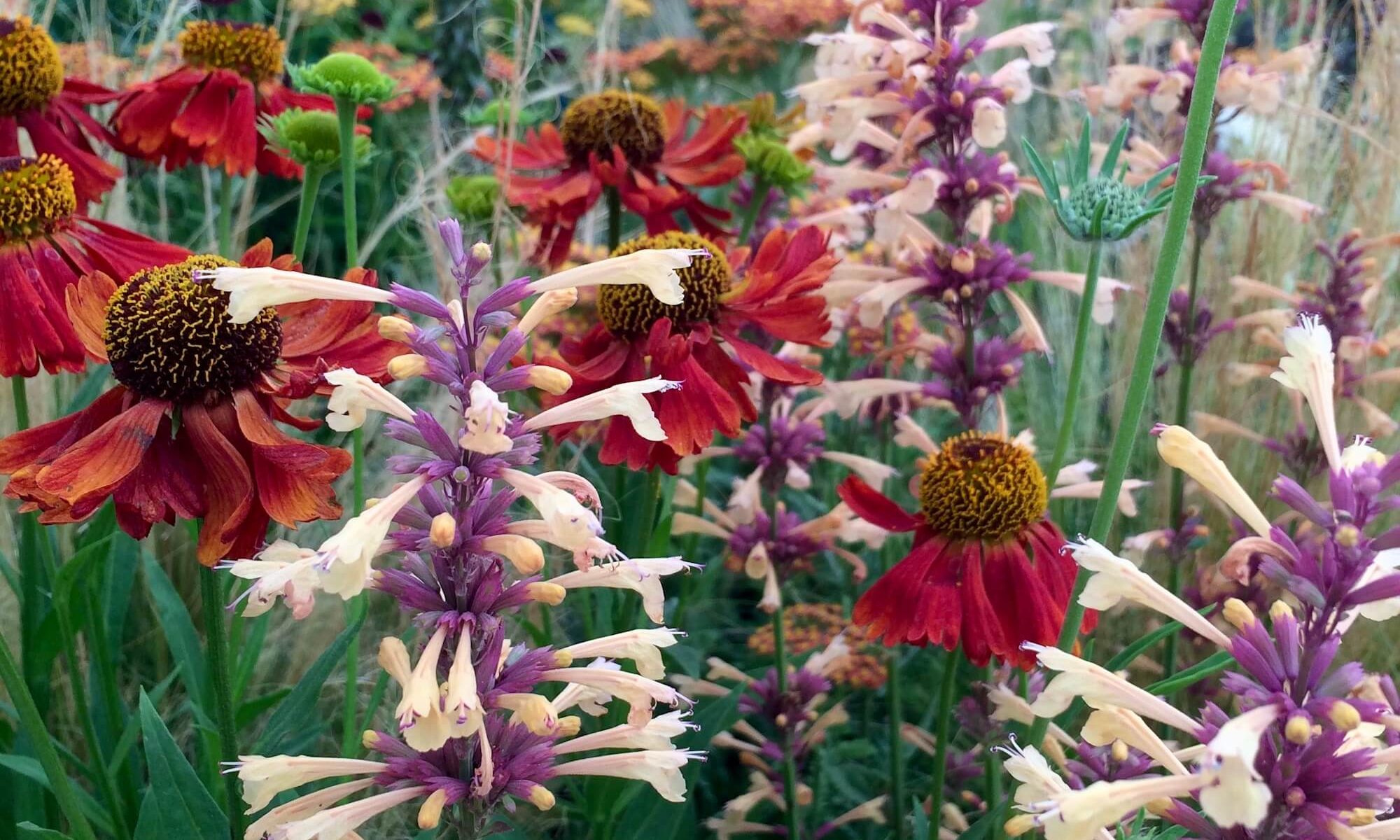

Harlow Carr is no longer the Royal Horticulture Society’s only northern garden, and not the biggest, but has the benefit of an extra 70 years or so of continuous cultivation. Highlights for me include wonderful collections of primula and meconopsis, typically in flower around mid June to early July. The collections mingle in naturalistic drifts, their bold colours sparkling like jewels in their stream-side setting.
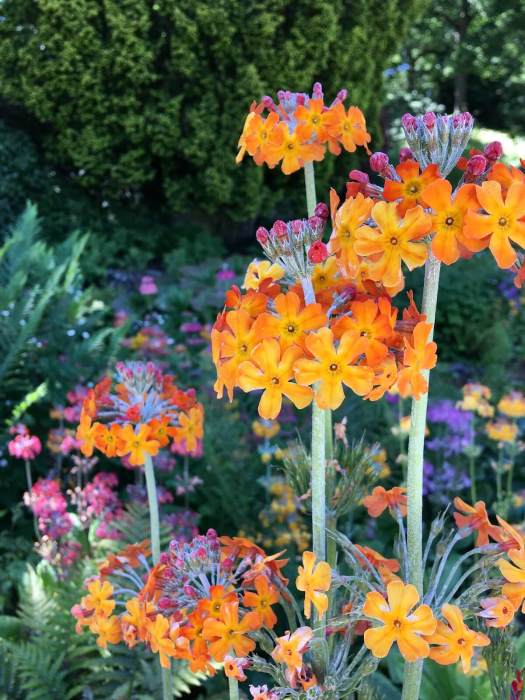
The renown of Harlow Carr’s candelabra primula hybrids has spread beyond the gardens, and deservedly so. Tiered whorls of flowers open from tight clusters of darker buds, facing outwards around sturdy stems. Their warm colours include some beautiful pastels. Technically, they are Primula japonica hybrids with elements of P. bulleyana, P. beesiana and P. pulverulenta in the mix.
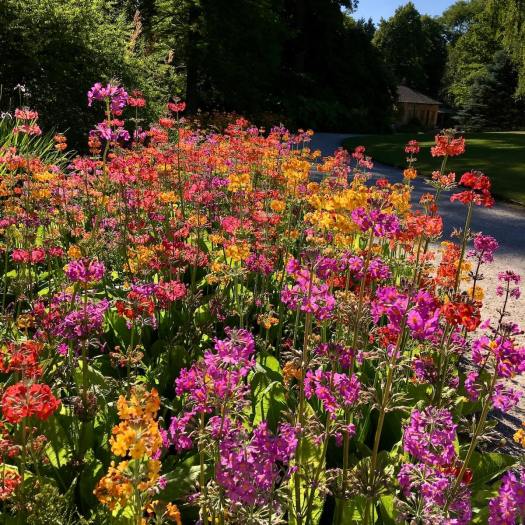
The overall effect of these bog-loving plants is dazzling on a midsummer day.


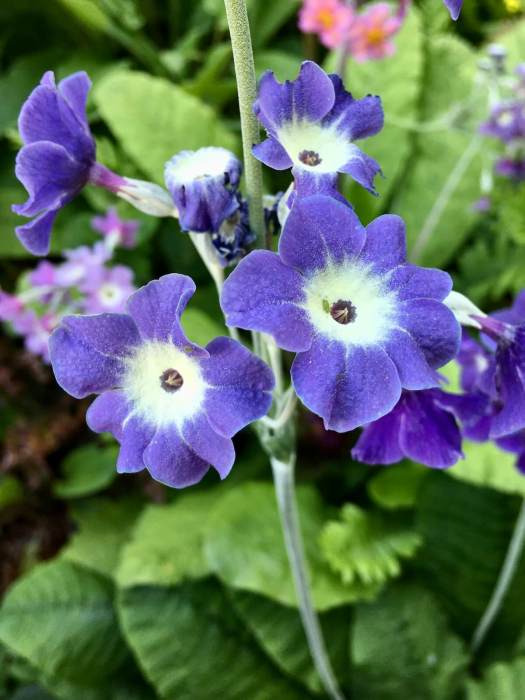
If you can turn your eyes away from the pull of the candelabras, you’ll see many other species of primula, and so much more.
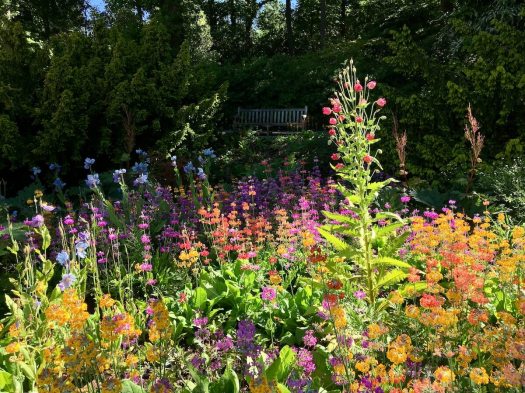
The statuesque plant towering like a lighthouse over a tumult of primulas is a pink meconopsis; blue meconopsis are towards the back left. Meconopsis species are members of the poppy family (Papaveraceae) that hybridise readily, so are difficult to identify. Their silky petals typically nod or droop giving the flowers a hooded appearance.
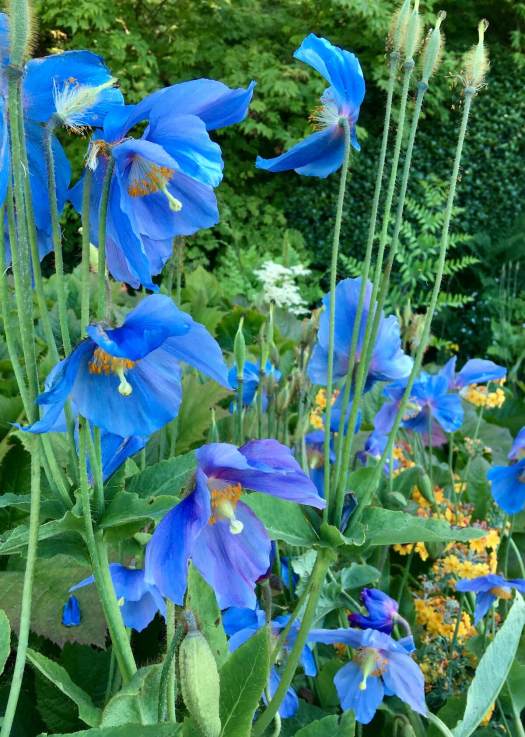
Harlow Carr has a long history of growing meconopsis, formerly using a blue poppy as its logo, and makes growing them seem effortless. Still, regular visitors will notice some ‘drifting’ around the stream side borders from season to season as specimens die and new areas are planted.
While meconopsis enjoy Harlow Carr’s humus-rich, acidic soil and dampness, the average gardener will not find them easy to maintain. Many forms are short lived or monocarpic, dying once they have flowered.
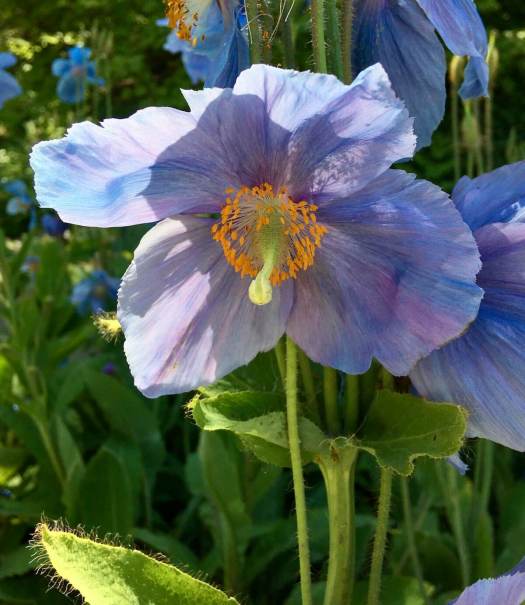
All the more reason to visit them here – blue poppies are sensational, while they last. Even their hairy foliage is beautiful from the time when it first emerges, glistening, in spring. I loved how the one above was rippled lavender and blue.


Blue poppies are the best-known of the meconopsis, but Harlow Carr also has white, cream, pink, red, purple and yellow forms, some in the woodland borders, all worth searching for.
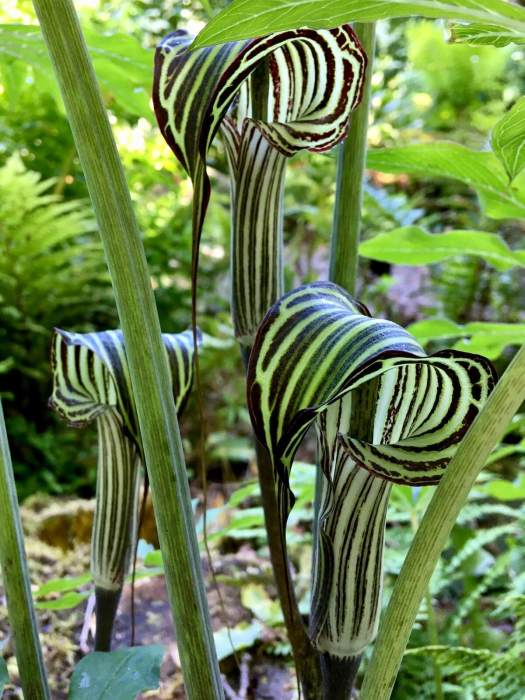
Look closely, because other woodland treasures are easy to miss, such as the Arisaemas which hold their flowers well below their leaves.


This dusky one is Arisaema speciosum var. magnificum. It may be weird to say any plant is weird, but what do you think?
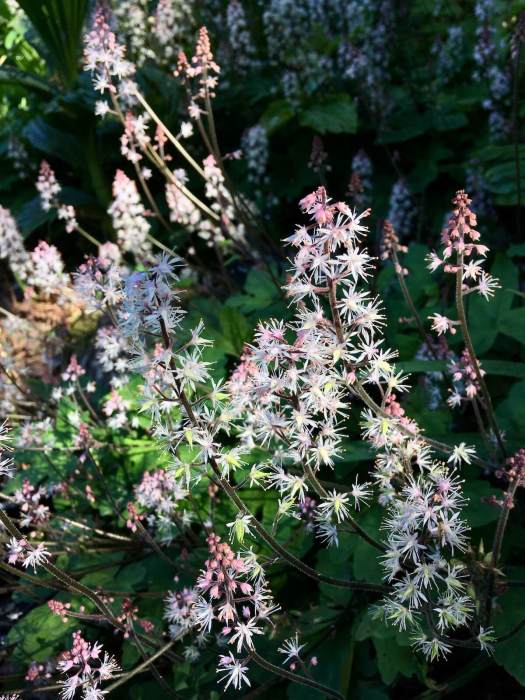
Visitors who love unusual plants would do well to explore the terraces and woodland border behind the Old Bath House. It’s a pure joy to wander in a floral woodland, even after the spring peak has abated.
Woodland eventually gives way to wildflower meadows, studded with common orchids at this time of year.
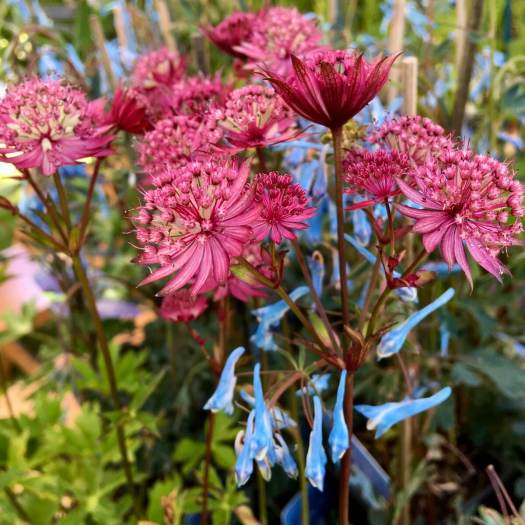
Our most recent visit to Harlow Carr was on the eve of the annual Flower Show which could have meant chaos, but not at all. The garden is expansive enough to stay serene.
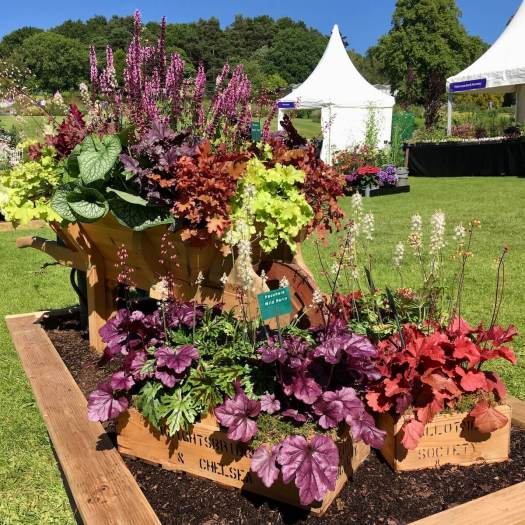
Where plant stands were emerging, activity added to an atmosphere of anticipation.
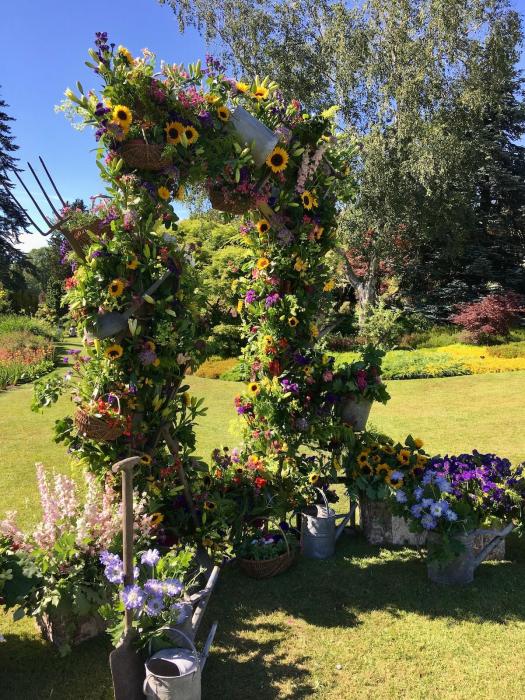
We watched as floral designers put the finishing touches to this year’s selfie frame, which was impressive as ever. It was heavily backlit by the high, midsummer sun, but you’ll get the gist.
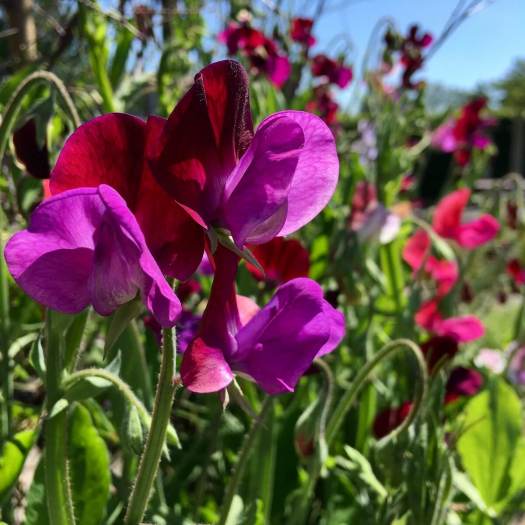
The whole garden was basking in sunshine. In one of the kitchen garden areas, sweet peas were fragrant enough to halt this by-passer in her tracks.
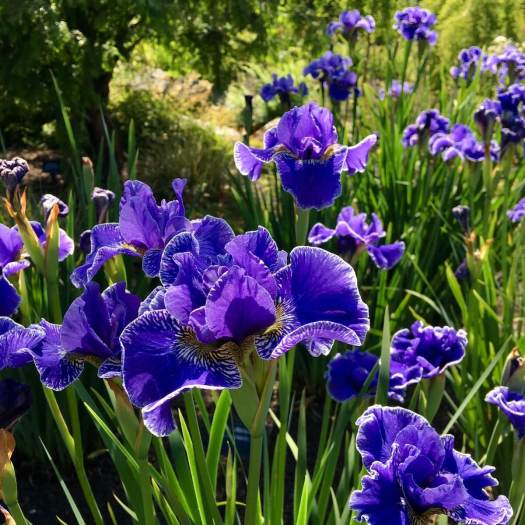
While I’ve not so far mentioned the irises, their rich blues and purples would be a highlight elsewhere.
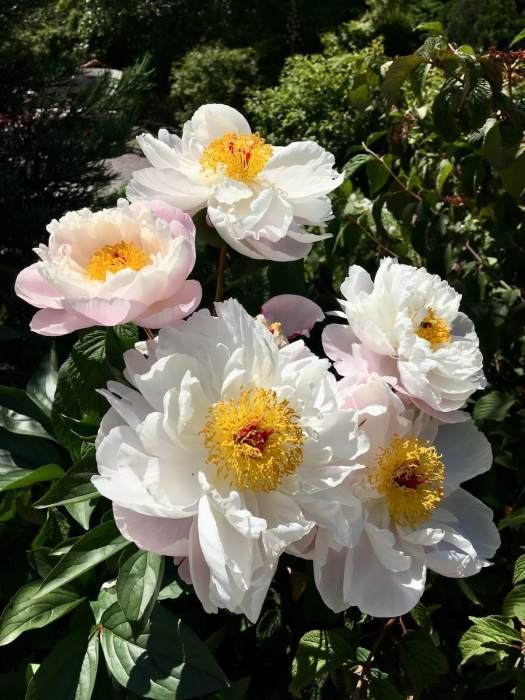
We had missed the stately alliums, which were starting to go to seed, but peonies and roses offered ample compensation.
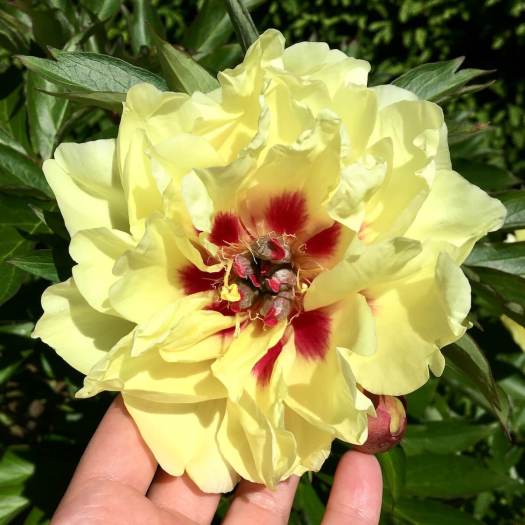
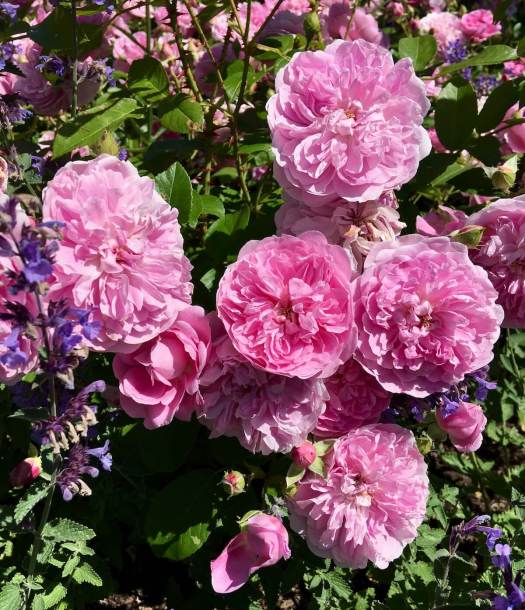
We’d not visited Harlow Carr since the start of the pandemic and were impressed by the changes made. In particular, a varied planting of David Austin’s roses has been added, including recent new varieties as well as old favourites. The roses are still fairly young, but already look great.
I’ve never been disappointed by a visit to RHS Garden Harlow Carr, and in case you think that given the sight of a flower, I am contented, that’s not always the case. I can be highly critical, and judge gardens on the terms they claim for themselves.
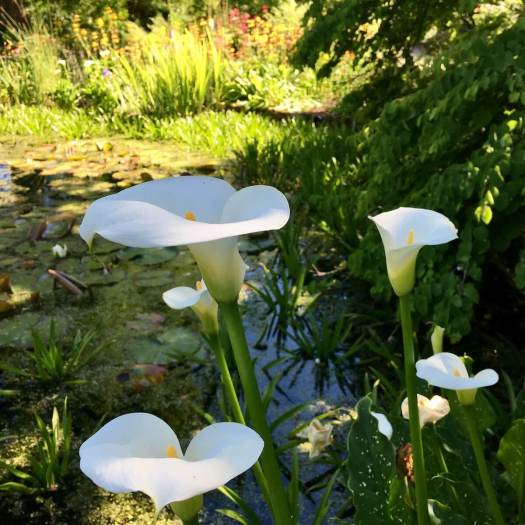
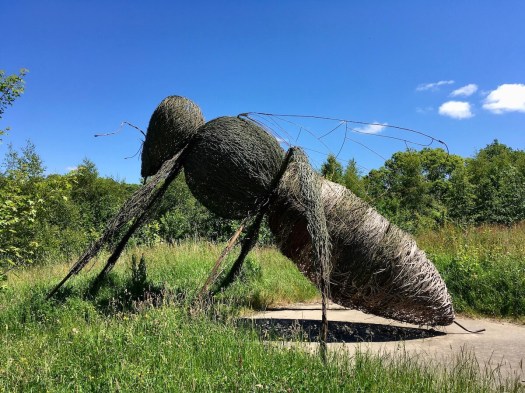
If you think a major garden ought to be well-maintained, inspirational and educational, Harlow Carr will tick all those boxes. Add a sculpture trail that is often refreshed; kitchen gardens; broad, long flower borders; an alpine house of tiny treasures; children’s play areas; ponds; a winter walk; a library (and excellent bookshop); and I’m more than contented, at any time of year.
Check out the Harlow Carr section of the RHS website for visitor information. RHS members can visit any of the society’s five gardens, as often as they want, for free, and take a friend along too.
I hope readers who live too far away to visit Harlow Carr have enjoyed my latest pictures from the garden and are lucky enough to have one or more favourite gardens within reach of home.
 Susan Rushton
Flower porn to the nth degree! Loved this post, lovely share, Susan!
Thanks, Eliza. I’ve seen candelabra primulas in many other places, but no planting of them healthier or happier than these.
Wow….what a garden!!! I was going OK until I saw the Arisaemas and they are mind blowingly wonderful.
Thanks for taking me along Susan 🙂
My pleasure! I trust your mind has recovered by now.
👍😁
beautiful photos. That’s an amazing wicker bee.
It was huge.
I love going alone with you on your garden tours.
And it’s lovely for me to have you along.
Thank you for sharing these lovely photos! I’ve never been to Harlow Carr, but it’s on my wishlist. Those primulas are amazing.
It’s well worth its spot on your wishlist.
This is a dream from beginning to end. Thank you so much.
I’m glad you enjoyed it.
Our last couple of visits to Harlow Carr have been marred by diggers, excavators and Public Works. Good to know it’s returned to its job as a Haven.
Oops! We were the beneficiaries of your disruption, then. The fragrant garden area has been redone too. I quite liked the old version, but it’s good to keep on top of things.
Yup. It was frustrating. The noise as much as anything. I don’t like it that houses have now been built so near the gardens either.
I am trying to imagine actually being in such a place, but I don’t think I can. Such wonders. I’ve never seen or heard of such flowers as the candelabra primulas. There are so many flowers here that look like stained glass — the effect is crazy beautiful! I love the word “tumult” for it all. Indeed! Even the photos are good for the soul, let alone the reality of being there. Thank you!
I ought to try to write a rambling through the garden post one visit to see if I can correct that. One for the future, perhaps.
Yes, please!
What a beautiful, variegated sample of pictures! I was transported there. Thank you.
Thanks for your lovely comment. I’m glad you enjoyed it.
“Flower porn,” indeed! Britain really does have the best gardens (say I, who have not been there yet). I used to grow meconopsis (from seed yet!) but they are incredibly hard to keep going so I’ve given up. Always nice to see them doing well somewhere!
I hope you’ll make it over one day then you can see them for yourself.
Wow! Fantastic garden and fantastic plants.
I’m glad you liked it, Amy.
What an awesome display of flowers and their beauty!
It’s always a treat to visit.