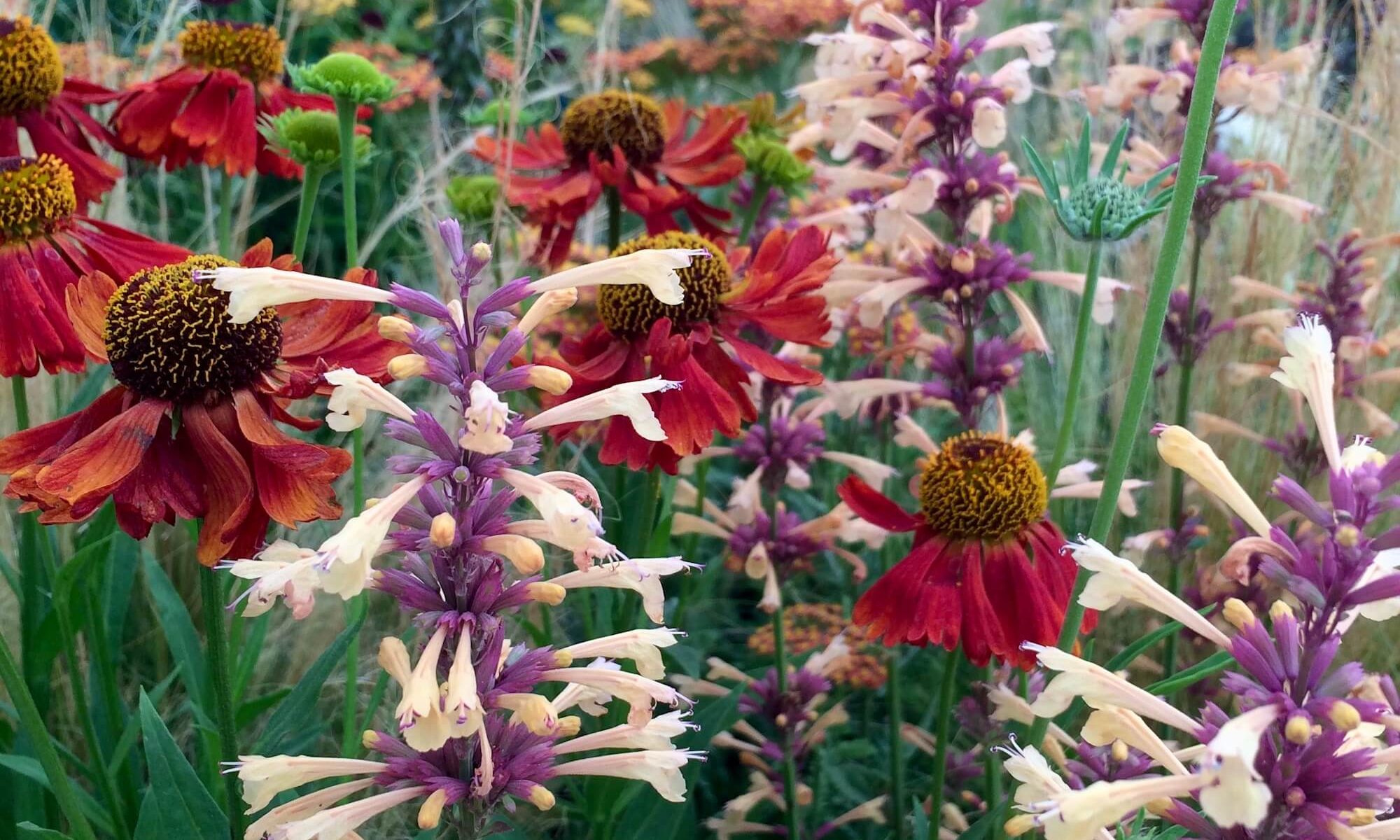
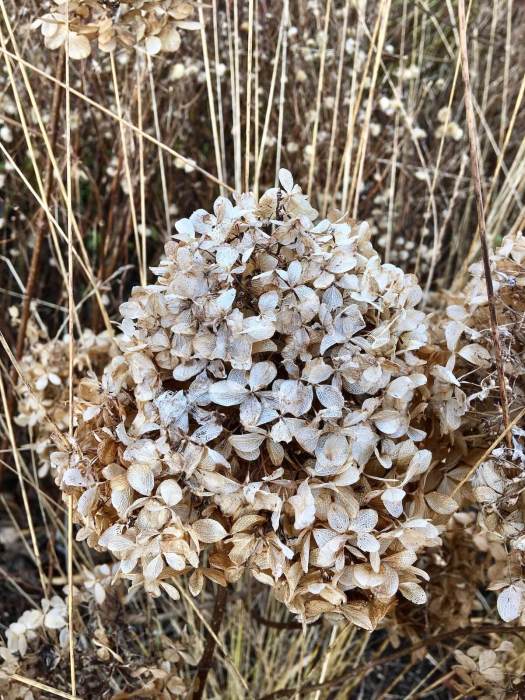
Many gardeners cut back perennials during the winter, but we don’t have to. RHS Bridgewater has left their extensive tall prairie style plantings essentially uncut as you can see from these pictures, taken at the end of January.
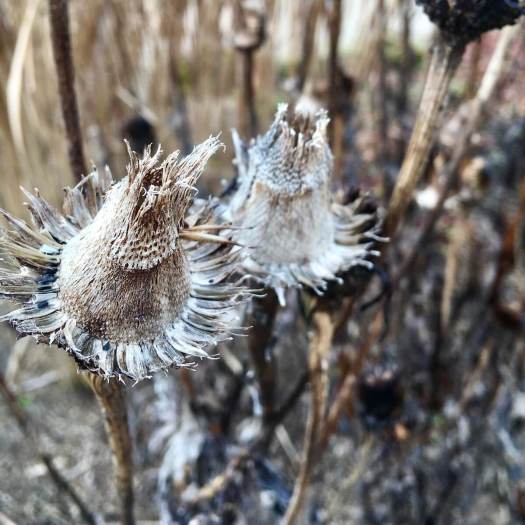
By not cutting back the plants, the garden can provide shelter for insects and food for birds during the coldest months. The lines and textures provide plenty of interest for humans too.
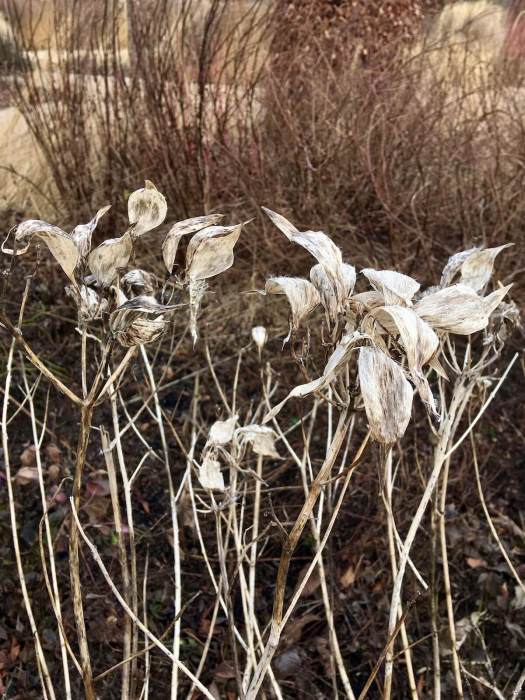
I doubt that this style of planting is as low maintenance as it looks: gardeners were working in the garden artfully tending the dead stems.
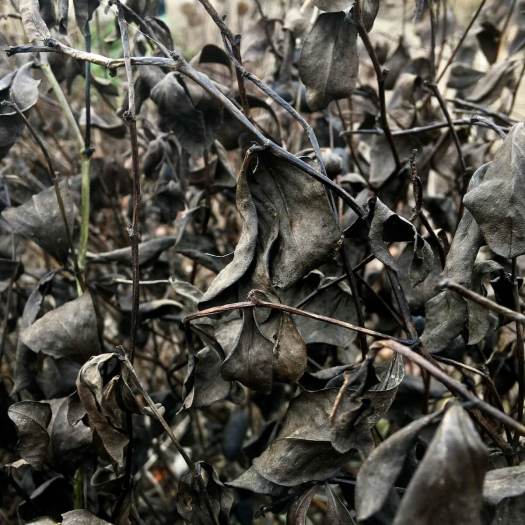
The plants chosen are overwhelmingly North American natives which jostle amicably with each other for space.
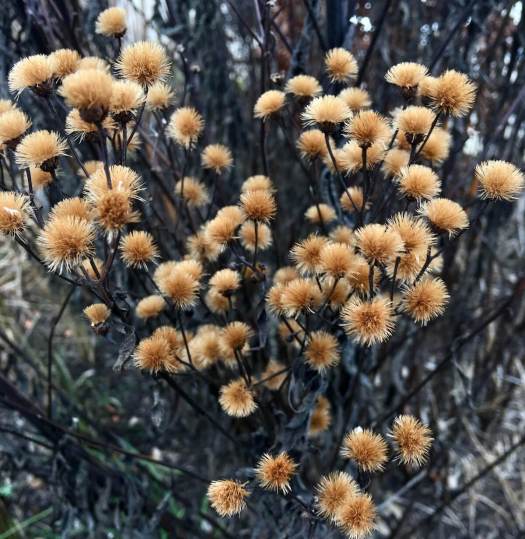
Few concessions are made to January visitors in the form of flowering plants so the eye quickly gets accustomed to comparing and contrasting shades of brown.
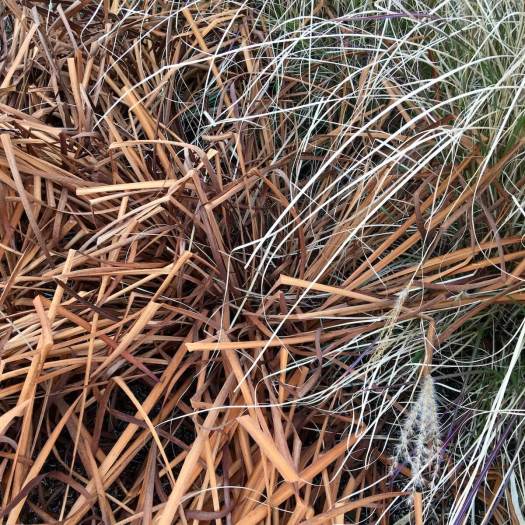
After half an hour, I smiled to see my sweetheart enthusiastically dart towards a patch of iris foliage exclaiming, “That’s a pretty brown!”
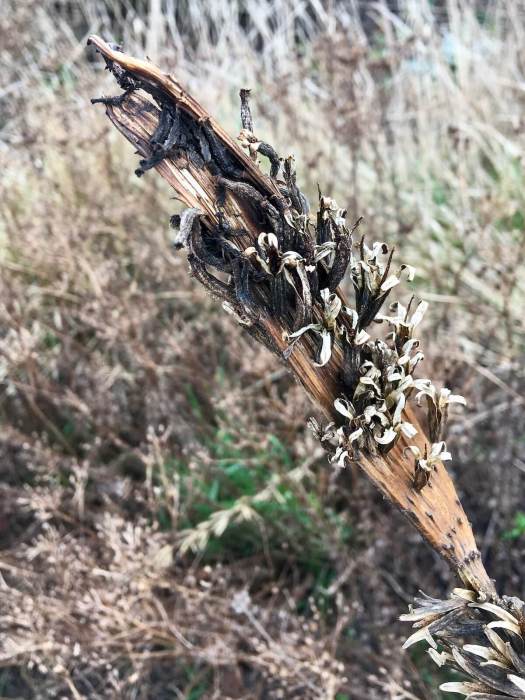
The walled garden has a calm, reflective atmosphere in summer when it is packed with flowers and allowing the plants’ foliage and seed heads to stand helps the mood persist into the winter.
It must be a treat for staff to watch the sun rise or set there in fine weather for even on a dull winter day at noon there was a quiet sense of glory.
 Susan Rushton
I’m glad that the idea of a dried winter garden is catching on. I prefer looking at that rather than a plain flat look. I was out walking yesterday, admiring a field of rushes, dried grass, yarrow and asters. The wind had etched lines in curves around the grasses, so beautiful, esp. in the low light.
A perennial border can look a bit nothingy with everything cut back – ‘plain flat look’ describes it well. The scene you describe sounds wonderful. I hope you got a picture or two.
I love a winter garden. It has an ethereal beauty all its own, as your pictures show.
I like them too. This are has more the feel of a garden in winter than a winter garden if that makes sense. They haven’t gone big on the usual plants that provide flowers in winter, other than in the plant centre, of course. January is a tricky month and no doubt that will come.
I’m with Margaret21, above: “ethereal” is the word. There is real beauty in these images. I like the notion of their “jostling amicably”; one could almost imagine that they take pride in their overall presentation. Your comment about how the eye adjusts to shades of brown is most interesting; I hadn’t thought of that.
I’m interested in natural companionability in plants – the ones you always see growing together on a stone wall or on a wild patch of land. Rosebay willow herb, white bindweed, nettles and blackberries, for example. They clearly get along.
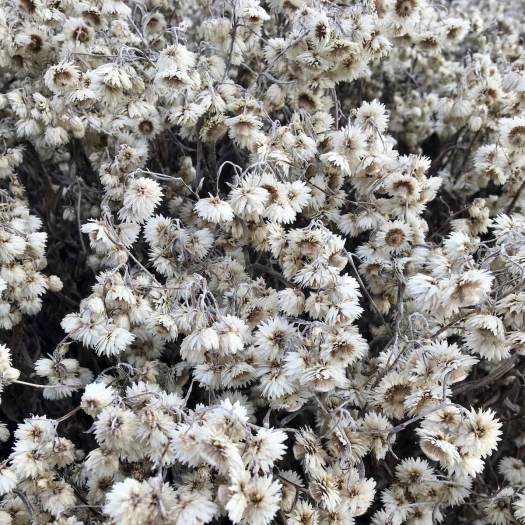
Love this photo display of the wintry beauty of plant life. The sepia brightness of the Ironweed is softly alluring. ❤
Some browns do stand out more than others and these were striking against the dark foliage.
I, too, love uncut gardens in the winter, and “ethereal” is the perfect description of the plants in your photos. I no longer cut my gardens back in the fall, and truly clean up is no worse in the spring. Everything is easy to pick up.
It is usually much lighter by then – part way to compost. It’s a big area to clear though when they decide to make a start.
Beautiful and natural!
Thanks, Tiffany.
Brown is the perfect colour for January and seed heads are always wonderful to see and photograph. Bridgewater looks like a marvellous garden.
The whole garden is a WIP but the walled garden has clearly been prioritised. It has been tricky times to open a major garden as you were saying recently.
I’m not keen at all on winter gardens left uncut, most colours are dull and drab and dead plants and flowers just look a mess. I do like your last photo though and the ironweed looks quite pretty 🙂
Those of us who get out into the countryside see plenty of artistic decay on our walks. I still found it interesting with all the different seed heads.
I love this, thank you for this one. I’m so fascinated by the colder, winter, hibernating months, and find the plant life equally dynamic and incredible to those in the spring and summer. You brought my sentiments to life here. Thank u 🥀
My pleasure – I’m glad it resonated with you.
I love this look and the textures and forms that are revealed in the winter. Since our climate is quite cold in the winter, leaving the plant stems up protects the plants as well as providing cover for wildlife. Beautiful photos, Susan!
Excellent point. And thank you!
I don’t like mushy mulchy leaves much, but individual plants like hydrangea can look majestic in their winter state, and grasses and seedheads can be wonderful as the light catches them.
When they go mushy, they are something else. Bluebell leaves are the worst for that.
🤗💟
It’s interesting to see plants in their winter-wear. I never would have recognized the Asclepias, for example. I wonder, too, if certain cultivars do better for this purpose than the native plant: the ironweed, for example. It certainly would take knowledge and experience to know which plants will continue to look as beautiful as these — although the hand of a gardener certainly helps!
The Asclepias had the most artistic decay. The specific varieties will have been very carefully selected. This has been fashionable in the UK for at least a decade, so designers will have had plenty of chance to experiment elsewhere.