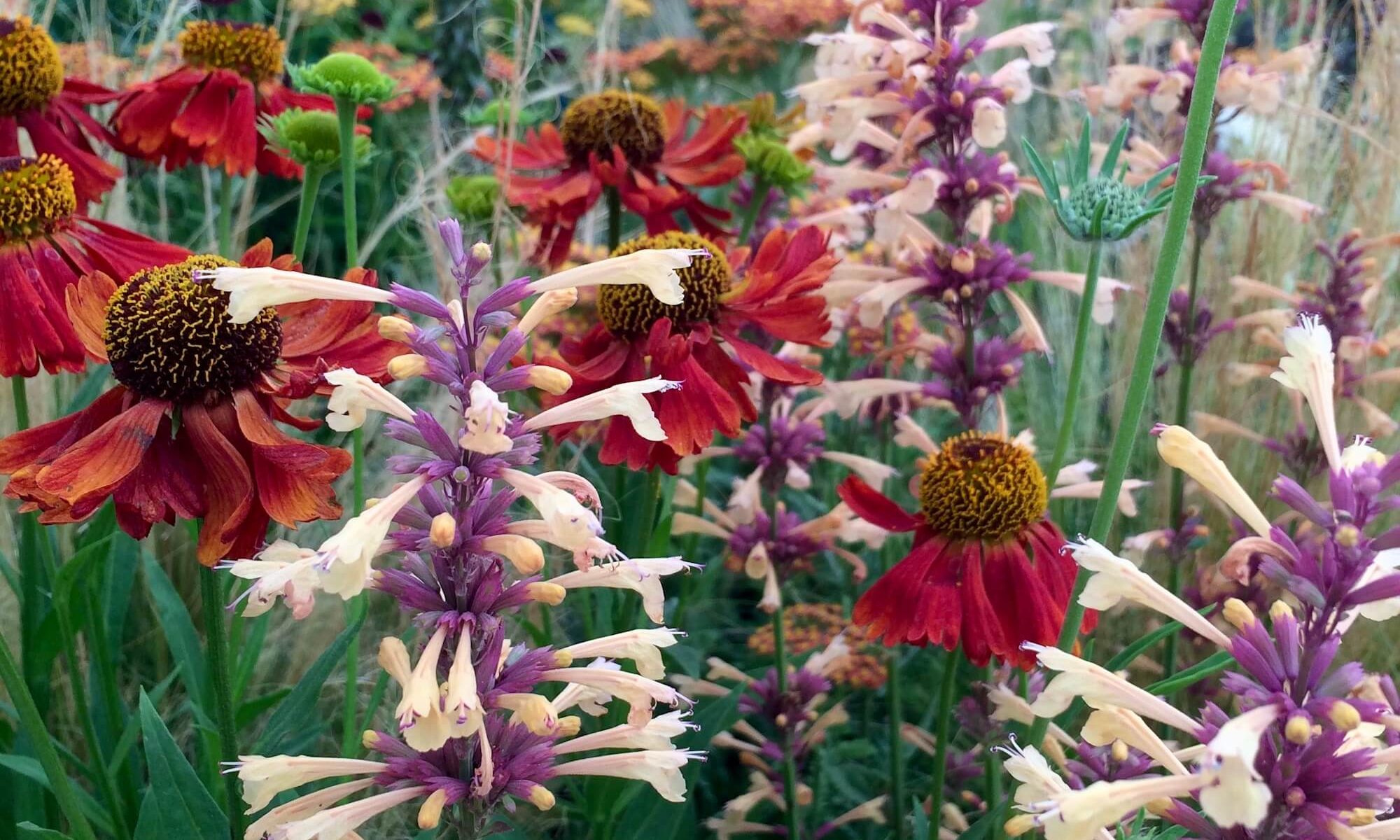

If I suddenly had to survive by foraging alone, though I have some knowledge of plants, I’m not sure I’d last long, especially if the whole of the country was foraging too. While one man’s meat is another man’s poison, anyone with an apple tree would surely be thinking themselves lucky.
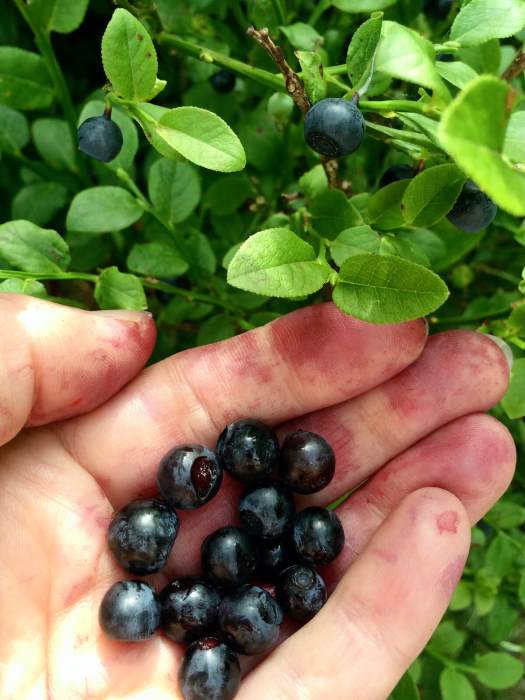
In these days when most people do not forage, our wild moorland berries are an exception. When they ripen, you have to be fast to get much of a look-in. The difference between a fat, sweet berry and a mouth-dryingly sour one is a just week or so, and if you wait too long, semi-professional gleaners will have swept through and stripped the best patches of bushes clean.
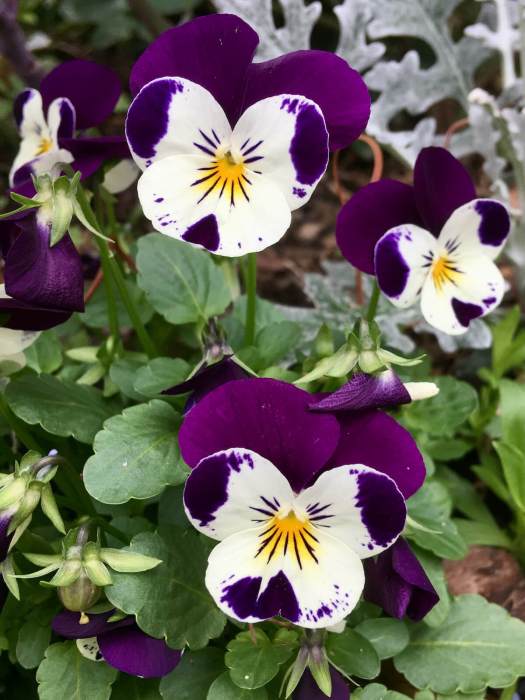
While I will happily help myself to a few berries while out walking, I’ve never been overly keen on eating petals. There’s something unappealing in their texture when chewed. Mind you, if that’s all there was, I’d be heading for the pansies and the roses while giving poisonous delphiniums and foxgloves a wide berth.
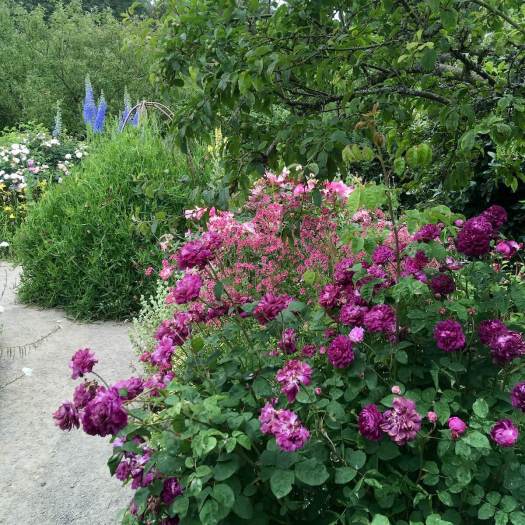
Fifteen years or more ago, I met a man who claimed to have tasted almost every rose in the David Austin Roses gardens: that’s a goodly number of roses. He told me that roses all have different flavours. I imagine their scent is somehow wrapped up with that.
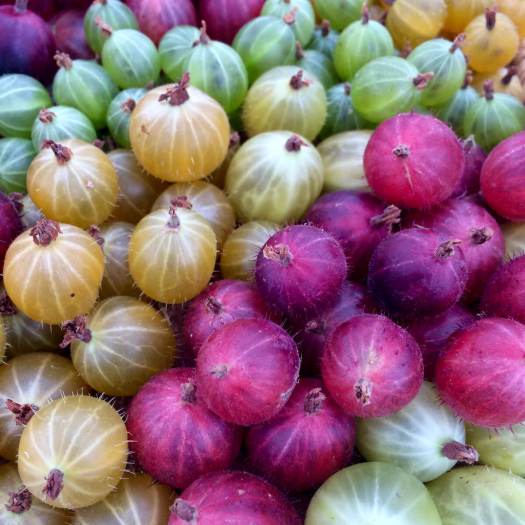
One taste I have yet to acquire is gooseberries, although I was fed them often enough at school. I’d like to like them, but I really don’t. Served in a crumble with plenty of custard they’re not too bad but I’d rather have plums, blackberries or wimberries (given half a chance).
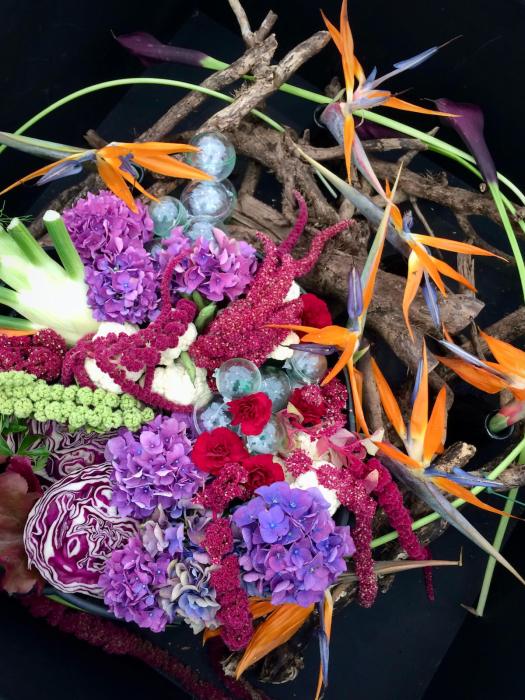
On the other hand, I’m a big fan of pickled red cabbage, which isn’t to all tastes: a potato pie isn’t the same without some.
I’ve often seen seen edibles used in floral designs because of their decorative properties, but it always gives me an initial frisson as if it breaks some taboo. We have fixed ideas of what plants are for.
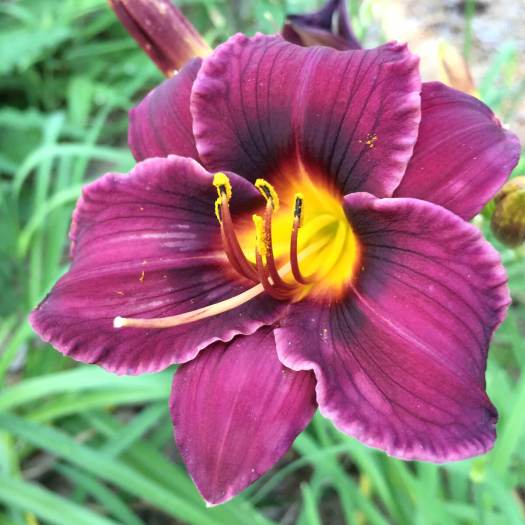
Daylily flowers can be stuffed and eaten in the same way as courgette flowers, but few us have tried it, even though many gardeners grow them in abundance. We have lost confidence in our ability to forage, perhaps rightly so. I can’t imagine a TV cook suggesting we go out into our gardens and gather daylilies when toxic lilies look so similar, particularly to non-gardeners.
Our love of decorative plants has muddied the water. Some of the plants we cultivate could kill us in a few bites.
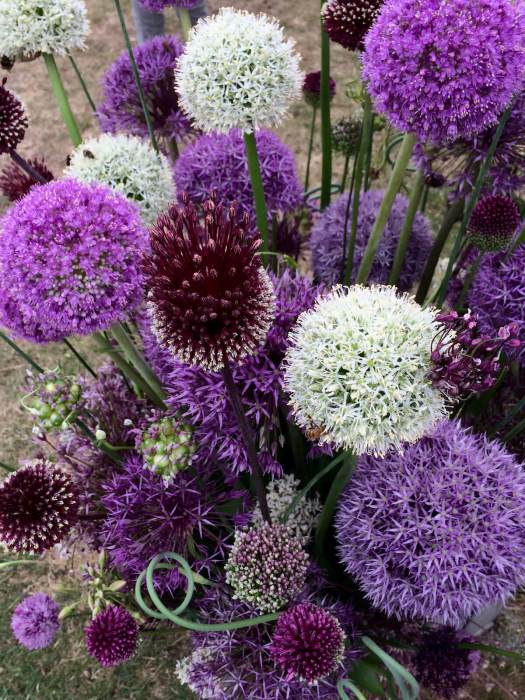
And while all alliums are in theory edible for humans, they don’t all taste good and they are toxic for cats and dogs. It would not occur to most of us to eat fancy alliums, but I wonder how many of us have fed our dogs ‘ordinary’ onions mixed in with scraps of left-over meat?
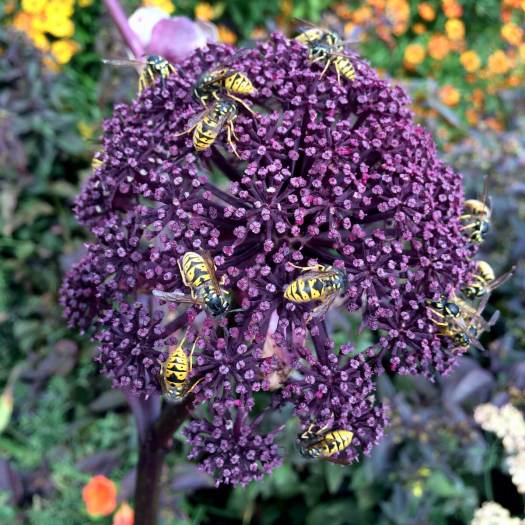
While one species of a plant might be widely eaten, others are only used for herbal properties. Angelica gigas is not the one that has edible stalks, but it does have medicinal uses. I’m classifying it as edible for pollinators as these were foraging so gleefully in a garden filled with flowers competing for their attention.
In ‘Weeds’, Richard Mabey writes that an Iron Age man preserved in a bog near Tollund was found to have 63 varieties of seed in his stomach from his last meal, a form of winter gruel. Today expensive government campaigns try to persuade us to eat a more varied diet containing five different types of fruits and vegetables per day. Our hunter-gatherer forebears would wonder how edible plants have become such a tricky proposition.
Prompted by HeyJude’s request for purple edibles.
 Susan Rushton
I enjoyed this look at edible plants and foraging. I would not trust myself to forage for food because my knowledge of what I can and can’t eat in the wild is pretty slim. Apparently my knowledge of the flower garden is also slim. I had no idea daylilies are edible. I have some type of sage in my flower garden that smells like the herb I cook with, but since I didn’t save the tag that explains how to grow it and whether or not it’s edible, I’ve not taken a chance on it. Oh well, I do enjoy the scent of it when I’m out in the garden. 🙂
A blogger wrote about eating a particular kind of fern the other day, and said they were tasty, but you had to be careful not to get the wrong type. Plant identification is not always straightforward and there’s a lot of inaccurate information online, so you’re wise to be wary.
Amazing gooseberry colours
I sometimes wonder why we typically only eat particular colours of fruit and vegetables even when several exist. Is it because yellow and purple carrots or tomatoes don’t taste as good or are more tricky to grow or do they not look as appetising? I once had some purple peas and they were delicious.
I did try growing yellow beans once and felt they look anemic so never grew them again. I do grow purple ones though, though on cooking they do turn dark green
Have you ever tried Juneberries, also called Serviceberries or Saskatoons. They are quite sweet and tasty, though we leave ours for the birds. We also have 2 kinds of wild currant, they are quite sour. As teenagers Judy and her brother tried to follow Euell Gibbons by roasting acorns. It was not a success. I definitely lack confidence in my own foraging ability, though might be willing to trust someone with the appropriate experience.
There is a company growing Juneberries in Worcestershire, but I haven’t seen them, never mind tasted them.
I used to be thought unusual for the amount of foraging I did – though really it wasn’t much at all. Now of course I’ve long been left behind by the New Vanguard. Still, if you find any wild gooseberries (and I do sometimes – garden escapes I suppose?) send them along please,
We have a cafe that specialises in non-alcoholic drinks that have been created from foraging. he does brilliant videos