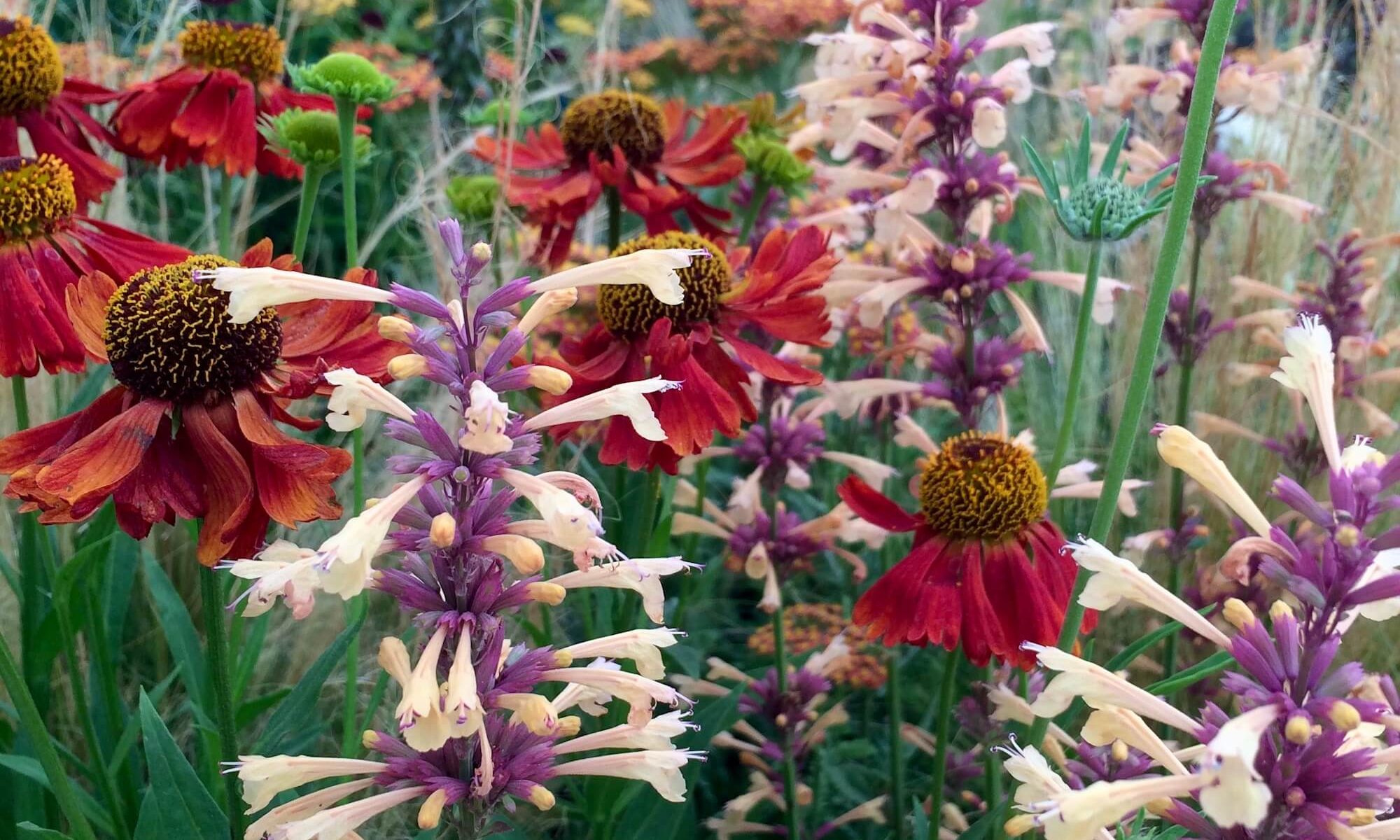

If I suddenly had to survive by foraging alone, though I have some knowledge of plants, I’m not sure I’d last long, especially if the whole of the country was foraging too. While one man’s meat is another man’s poison, anyone with an apple tree would surely be thinking themselves lucky.
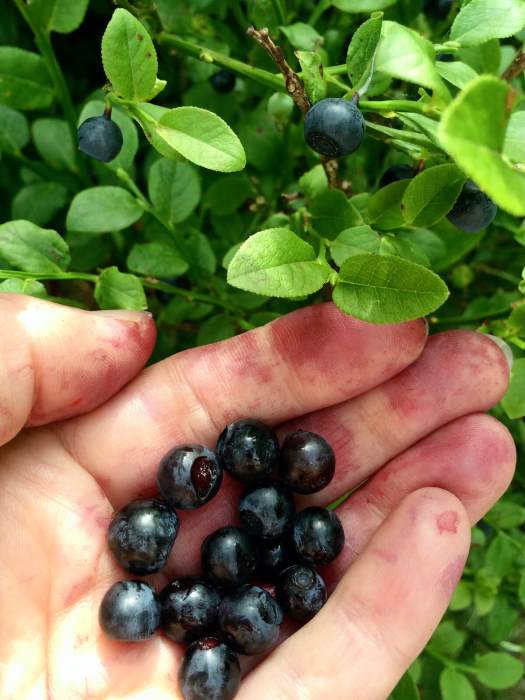
In these days when most people do not forage, our wild moorland berries are an exception. When they ripen, you have to be fast to get much of a look-in. The difference between a fat, sweet berry and a mouth-dryingly sour one is a just week or so, and if you wait too long, semi-professional gleaners will have swept through and stripped the best patches of bushes clean.
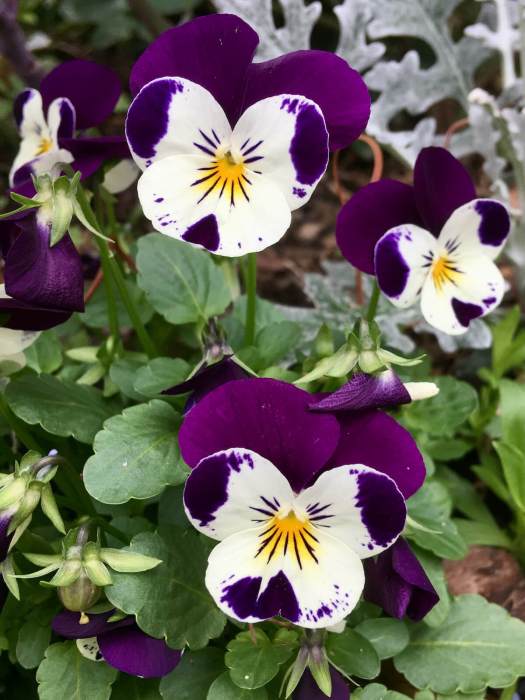
While I will happily help myself to a few berries while out walking, I’ve never been overly keen on eating petals. There’s something unappealing in their texture when chewed. Mind you, if that’s all there was, I’d be heading for the pansies and the roses while giving poisonous delphiniums and foxgloves a wide berth.
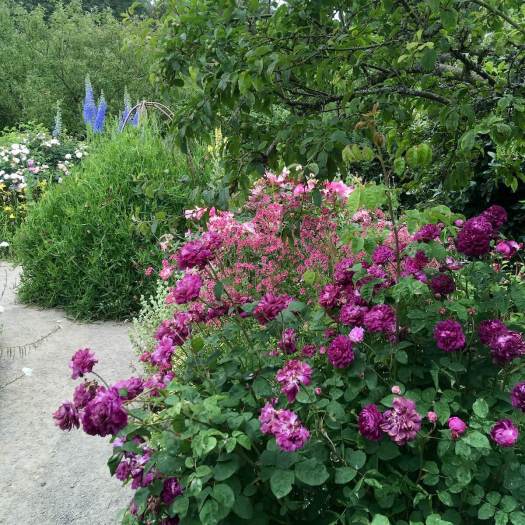
Fifteen years or more ago, I met a man who claimed to have tasted almost every rose in the David Austin Roses gardens: that’s a goodly number of roses. He told me that roses all have different flavours. I imagine their scent is somehow wrapped up with that.
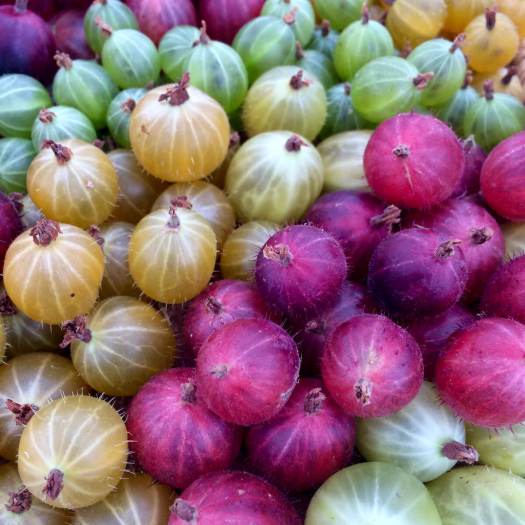
One taste I have yet to acquire is gooseberries, although I was fed them often enough at school. I’d like to like them, but I really don’t. Served in a crumble with plenty of custard they’re not too bad but I’d rather have plums, blackberries or wimberries (given half a chance).
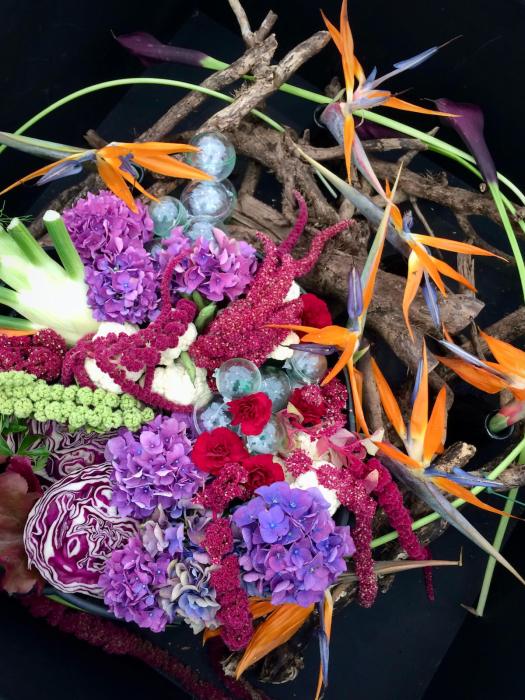
On the other hand, I’m a big fan of pickled red cabbage, which isn’t to all tastes: a potato pie isn’t the same without some.
I’ve often seen seen edibles used in floral designs because of their decorative properties, but it always gives me an initial frisson as if it breaks some taboo. We have fixed ideas of what plants are for.
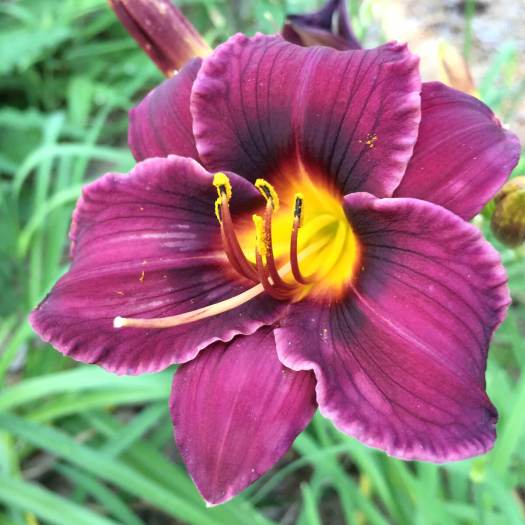
Daylily flowers can be stuffed and eaten in the same way as courgette flowers, but few us have tried it, even though many gardeners grow them in abundance. We have lost confidence in our ability to forage, perhaps rightly so. I can’t imagine a TV cook suggesting we go out into our gardens and gather daylilies when toxic lilies look so similar, particularly to non-gardeners.
Our love of decorative plants has muddied the water. Some of the plants we cultivate could kill us in a few bites.
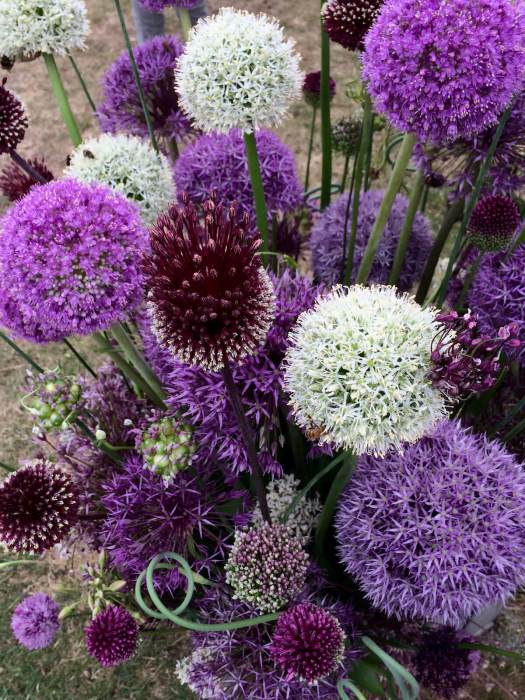
And while all alliums are in theory edible for humans, they don’t all taste good and they are toxic for cats and dogs. It would not occur to most of us to eat fancy alliums, but I wonder how many of us have fed our dogs ‘ordinary’ onions mixed in with scraps of left-over meat?
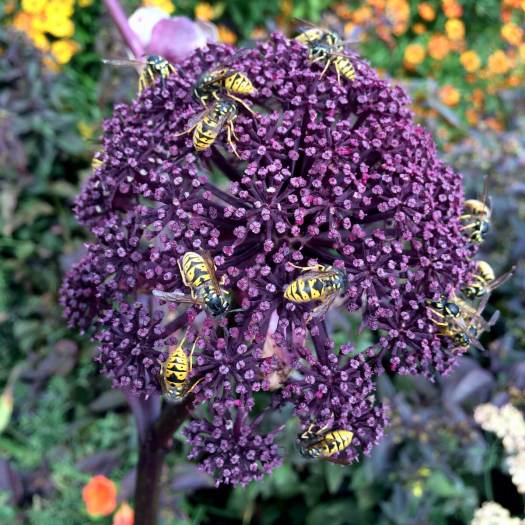
While one species of a plant might be widely eaten, others are only used for herbal properties. Angelica gigas is not the one that has edible stalks, but it does have medicinal uses. I’m classifying it as edible for pollinators as these were foraging so gleefully in a garden filled with flowers competing for their attention.
In ‘Weeds’, Richard Mabey writes that an Iron Age man preserved in a bog near Tollund was found to have 63 varieties of seed in his stomach from his last meal, a form of winter gruel. Today expensive government campaigns try to persuade us to eat a more varied diet containing five different types of fruits and vegetables per day. Our hunter-gatherer forebears would wonder how edible plants have become such a tricky proposition.
Prompted by HeyJude’s request for purple edibles.
 Susan Rushton
Such beautiful images and so deliciously inspiring! I love the gooseberry image the best, but all of them open my heart xoxox
I’m glad you liked them.
I remember picking billberries for pies as a child. I’ve often wondered how closely related dandelion and burdock is to North American root beer.
Very similar.
It takes a lot of picking to get a good pie’s worth. I am not sure about what is in root beer. My sweetheart likes it as a treat with ice cream but I don’t fancy that at all.
We used to try to pick enough billberries for two pies. Root beer with ice cream is called a root beer float if I recall correctly. I’ve never had one and don’t remember the last time I had root beer.
I much prefer ginger beer.
My grandmother had a gooseberry bush in her yard and I remember she did something with the berries, but I don’t know what. Jam maybe? They sure are beautiful.
Or a pie, perhaps?
Excellent post! I, too, am reluctant to eat edible flowers. Heck, I don’t even like to pick them and put them in vases, although there is certainly nothing wrong with this. Nothing like cut flowers to brighten a house. I think my reluctance to eat or pick stems from my extreme love of flowers. I just want them to be where they are, in all their loveliness, for their duration of their bloom.
I have to agree with you Laurie. I prefer my flowers in the garden.
Funny, isn’t it?
Dad never liked picking flowers either. I always think twice. If they last well in the vase, that’s one thing, but if they are fleeting it does seem a shame.
Foraging for food? Oh, I’d be so up a creek! But a feast for my eyes? Oh, yes, I could do that, especially with these photos. Pansies really know how to do purple. I’d never heard of or seen a purple apple — it looks as though it really wants to be a plum. But all the purple edibles here are enticing. And now I must google potato pie with pickled red cabbage.
The apple looked a bit pear-like to me, although pears are only rarely purple. I wonder if we miss out by having such firm colour associations with fruit and vegetables, or whether we have good reasons for it.
I never wondered why I look for certain colors in fruits and vegetables, but now I will wonder.
I haven’t heard of wimberries. And the goosegogs are fabulous. I love gooseberry ice cream/sorbet whenever I can find it. A true feast for the eyes this post Susan. Thank you 😊
Wimberries is what I’ve always known our local wild moorland berries by. You might think of them as bilberries or whortleberries. There are hundreds of species of Vaccinium and they hybridise freely, so putting a finger on exactly what they are would be a challenge.
I’m with you on the gooseberries!
I’d even rather have rhubarb crumble.
Ooh that’s a tough one, but think you’d be right as guess in the crumble I could eat the top!
Nature gives us a lot more than what we find in the supermarket !
It’s scary how much dependence we have on a relatively narrow range of plants.
It’s a minefield, it seems. Those purple apples are pretty, though I’ve never seen one before. Ordinary ones gripe my stomach, unless they’re cooked 🙂 🙂 Rhubarb?
Do they? I thought apples were supposed to be a cure for everything! I only like Jazz apples, or at least of the ones I can get, I like those best.
I love this post Susan. Your photos are beautiful, and the subject of foraging one I’m increasingly interested in. I recently met a chap whose main living now comes from foraging; he has council licenses, etc and sells to restaurants as well as at the sunday market. Apparently artisan gin makers are huge buyers of foraged plants!
I can imagine. It’s something I feel I ought to know more about. I tend to remember where I have seen a particular plant and often imagine that taps into instincts from long ago.
Fun post, Susan. Like you, I’d probably starve if I depended on foraging. 😉
The man that tasted all the David Austin roses is rather brave… aren’t roses often sprayed with fungicides and pesticides? Not too many organically grown roses these days!
I had the same thought!
I’d probably starve if I had to forage for my food, but in theory, I’ve done sufficient plant identification in my Herbal Medicine course in the early 1990s. I never knew so many plants could be used for medicines until that course.
I’ve also done a plant (aka weed?) identification course many many years ago in conjunction with that herbal medicine course.
I’ve forgotten most of what I learned though. My knowledge is pretty much restricted to common culinary herbs these days. It’s so easy to mix up plant identification with similar berries being poisonous. I buy my herbal teas in a box, although have used my mint and lemon balm plants for hot drinks.
I think you’ve got to be very experienced to cut wild Funghi for cooking, let alone gather berries in hedgerows.
I have a big herbal book but I have never felt able to use anything in it. It’s not just getting the plant identification right, but also the dosage and knowing exactly how it will affect the human body. I buy herbal teas but I try not to overdo it and to mix them up a bit rather than drink a lot of one thing. For example, camomile is supposed to be soothing but if I drink it more than every few days, it makes me feel woozy.
Having studied herbal medicine back in the ‘1990s, I think I’ve learned the basics and that……is not to get cocky because I’ve done the basics.
Your should never have more than 4 cups of the same herbal tea per day.
In Aromatherapy for example, you use small does for mental complaints and more for physical problems (like a sprained ankle).
My first bath using Marjoram essential oil was fantastic for a good night’s sleep, so I used twice as much in my bath the next night and had terrible nightmares LOL 😀
I drank Chamomile for some 30 years and wasn’t actually sure that it was helping to keep me calm when working, but once I stopped drinking that particular herb, I was surprised how irritable I felt. Other than sticking to the ‘no more than 4 cups a day’ of a particular herb rule, it’s always good to remember that what is one man’s cure is another man’s poison. I had about 20 herbals of various kinds and the same number on Aromatherapy, but I’ve re-homed most books now that my eyesight and concentration is poor.
You’re doing the right thing by using a mixture of herbal teas.