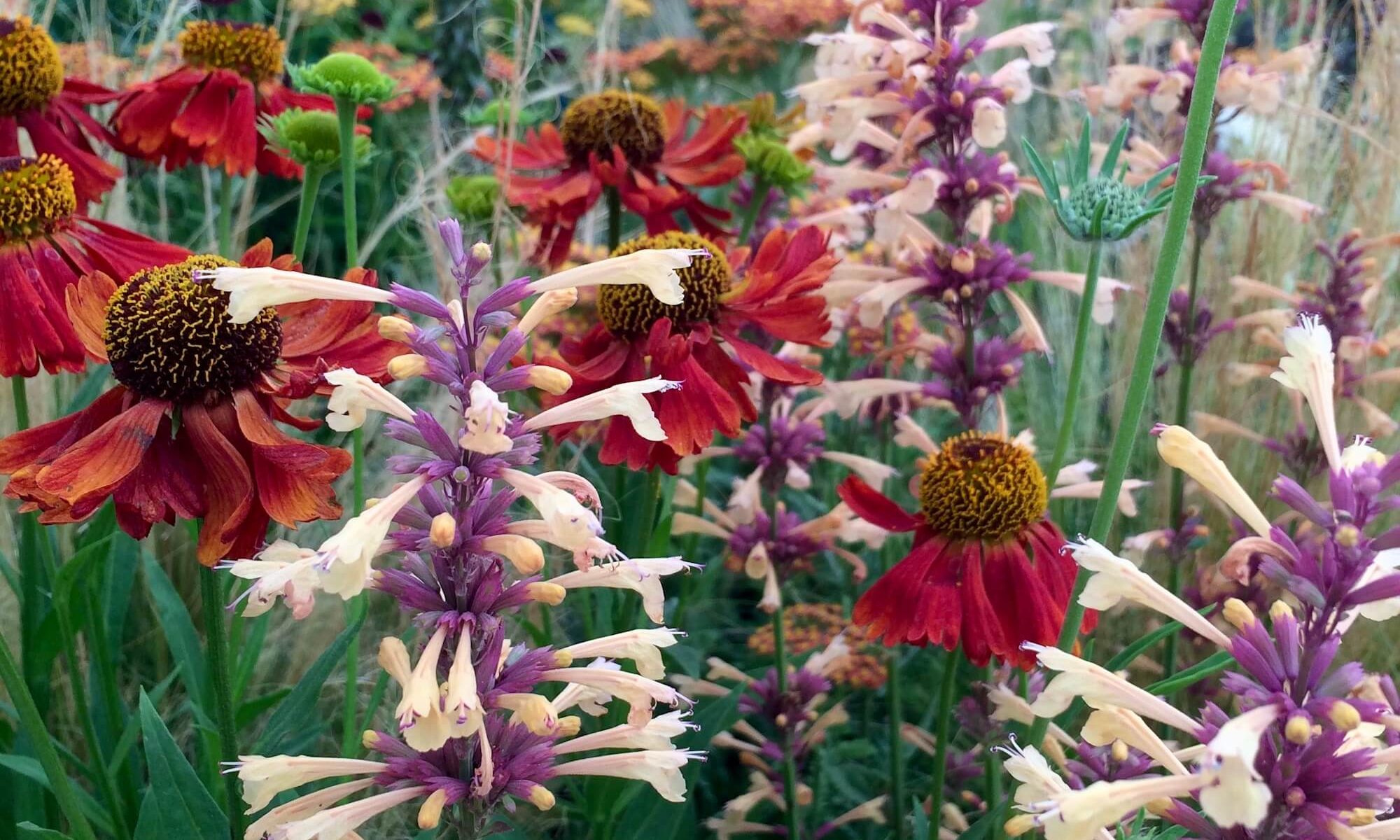

I always leave Hidcote wishing that it was pretty much on my doorstep: I’d love to visit more often so I could watch this oversized, hundred year old cottage garden move gracefully from season to season.
It’s a little ironic that one of the archetypal English gardens was created by an American, Lawrence Johnston, his influence extending to the neighbouring Kiftsgate Court which would also make my top twenty English gardens list. Johnston had absorbed many ideas from the designers and influencers of his time and had the resources to make his grand dream real.
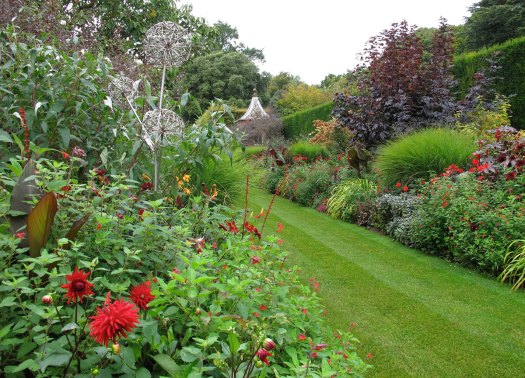
Today his house and garden is maintained by the National Trust. It’s far from easy to keep the classic, long and deep, twin herbaceous borders you’ll find at many of the best English gardens in good condition: adding colour constraints can only create more of a challenge. As you can see, it was very well maintained when we visited in summer 2014 when these pictures were taken.
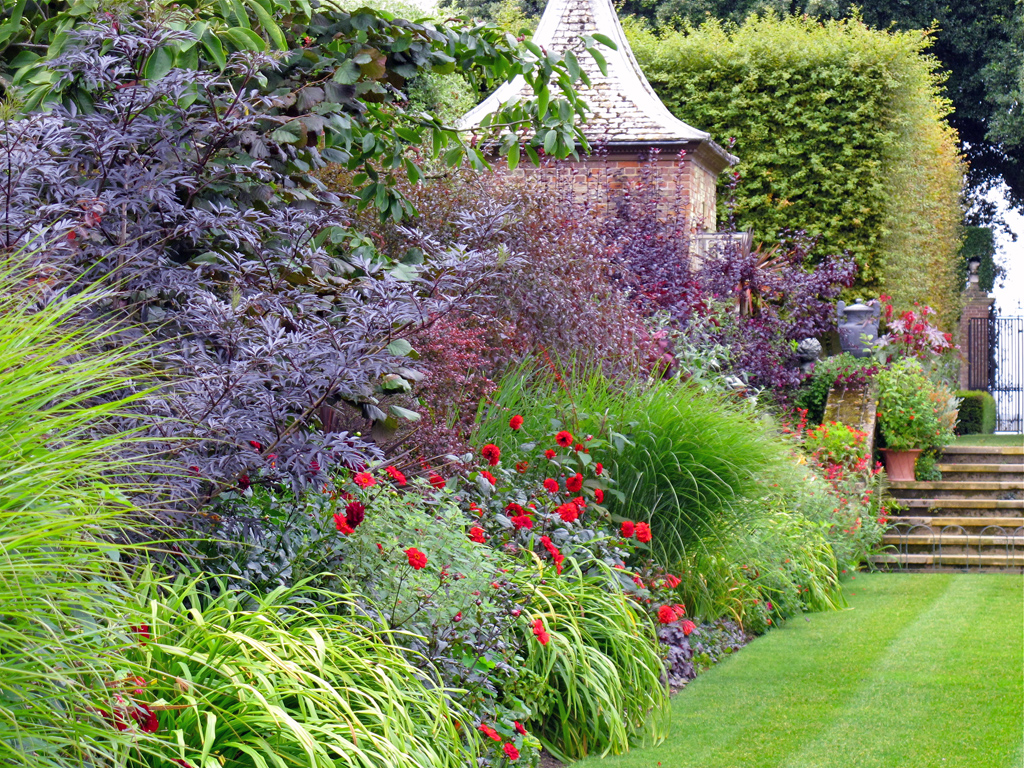
Hidcote’s white moon garden may have been eclipsed by the one created by his contemporary Vita Sackville-West at Sissinghurst, but his hot, red double border continues to melt the hearts of gardeners. My garden writer friend Sandy Felton loves it with a passion – you can enjoy her wit and wisdom through the popular online magazine Reckless Gardener.
It’s a minor disappointment that you can’t walk down Hidcote’s famous red border: you have to peer in from the ends. I suppose it helps keep the grass in good condition.
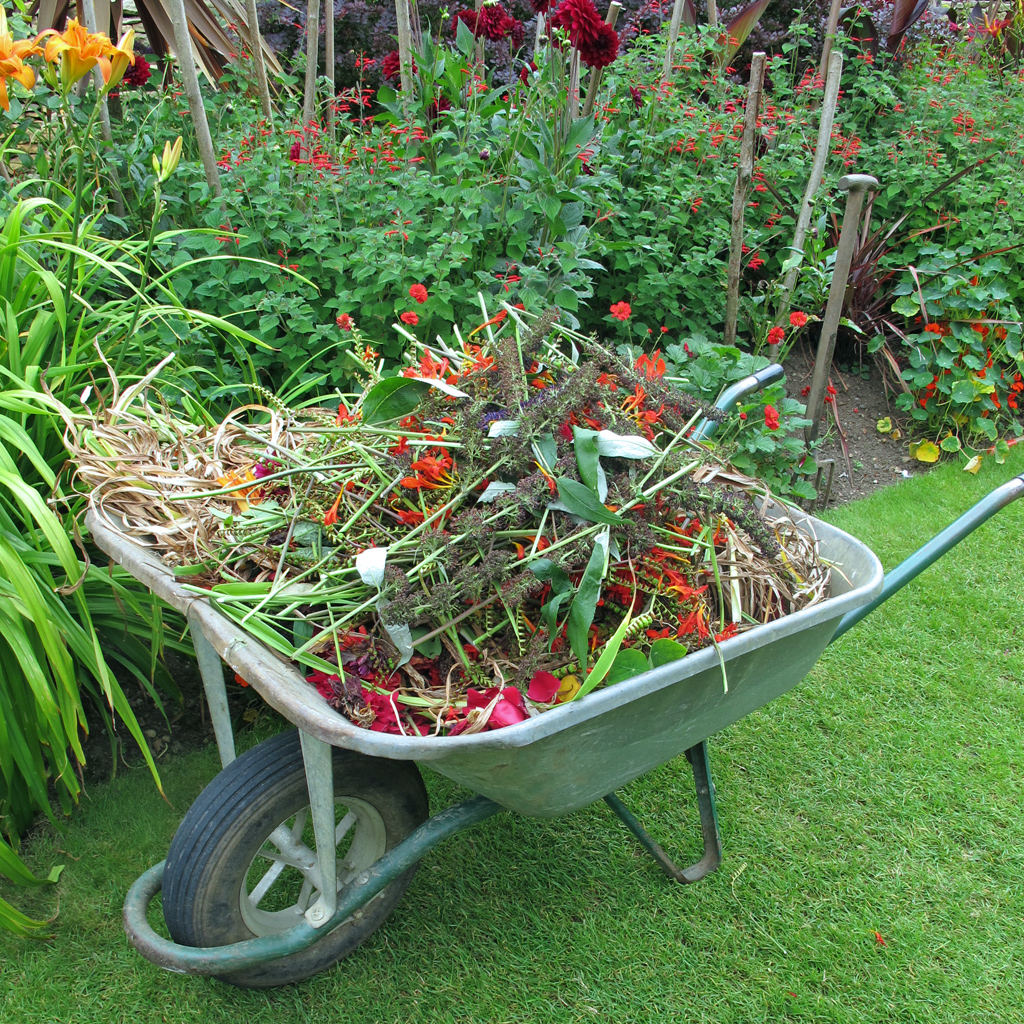 Expect to find a picturesque wheelbarrow parked part way down piled high with dead-headed flowers and garden debris. Even if the barrow’s been relieved from duty, it can be a challenge to get a clear picture without also capturing the visitors taking it in turns to gaze devoutly from each end into the long, densely planted twin borders. It always reminds me of being in a crowded National Gallery some years ago, queuing to take a look at Van Gogh’s Sunflowers painting.
But it’s worth it. The stars of the show include dahlias, cannas, salvias and verbena ‘Lawrence Johnston’ performing against a rich backdrop of green, purple and burgundy foliage. Many of the flowers are annuals and the dahlias have to be lifted and replanted, so the red borders are reinvented each year.

I’ve read that the colour scheme of the original planting was inspired by the various shades of red in the folds of a musician’s dress in another painting, Madame Suggia by Augustus John and that this picture is still used as a reference today when selecting cultivars. The timing seems plausible, but some creative license has been used if the story is true.
The red border is just one of the many gardening rooms and vistas at Hidcote, each with a different theme or style. So far as I can remember it’s the only one where access is restricted.
For me, this is an English garden most garden-lovers will enjoy, situated as it is in the heart of England, nestled in amongst the picturesque villages and hamlets of the Cotswolds.
A few more links
Check out another red border, at Coton Manor.
The Dress: Madame Suggia by Augustus John is reputed to have provided the red border’s colour theme.
And finally my post showing a close up of the sculpted head of Ariel at the top of the steps leading down to the red border.
 Susan Rushton
Beautiful gardens
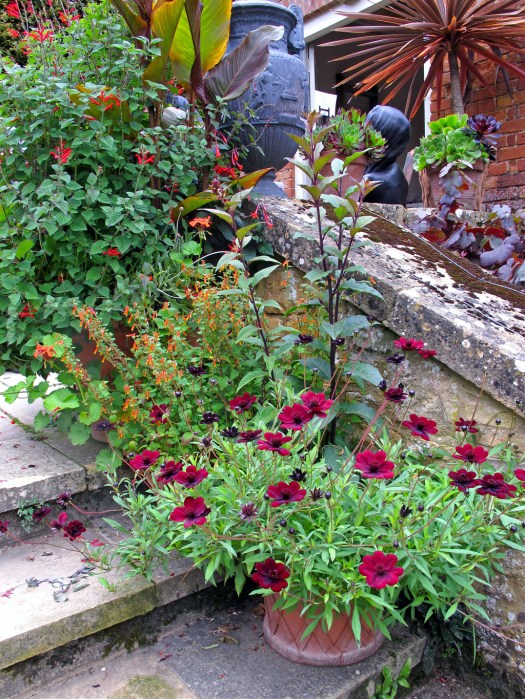
Such vivid color Susan. I’m wondering what is the flower in first picture, right border center, there are three of them? Are they an allium?
Yes – metal ones! The garden has garden art scattered through it..
A bit disappointed knowing I can’t grow them. But still, they def add something whimsical to the garden 🙂
You could grow some real ones, wait for them to fade in the winter, then spray paint them silver!
Ah, you’re clever. I do love the real ones as well. 🙂 Thanks for the fun idea!
I have seen them sprayed with car spray paint in turquoise which looked amazing!
Bear with me…does it preserve them? This is temporary art, the spraypainting flowers? Car paint seems very durable, so just wondering 🙂
I spoke to the chap who had sprayed them and apparently they do last, how long for I don’t know, but it protects them from the rain. Worth trying I think.
Sounds like a bit of fun alright, the kiddos would love it 🙂 Imagine sunflowers? hmm…
I love Hidcote too, and Kiftsgate, so totally agree with you. We could walk along the red border though. I have a post you may enjoy, also one on Kiftsgate if you do a search. https://smallbluegreenflowers.wordpress.com/2013/12/11/hidcote-manor/
Oh, and Pashley Manor garden (Kent) has a beautiful red border!
I visited Hidcote mamy years ago and it chucked it down with rain. I eventually gave up peering out from under my umbrella. I think I must go back now!
It rained a little when I was there too – that’s the British summer for you!
Thank you for your summer visit. My recent visit was in the autumn and the view was so different. It is my one and only visit so far although I do plan to go back 🙂
You have an amazing blog.
Neighbors stop by to tell me what a brilliant gardener I am. Then I look at this well thought out post with the excellent links and realize when it comes down to it I have no idea what I’m doing. I loved the seasonal color photos from Coton Manor (THAT was what made me realize I am simply playing in dirt.). I especially liked the link to the red dress. The interactive link is still loading and I may have to close some other windows before giving it a try.
This is a great post. I am leaving the page richer for having stopped in. Thank you.
Thanks for such a kind comment. I appreciate it. It sounds as if you have a wonderful garden! I spend far more time these days enjoying gardens and taking pictures in them than I do actually growing things.
You have a wonderful garden.
It isn’t mine, but it is wonderful. 🙂
Hidcote is one of England’s most famous gardens.
The real influence with Lawrence Johnston was Thomas Mawson’s book (1900), which LJ followed exactly for the garden rooms and reflective pools at Hidcote. Also Nora Lindsay, for the planting, she was involved in styling many gardens belonging to the aristocracy, including the Duke of Windsor.
Thanks for your comment, Brian. Interesting to see that you credit Hidcote and Little Dexter as influences for your own garden in turn.