From The Alpine House at Harlow Carr Gardens: Ten Tiny Treasures

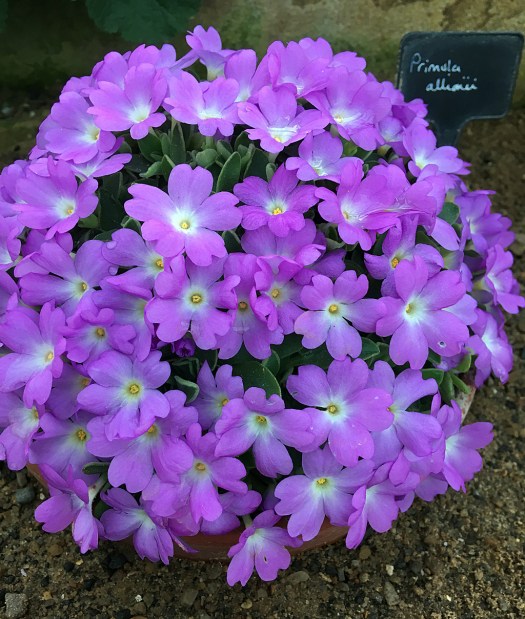
A small primula covered in a mound of flowers
Primula allionii

The northernmost of the Royal Horticultural Society’s gardens, Harlow Carr, has so much to see that most repeat visitors must feel torn about where to go first. Not me – the Alpine House draws me in like a magnet. It’s show time there, whatever stage of the year. The gardeners tend a stock of plants behind the scenes, picking out tiny treasures when they are at, or around, their best for their turn in the Alpine house spotlight. This week our treats included several primulas, some flowering so madly that their leaves were hidden, others wearing their leaves with pride.
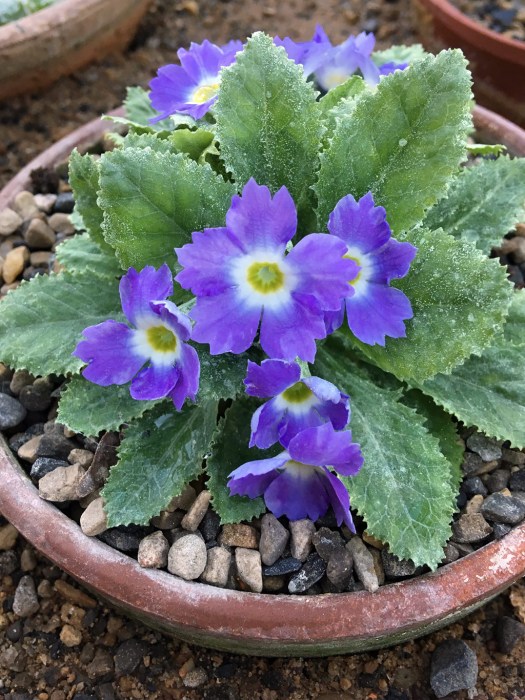
Lavender coloured primula with toothed, mealy leaves
Primula ‘Tantallon’

Some of the plants in the Alpine greenhouse are inside because they need protection from cold, wind or rain; others would grow outside just fine. Common species plants are treated as carefully as rare or special cultivars, all raised up on broad, sweeping benches so we can admire them at close quarters. Plants are grown in traditional clay pots, sunk into a mixture of sand and sharp grit to help keep the roots cool and stop them drying out too quickly. Continue reading “From The Alpine House at Harlow Carr Gardens: Ten Tiny Treasures”
In Praise Of Winter Gardens, Plus A Tip Or Two

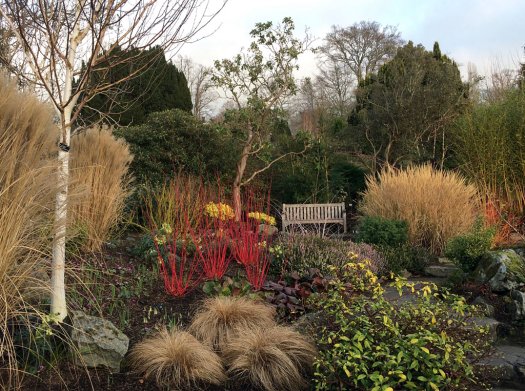
Wooden bench amongst winter plants and grasses
Bodnant Garden’s colourful winter garden

I’m a big fan of winter gardens that make the most of plants that look good when herbaceous borders are expanses of mulch-covered dirt. Trees with white trunks such as this Betula utilis var jacquemontii (Himalayan birch) often feature, together with evergreens, light-reflecting grasses, red stemmed Cornus (dogwood), Skimmia, Hamamelis (witch hazel), flowering heather, hellebores, Bergenia, Cyclamen and winter flowering bulbs.

Plants like this seem to shrug off winter weather, but the current cold spell means that the hardiness of plants of all types is being tested in many UK and American gardens.

Some gardeners go to great lengths to keep tender plants alive, wrapping their pots up, covering them with some form of plant blanket, or moving them indoors. Others will only plant what grows. Many of us are somewhere in-between, willing to offer our plant treasures a helping hand if conditions are unusually bad, provided we know what to do.

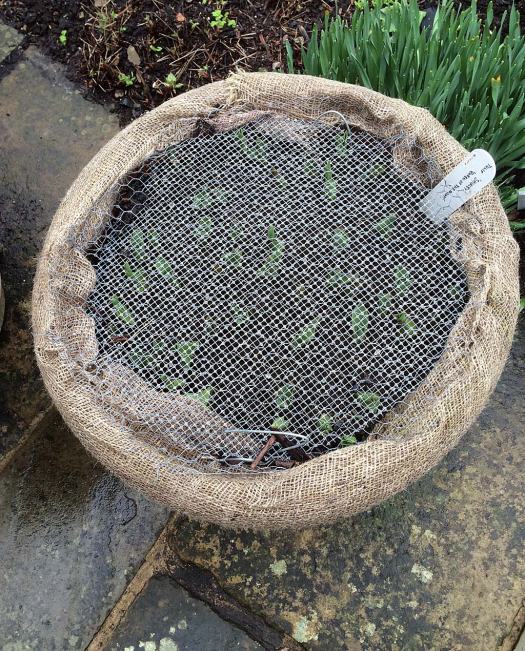
Overhead view of a pot protected from the frost
A pot of bulbs wrapped in burlap, with a double layer of netting to deter squirrels

Continue reading “In Praise Of Winter Gardens, Plus A Tip Or Two”

Howick Hall’s Sensory Garden

A bench in an abundant flower garden
A bench tempts the visitor to linger and enjoy a visual feast of flowers

What makes a sensory garden different to any other garden? We can expect the boundaries to be pushed, as they are in Howick Hall’s new sensory garden. Starting, as in any garden, with the soothing power of green, contrasting textures and colours are layered on to stimulate us.

Silvery heart-shaped leaves, grasses and hydrangeas
Silver brunnera leaves with dwarf hydrangea and golden Japanese hakone

We respond with an instinctive head-turn as we half-spot a flash of wings between rustling leaves. Our thumbs and forefingers are stained and scented from crushing a rosemary leaf, just one of many fragrant plants around us. We tune in to sounds – water splashing, birdsong and the blunt music of windchimes.  Continue reading “Howick Hall’s Sensory Garden”

Crocosmia masoniorum ‘Rowallane Yellow’ AGM

Crocosmia with rich yellow flowerss

Many of the plants that most catch my eye have something majestic about them. In this case it’s the rich yellow flowers held horizontally along single-sided stems that taper down in a showy arc. Each individual floret is unmistakably a lily with its stamens and stigmas flung out in invocation. Buds tier beneath, patiently await their turn in the spotlight.  Continue reading “Crocosmia masoniorum ‘Rowallane Yellow’ AGM”

Toad-Lily With Grasses And Nicotiana

Tricyrtis flowers and buds with grasses

High up on my photogenic flowers list comes tricyrtis, also known by the folk name toad-lily. This one is all the more picturesque for the curtain of grasses and backdrop of nicotiana (those pale, drooping, trumpet-like flowers).

Layered symmetry is a big part of a toad-lily’s charm. Looking down at the main flower, beneath three forked tongues joined triskelion-style, you’ll find a ring of legs with shoes that appear to be dancing. Well, they might if, like me, you’ve been keeping up with this year’s Strictly. The three narrow petals have a delicate smattering of freckles and are positioned between three darker sepals, their ends curling back. The yellow splotches (almost hearts, if you squint enough) give this particular form a sunny glow.  Continue reading “Toad-Lily With Grasses And Nicotiana”

Fingers Burnt By Plants (Or Is It The Plants Getting Burnt?)

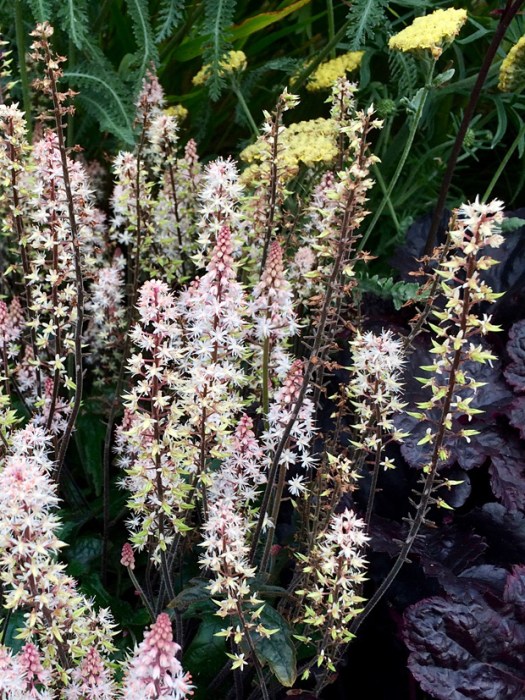
Tiarella flowers
Tiarella flowers setting the trends at the RHS Tatton Park Flower Show

Love isn’t always requited between humans & plants, but we shouldn’t allow the lamentable failure of a relationship to thrive to put us off one type of plant entirely. Easy to say, but harder to venture a tender heart the second time around.

I was first acquainted with a brownish heuchera that lived in a hanging basket in an out of the way place, seemingly never watered. Most of the soil had fallen out and only a spindly root system prevented the heuchera from going the same way. The plant never looked great, but you had to respect its toughness. I can’t claim to have fallen in love; at best we were on nodding terms.

Contrasting brown, green and purple leaves covered in raindrops
Heucherella ‘Redstone Falls’ with contrasting varieties

Inspired by that one, I went on to grow several heucheras, tiarellas and their hybrid, heucherellas, using their mounds of patterned leaves as ground cover. They really are plants you can paint land with, in England, at least. Unsurprisingly, I found myself getting fond of them.  Continue reading “Fingers Burnt By Plants (Or Is It The Plants Getting Burnt?)”