A layer cake of flowers: tulips, daffodils and blossom
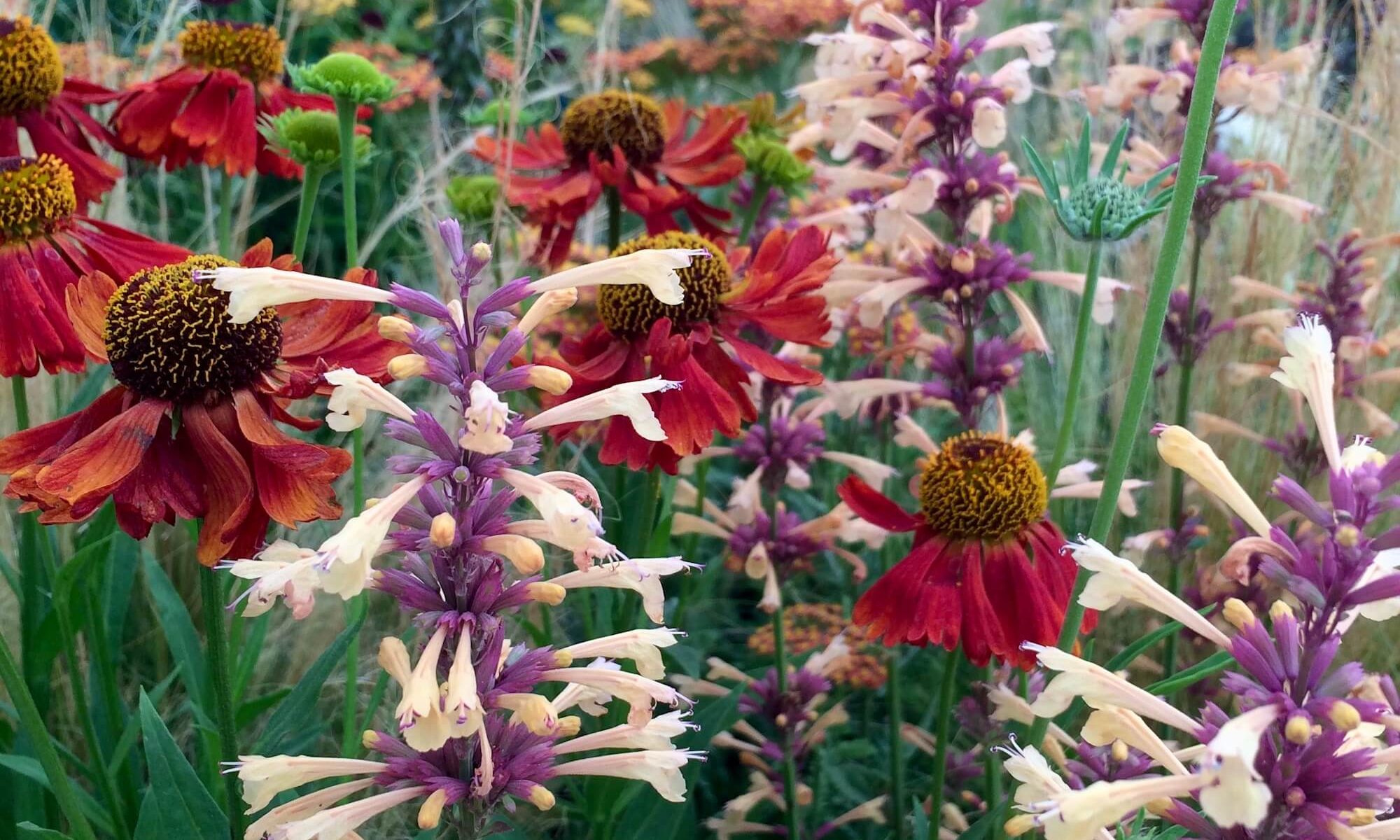
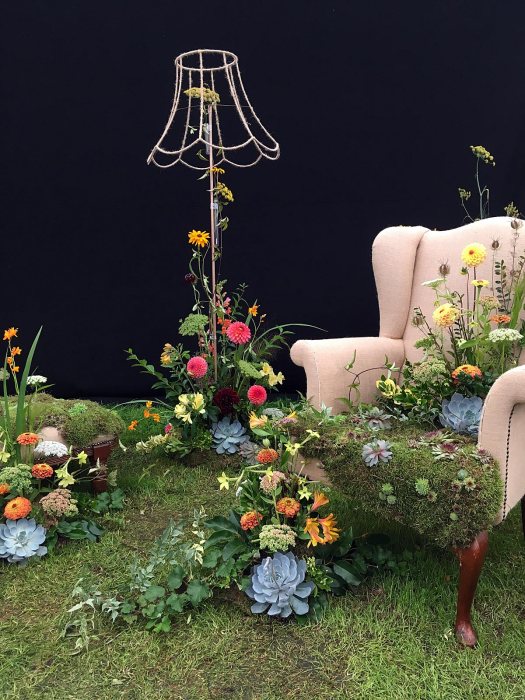
You might claim this is just on the edge of too much – too bright, too packed, too flowery, if there is such a thing.
It’s the latest in my series of pictures for dreaming. You may need to rein in your imaginations to prevent your senses overloading, especially if you were thinking of adding in bees hovering and humming and birds flying overhead. Continue reading “Flower Fantasia”
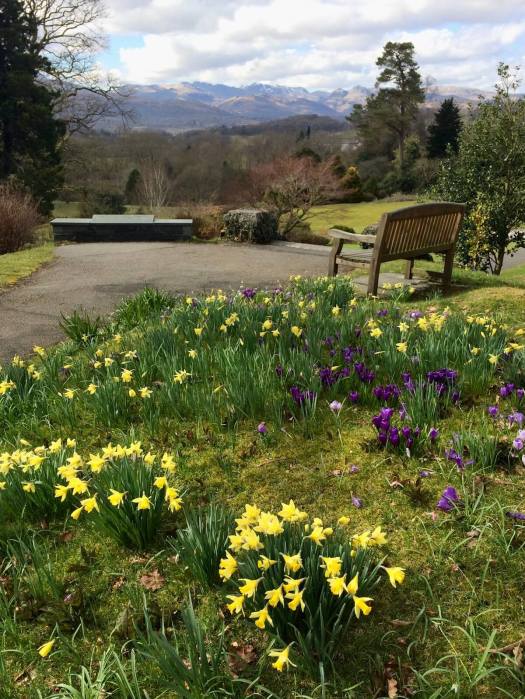
My picture today is another one for dreaming over for those who have the power to sit down here in their minds and spend a moment enjoying the spring flowers, the view and the fresh air.
Looking out from Holehird Gardens in the English Lake District
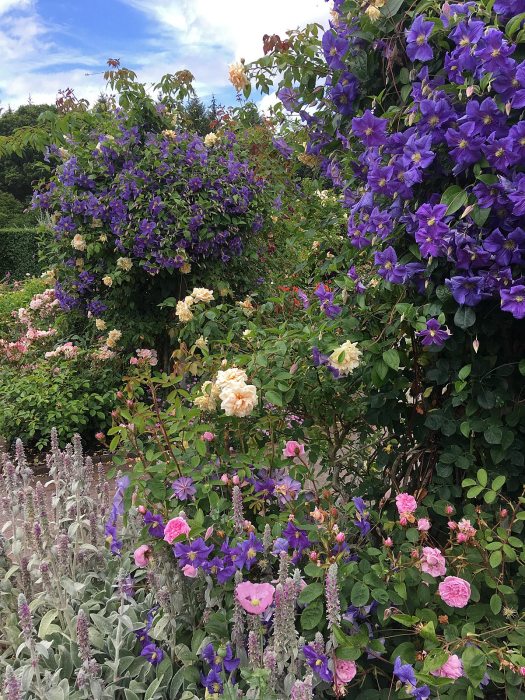
Clematis ‘Perle d’Azur’ with roses, stachys and poppies
Today, I’m offering you a picture to dream over: Clematis ‘Perle d’Azur, Rosa ‘Rêve d’Or’ (the pale apricot climber) and Stachys byzantina with a pink moss rose and papaver at RHS Rosemoor.
Clematis and roses have been planted together in cottage gardens for centuries.
The art of combination planting is to mix plants that will extend the flowering season (just how many buds are there on the moss rose?); be harmonious in colour and contrasting in height and texture (the soft lamb’s ear, the prickly roses) and in flower shape. The lamb’s ear brings its spires; the poppy, cups; the roses are rosettes, and the clematis are single, open flowers. The clematis provides height and a mass of purple-blue, which goes so well with the pastel pinks and apricots. There’s a climbing rose too. For good measure, the roses throw scent into the mix. Continue reading “Classic Combination Planting: Clematis With Roses”
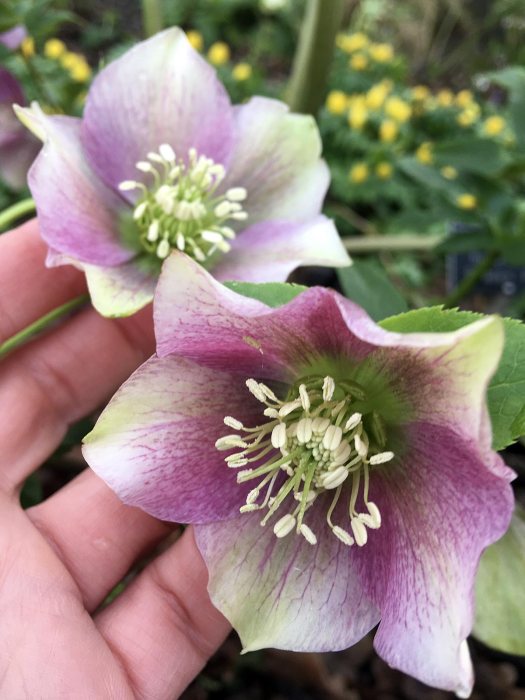
Although we think of hellebores as having petals, technically they are sepals, which accounts for their flowers’ longevity. This single hellebore is one of my favourites I’ve seen this year. Continue reading “Hellebore Hybrids: How Doubles Evolve”


 Susan Rushton