Green Flowers: Hellebores

Helleborus argutifolius has pale green flowers
Helleborus argutifolius

Green flowers are not always as subtle as they might appear – some of them are very striking. Today I’m sharing pictures of some of my favourite green hellebores.

Helleborus argutifolius produces one sturdy stem thickly clustered with flowers and buds a few shades lighter than the darker green leaves, and with golden stamens. The flowers persist for weeks or even months as with all hellebores, eventually forming equally striking seed heads, pollinators permitting. Like Helleborus foetidus (below) this is widely grown in the UK and can be found in many winter gardens.

Helleborus foetidus with dark foliage
Helleborus foetidus

This particular Helleborus foetidus has dark, purple tinged foliage and pretty purple lines around the edges of the petals (or sepals). At a guess, it is part of the Wester Flisk group. H. foetidus is an architectural plant, not because of its height, but because of the stems of elegant, tiered buds that hang like bells above deep, palmate foliage. Continue reading “Green Flowers: Hellebores”

January Squares: Snowdrops Glisten

Snowy landscape with snowdrops backlit by the fading sun
Snowdrops glisten under silver birch trees in a snowy winter garden

Interaction between the camera lens and the sun’s rays has sent rainbows tumbling from the top right. I’m not sure if that’s a feature or a flaw… perhaps a bit of both.

Pockets of snowdrops are barely distinguishable from the snow at first glance but, once your eye tunes in, they seem illuminated like tiny, ankle-high lamps. Long, narrow tree shadows accentuate the ray effect while the shade and golden rays together capture that feeling of warmth and exposure we Northerners associate with winter… the lucky ones, that is, who have the means of keeping warm. Continue reading “January Squares: Snowdrops Glisten”

Sheffield PlantSwap: Putting People And Plants Together

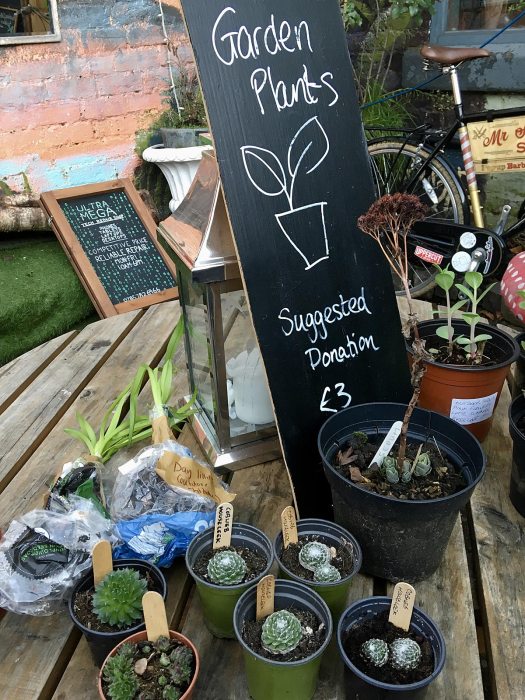
Garden Plants - Suggested donation £3

My sweetheart has a thing about plant swaps. There are few things more likely to get him all misty eyed, other than a sweet puppy (his term for any dog of any age not in full-on attack mode) or a cowboy film where the guy gets the gal.

The first time I went to a plant swap, I was randomly allocated the plant I had taken. That swap had been a lengthy affair and while there were plenty of great plants on offer, the likelihood of anyone getting the one they secretly hoped for seemed slim.

The Sheffield PlantSwap last Sunday was quite a different beast. Best friends Fay Kenworthy and Sarah Rousseau established it to help local people grow more plants without breaking the bank. They explained they didn’t know that much about plants when they started off and would have been intimidated by a garden club, but could see there was a need to get plants and people together. Continue reading “Sheffield PlantSwap: Putting People And Plants Together”

Flowers with backlight effect

Pink daisy flowers made translucent by sunlight

Pink flowers – possibly some form of echinacea – tumbling over each other as if to watch something. They’re at a concert and the ornamental grass is performing on stage, perhaps, or at a football match. An exciting one.

But we know that’s just fancy. Unlike us, the flowers don’t need a reason to be like this, they simply respond at a cellular lever to the sunlight, the soil and whatever moisture they can seek out. Continue reading “Flowers with backlight effect”

RHS Campaign For School Gardens, Chatsworth Flower Show

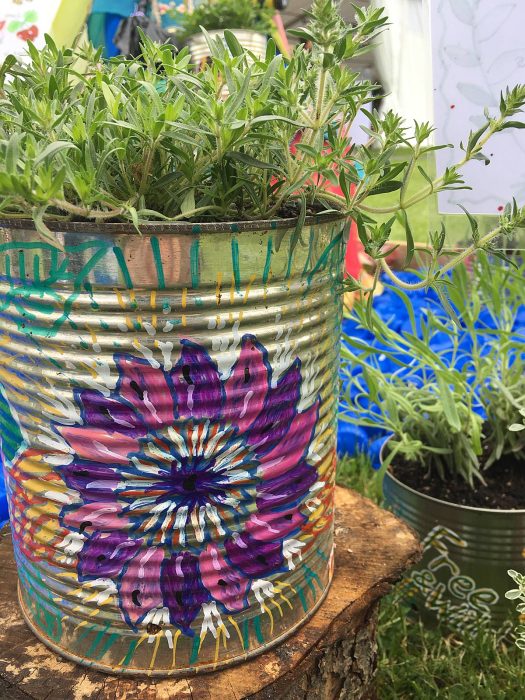
Mayflower Primary School’s sensory garden, It All Makes Sense, was one of my favourite corners of the Chatsworth Flower Show 2019. If there’s a child in your life, you might like to take some inspiration from these recycled tin cans, painted with cheerful motifs. Pop a herb or a flower in one and you have a tiny garden to enjoy, with potential lessons in art, the environment, nature, nurturing and cookery along the way.

While my secondary school had a small greenhouse, I only have the vaguest memories of going inside it. We never did anything as exciting as making a garden for one of the RHS flower shows. I love it when I see some of the kids who have been involved at the shows, proud of what they’ve achieved and excited to explain to visitors what they were thinking about in this or that part of the garden.

I’m one of the lucky ones. Although my schooldays preceded the RHS Campaign For School Gardens by decades, my childhood was filled with small lessons like these as part of family life. Caterpillars in jars that turned into butterflies. Rose petal scented water. A succulent that grew in a pattern. Owl pellets to pull apart, looking for bones. Flowers to plant. Potatoes to dig (well before their time as we were too excited to wait). Pebbles to pick out of streams. A bat cave to explore. Continue reading “RHS Campaign For School Gardens, Chatsworth Flower Show”

2020 is The Year Of The Hydrangea – Hurray!

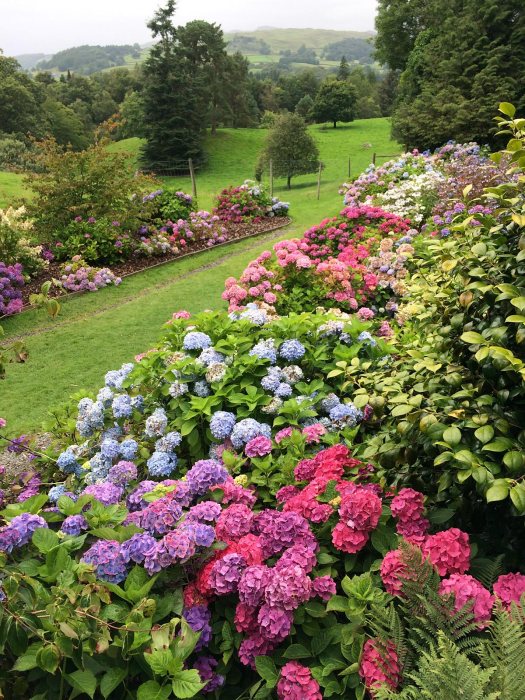
Hillside of hydrangeas at Holehird Gardens
Part of the National Collection of Hydrangeas at Holehird Gardens

When I posted yesterday’s picture, I hadn’t realised how on-trend I was. In celebration of this being the Year of the Hydrangea, I want to show the difference between mophead and lacecap hydrangeas.

While mopheads and lacecaps are much the same in growth, habit and overall impression, their flowers have different forms. For most of us, this is a matter of style rather than of botany, as we’re not likely to try to grow hydrangeas from seed.   Continue reading “2020 is The Year Of The Hydrangea – Hurray!”