Howick Hall’s Sensory Garden

A bench in an abundant flower garden
A bench tempts the visitor to linger and enjoy a visual feast of flowers

What makes a sensory garden different to any other garden? We can expect the boundaries to be pushed, as they are in Howick Hall’s new sensory garden. Starting, as in any garden, with the soothing power of green, contrasting textures and colours are layered on to stimulate us.

Silvery heart-shaped leaves, grasses and hydrangeas
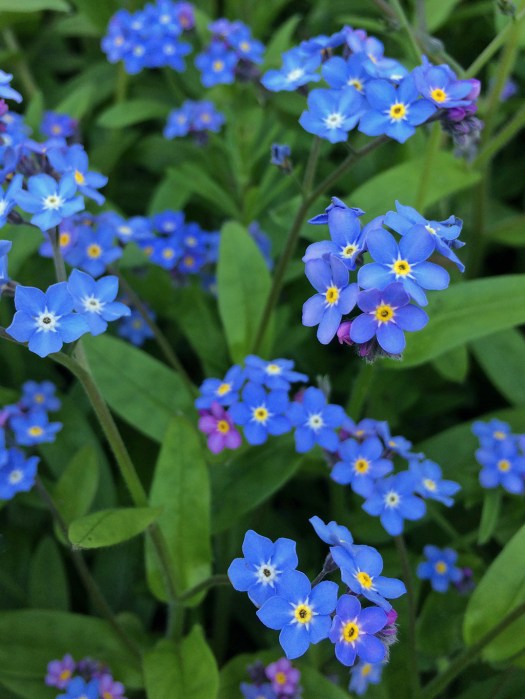
Silver brunnera leaves with dwarf hydrangea and golden Japanese hakone

We respond with an instinctive head-turn as we half-spot a flash of wings between rustling leaves. Our thumbs and forefingers are stained and scented from crushing a rosemary leaf, just one of many fragrant plants around us. We tune in to sounds – water splashing, birdsong and the blunt music of windchimes.  Continue reading “Howick Hall’s Sensory Garden”

Bold Venture Park In Winter

War memorial topped by an angel with trees in the background

My home town, Darwen, has several Victorian parks, including Bold Venture Park. At the entrance, an angel, now nearly 100 years old, holds up a wreath and an olive branch to remind us of the consequences of war and to commemorate those who fell in WW1. The angel’s wings are the first things you see when approaching from the town.

Looking out over a snow-covered park towards the war memorial

Bold Venture is a hillside park with an interesting topography, built around quarries and steep ravines. A small lake, home to ducks, is another visual magnet. The lake rarely freezes right over, but was cold enough to support a band of ice, covered in snow in places.

View of a frosted lake surrounded by snow covered trees

Continue reading “Bold Venture Park In Winter”

Passiflora vitifolia: A tropical vine bearing red passion flowers

Bright red passionflower vine growing against a fence

Red passion flowers, blazing joyfully in the early January sunshine during our visit to Florida, looked for all the world like a miracle to my Northern English eyes, tuned in to consider a single early snowdrop a delight.

It’s a bit of a minefield making sure which of the various scarlet red passionflowers you have before you. Passiflora vitifolia gets its name from the vine-shaped foliage. As its folk name is The Perfumed Passionflower you might expect me to have something to report about its fragrance but, not associating passionflowers with fragrance, it didn’t cross my mind to sniff it. It’s a vigorous vine when happy, able to reach 6 m (20 ft) if its surroundings force it to climb to reach sunlight. This smaller one was able to bask in the sunshine along a fence in the Naples Botanical Garden’s Brazilian Garden.

Passion flowers wow us with their intricate forms, even when their colours are relatively drab. This overhead view of a red passion flower could almost be a lesson in botany.

Three red-speckled styles that end in pale stigmas arch elegantly over at the top of the flower. The structure appears to balance on a creamy ovary in the centre, directly below; underneath that, five speckled filaments with green, pollen-bearing anthers attached. The pollen is held underneath – you can just glimpse it on the outer edges. Next, rings of eyelash-style filaments: long, dark red ones, with shorter ones in the middle, designed to make pollinators work hard enough for their nectar to withdraw with pollen on their backs (or heads, in the case of humming birds).

Underneath all that, five true petals, with five outer sepals beneath and between, all ten recurving backwards. My personal take on their colour? It’s the classic British fire engine red, more often described as crimson or scarlet.

Given its vine-like foliage, it would seem apt if this miraculous little plant went on to produce tiny bunches of grapes. Instead the fruits resemble dainty melons that some people describe as tasting like sour strawberries and others say are poisonous. It would be wise not to sample them unless you’re an expert.

Continue reading “Passiflora vitifolia: A tropical vine bearing red passion flowers”
Bird House Refurbishment And A Hauntingly Lovely Journey

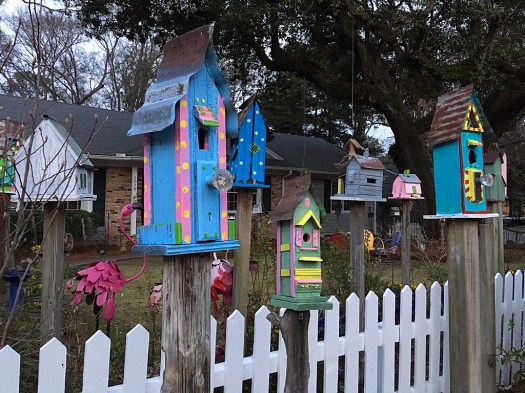
Brightly coloured birdhouses on wooden poles with a white picket fence

While I was in Mississippi, we were passing Suzie Cranston’s house when a ball of energy with a beaming smile bounced out of the driveway, exclaiming “I’m painting them! You must look! And I’m really enjoying it!”

She’s the lady, some of you may recall, with perhaps a hundred birdhouses in her garden.

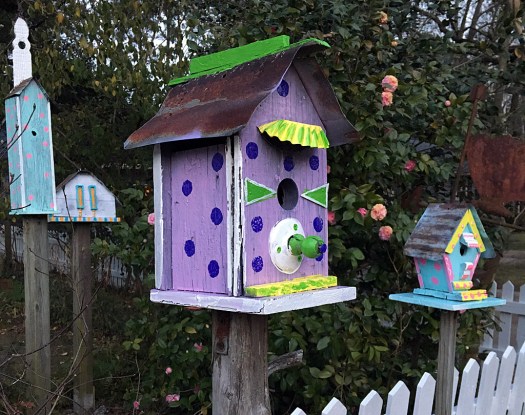
Polka dot birdhouse with tin roof

Waving us down the path to her workshop, she pointed out the detailing of the ones she was working on. Any bare wood had been painted over with cheerful colours. Continue reading “Bird House Refurbishment And A Hauntingly Lovely Journey”

Rosa ‘Tuscany Superb’: A Crimson Purple Gallica Rose With A Classic Old Rose Scent

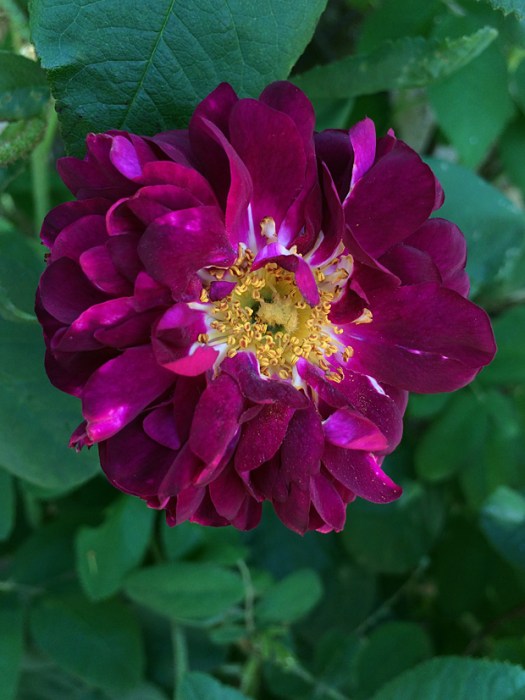
A semi-double dark crimson rose with golden stamens

Rosa ‘Tuscany Superb”s semi-double flowers are full enough to amply frame a central boss of golden stamens, lifted by glimpses of white around the eye. The petals have a rich, velvety character. You’ll see ‘Tuscany Superb’ described as maroon, purple, crimson, burgundy. I’ve contented myself with crimson-purple, but you can take your pick! As the flowers age, their colour darkens.

We have relatively few scented, crimson-purple rose varieties, and this one remains popular with those who are willing to grow roses that are summer flowering (the industry term for once-flowering). While some roses are grown as a thorny deterrent, ‘Tuscany Superb’ rose is prickly at best.

Depending on which expert you believe (in the absence of the luxury of having a bloom before you to savour), the fragrance is either medium or strong. Everyone agrees on its character, which is a classic Old Rose fragrance.  Continue reading “Rosa ‘Tuscany Superb’: A Crimson Purple Gallica Rose With A Classic Old Rose Scent”