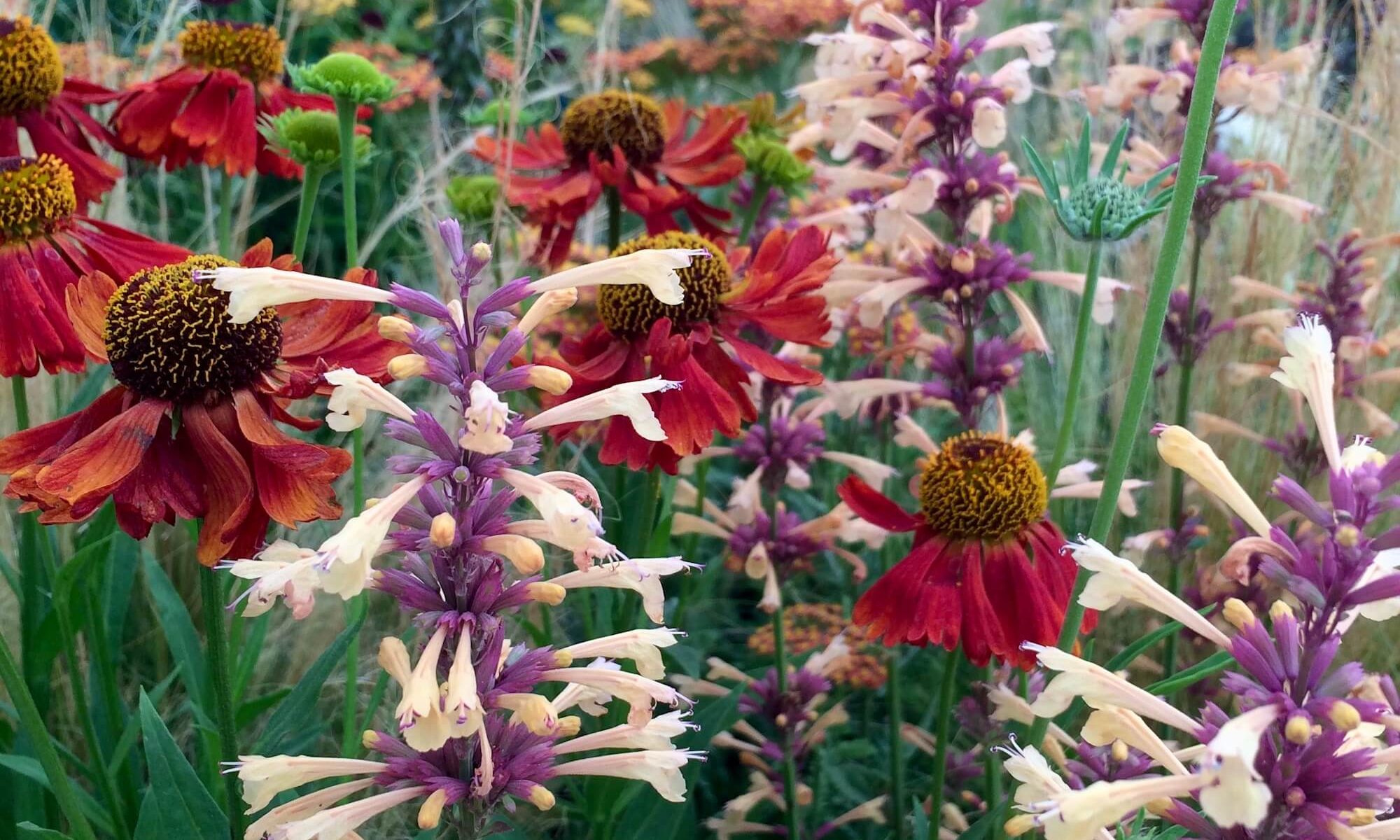
Whenever we’re on our way to see Becky and Don Potts, I tell myself firmly, ‘No more pictures!’
It never works.
Their garden is such a fun place to visit. Fewer minutes later than is really courteous after arriving, I’ll find myself drifting off to twist my iPhone over an unusual plant, trying to get a decent angle. A miniature will have cried out for attention, something with variegations, or a new coleus as Becky is fascinated by all of these.
My eye for an interesting plant lures me along paths, under trees, over mossy ground, round corners and beyond fences, through areas of full sun and almost as full shade, one plant leading to the next.
Then I’m tugged back round to see what I’ve missed.
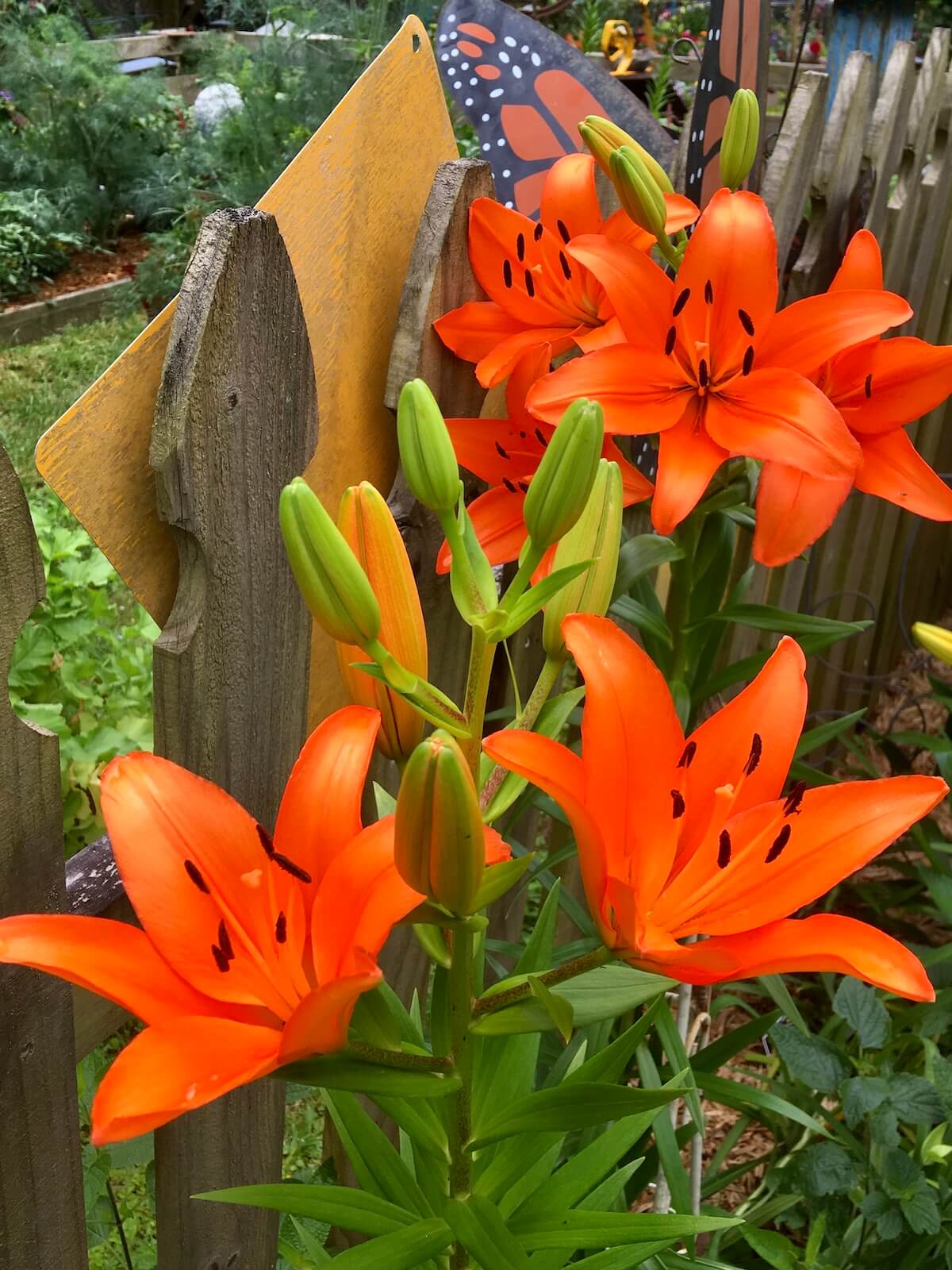
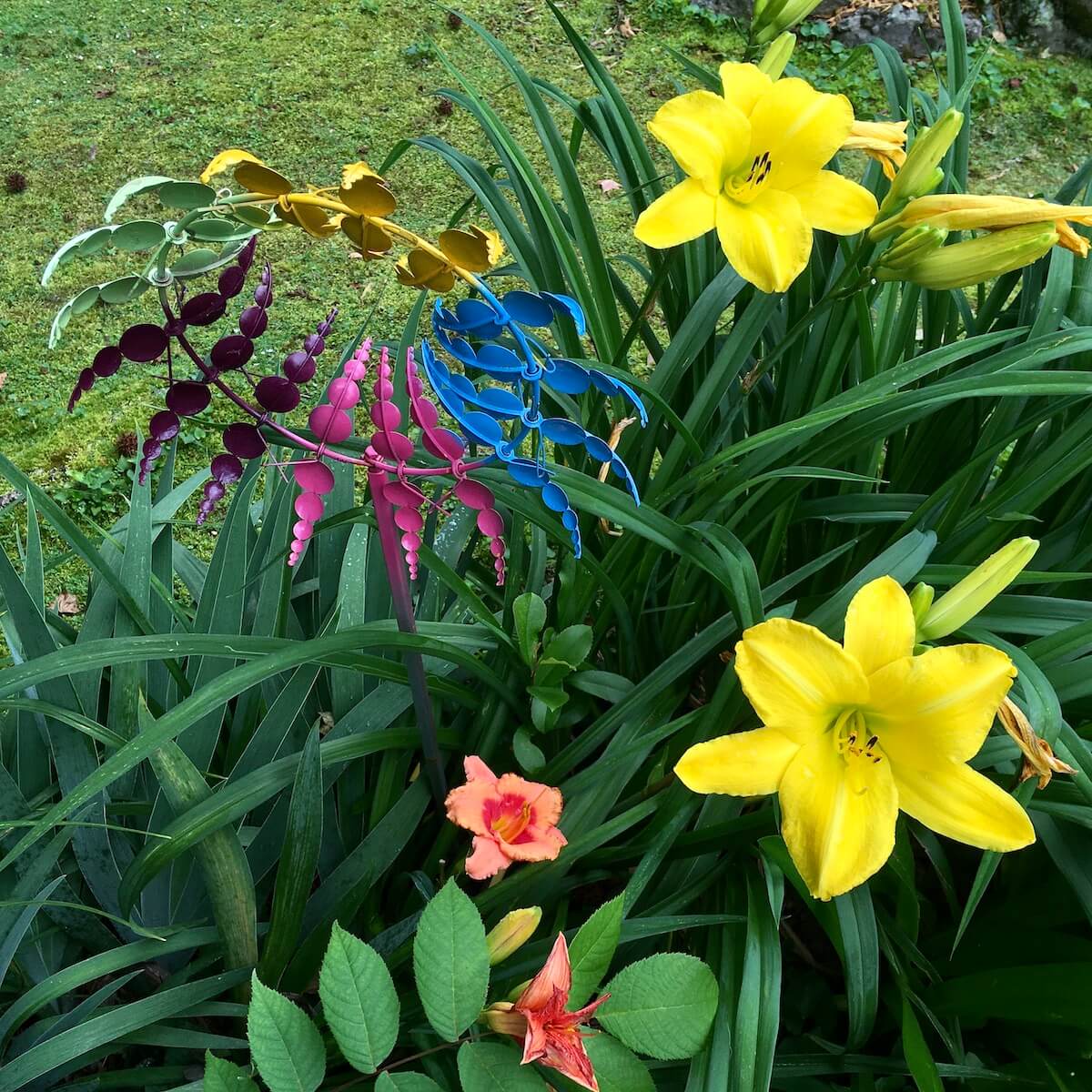
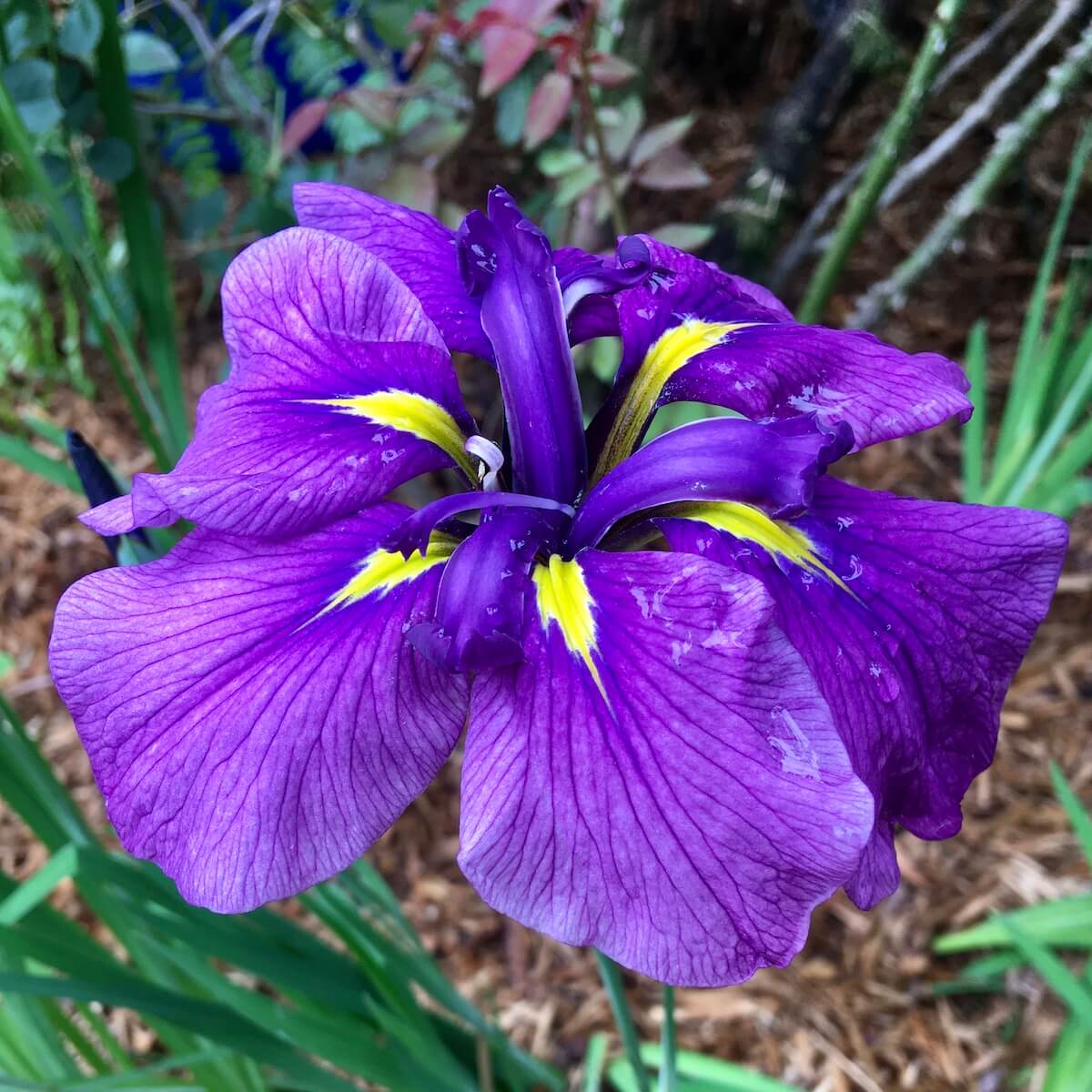
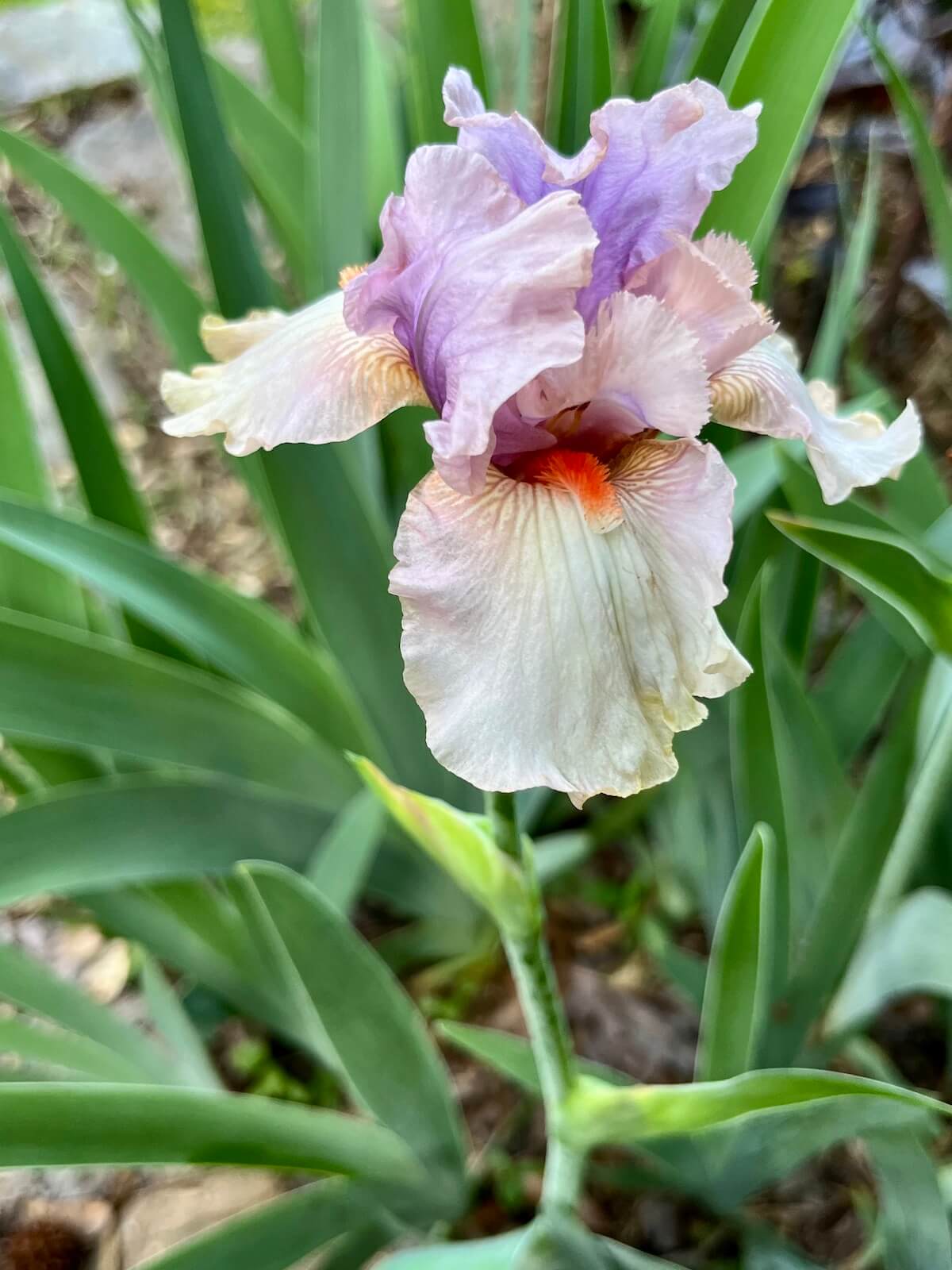
As in many Mississippi gardens, the flatness of the terrain means you can take in a lot at one time, even if you don’t find yourself spinning around.
Pocket after pocket of flowers, variegated leaves, yard art, natural objects, and decorative planters fill Becky and Don’s garden with vignettes, each being photobombed by several other vignettes in the background. And while a decent macro lens would allow me to isolate single plants or features against a blur of colour, that would distort what the mind actually experiences. In truth, the experience is not restful, as we typically think of rest, until you’ve made the leap.
Think of it as the garden version of entering a new land through the purple hole in the cloud at the top of the Magic Faraway Tree, but without the climb. A place where the Land of Do-As-You-Please meets the Land of Marvels.
Once you realise this is where you’ve landed, you’re better placed to enjoy the moment.


Becky has an eye for the marvellous, the tiny, the patterned, the sweet.
And it’s not just plants: she’s always on the look out for another fancy rock, an animal-shaped planter with a sweet face, or a towering, kinetic sculpture by a member of the Craftsmen’s Guild of Mississippi.
The garden has raised and island beds, containers of every shape and size, a small pond and two greenhouses and lots of yard art.
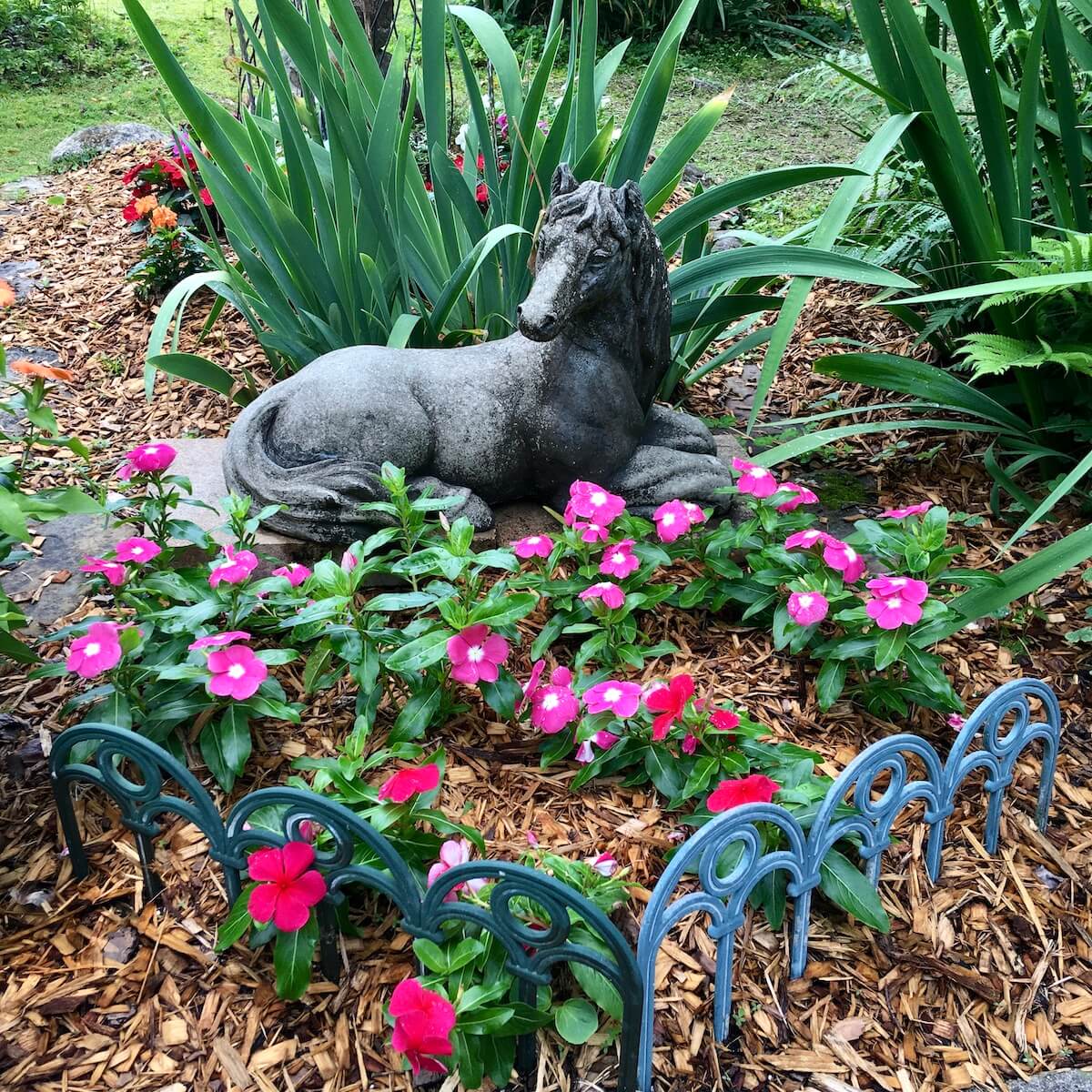
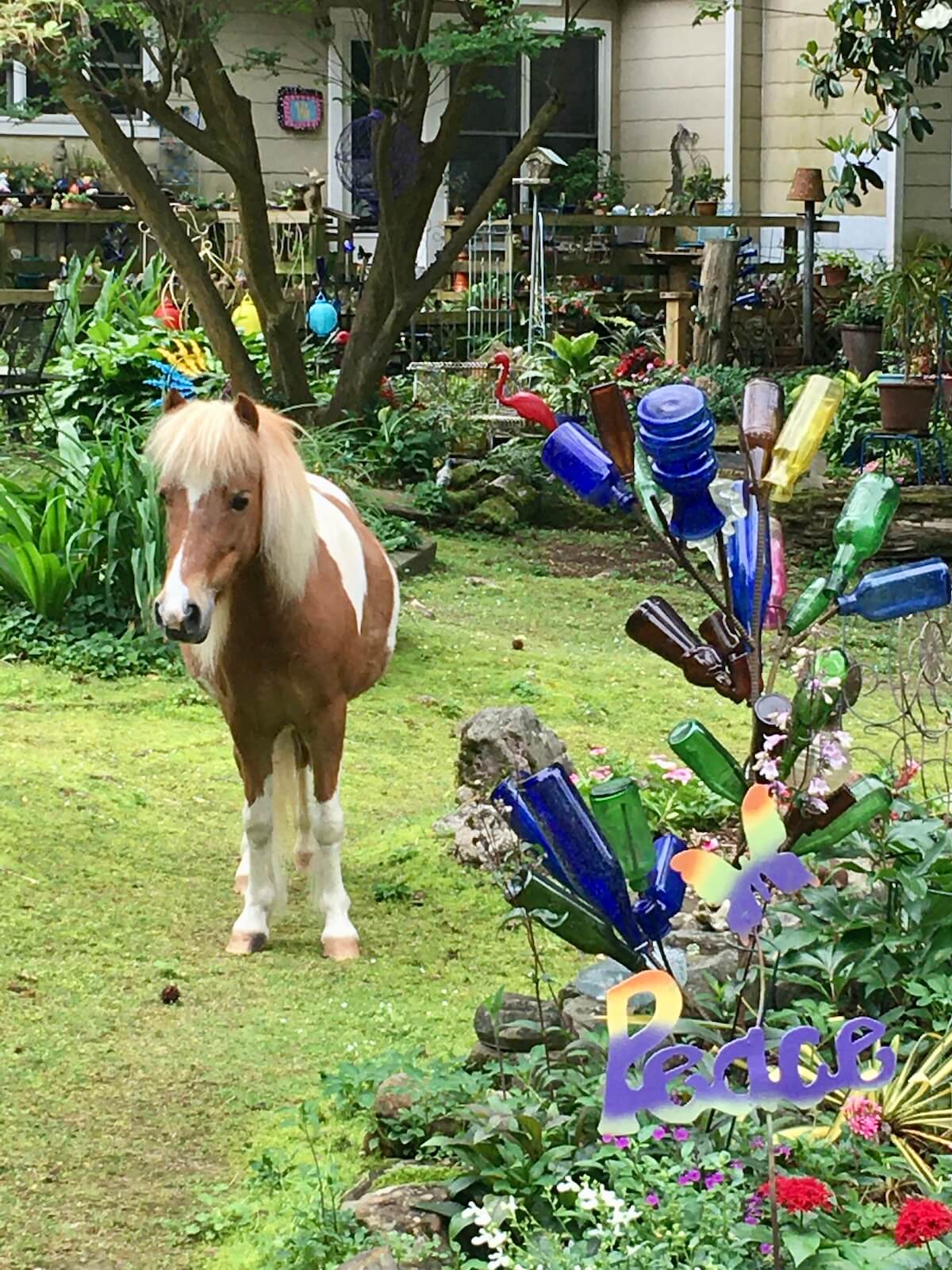
A miniature horse called Buttercup roams the garden, which means that all new plant arrivals have to be horse-tested by the simple method of offering them to Buttercup. Any plant she tries to eat is planted inside a fenced area; the others can go outside.
The test results are not totally reliable. Sometimes new shoots prove tempting even though Buttercup rejected the established plant. And recently Buttercup refused a large, very fine specimen of decorative grass then ate it all down to the stumps shortly after it had been planted outside the fence, which could suggest an element of subterfuge. Let’s hope that was a one-off.
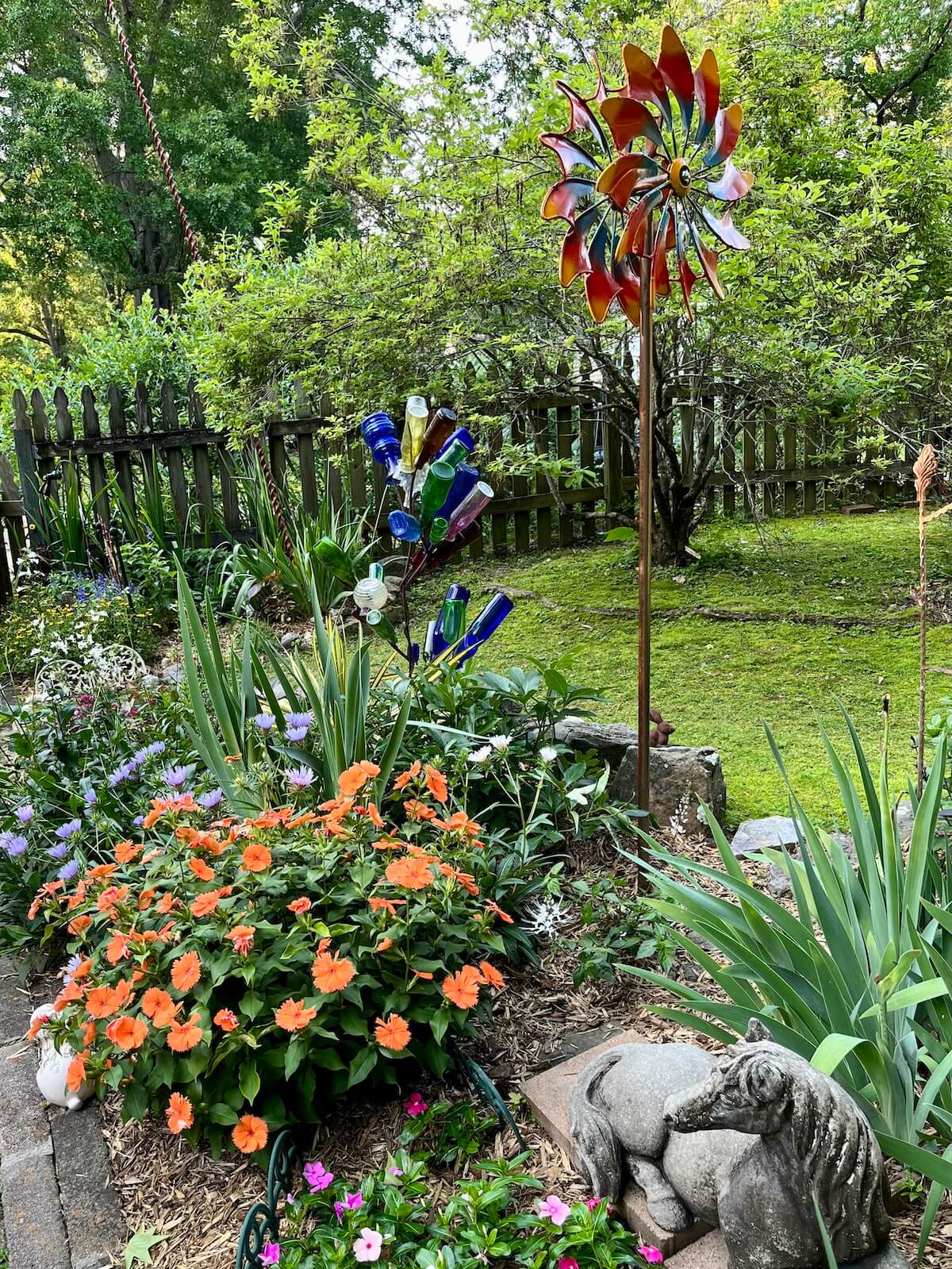
Contrary to what a landscape architect or garden designer might suggest, Becky explains, there is lots of “no order” here. Rather than maintaining lawn, she says, “Thank heavens for moss!”
Still, the collectables and the planting style remind me of how a poem works. I’m thinking of echoes with variation (= rhyme and rhythm); repeated, favourite elements (= refrains); contrasts brought into some form of balance; and an overall feeling of invocation and celebration.
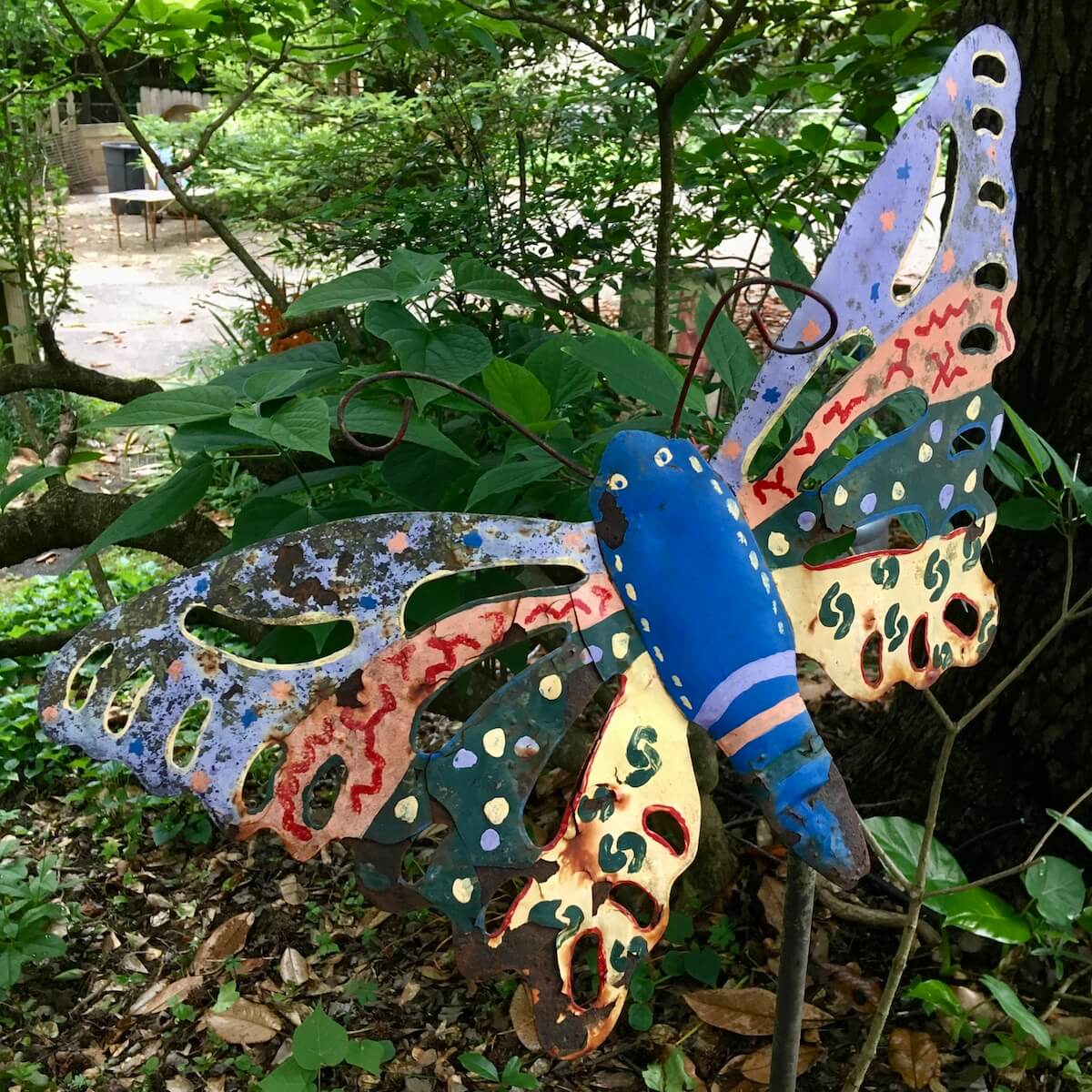
A huge metal moth perches awkwardly in the shade; the leaves of a pale caladium mimic a moth when they flap in the breeze; a real, much smaller moth drifts around a cleome and moves on. That kind of thing.
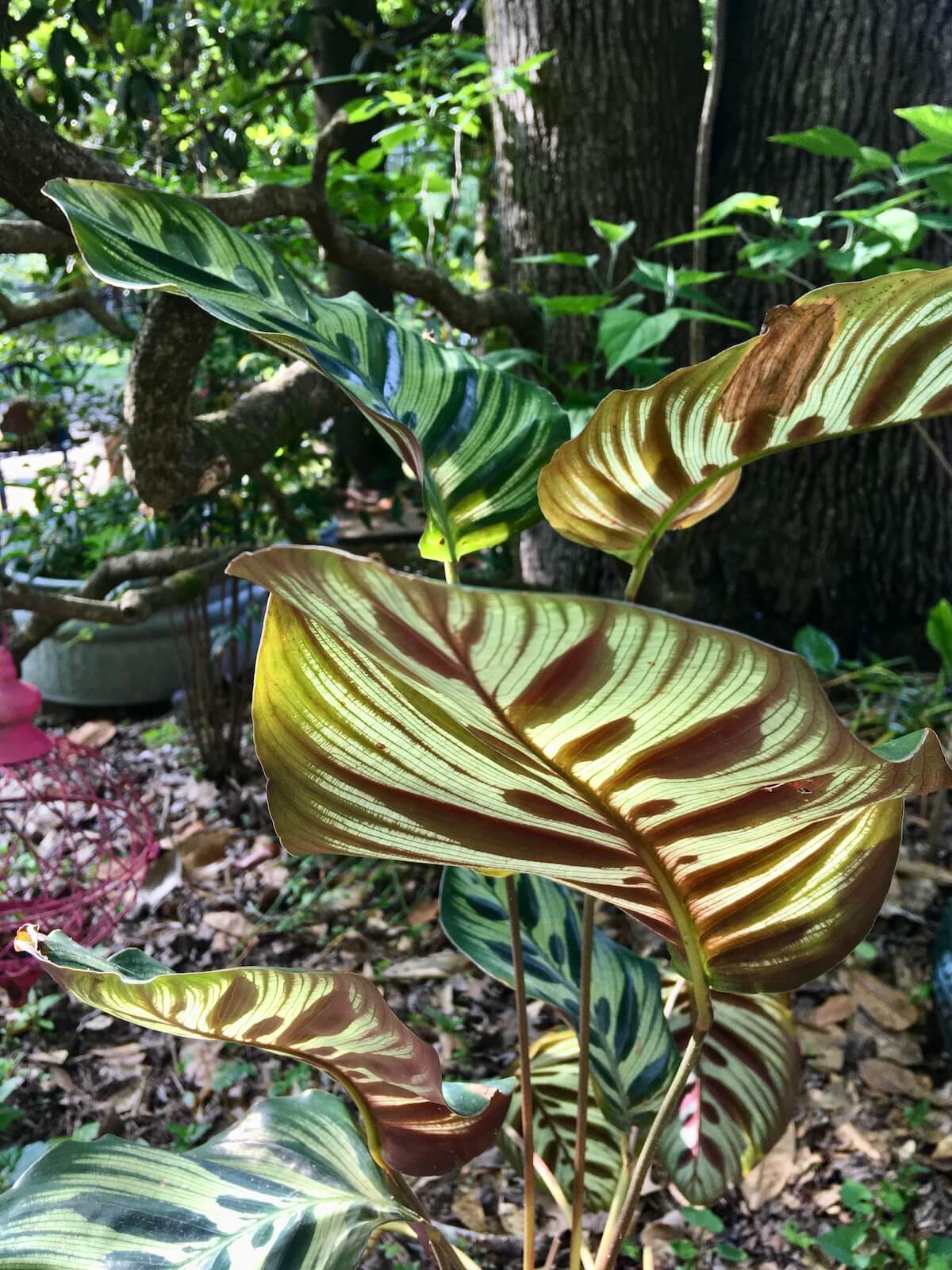
It’s lovely to stand in dappled shade to watch changing intensities of light filter through so many different types of variegated leaves.
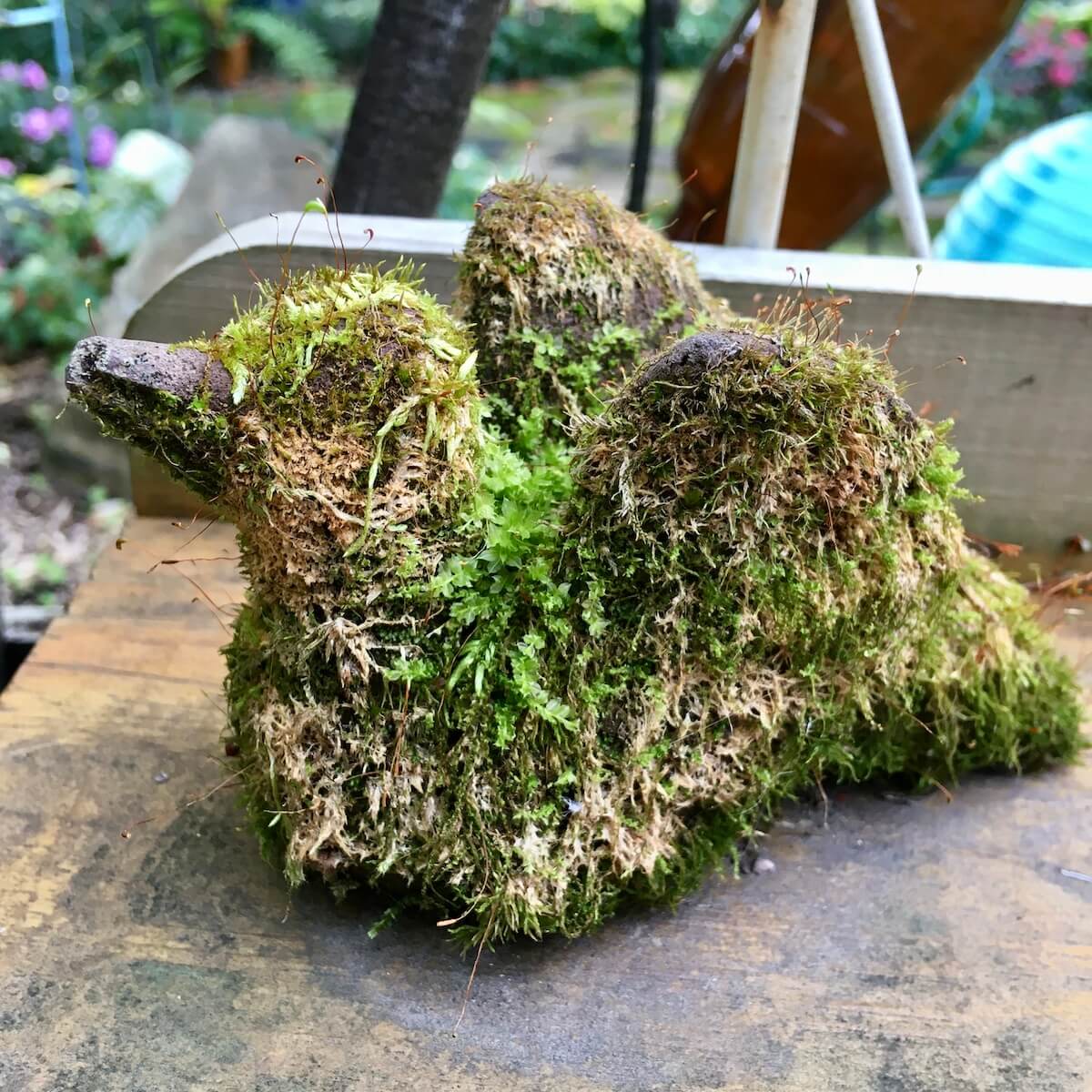
One of my favourite items is a small, metal bird (a dove?) with a slightly chipped beak that is slowly being covered in moss.
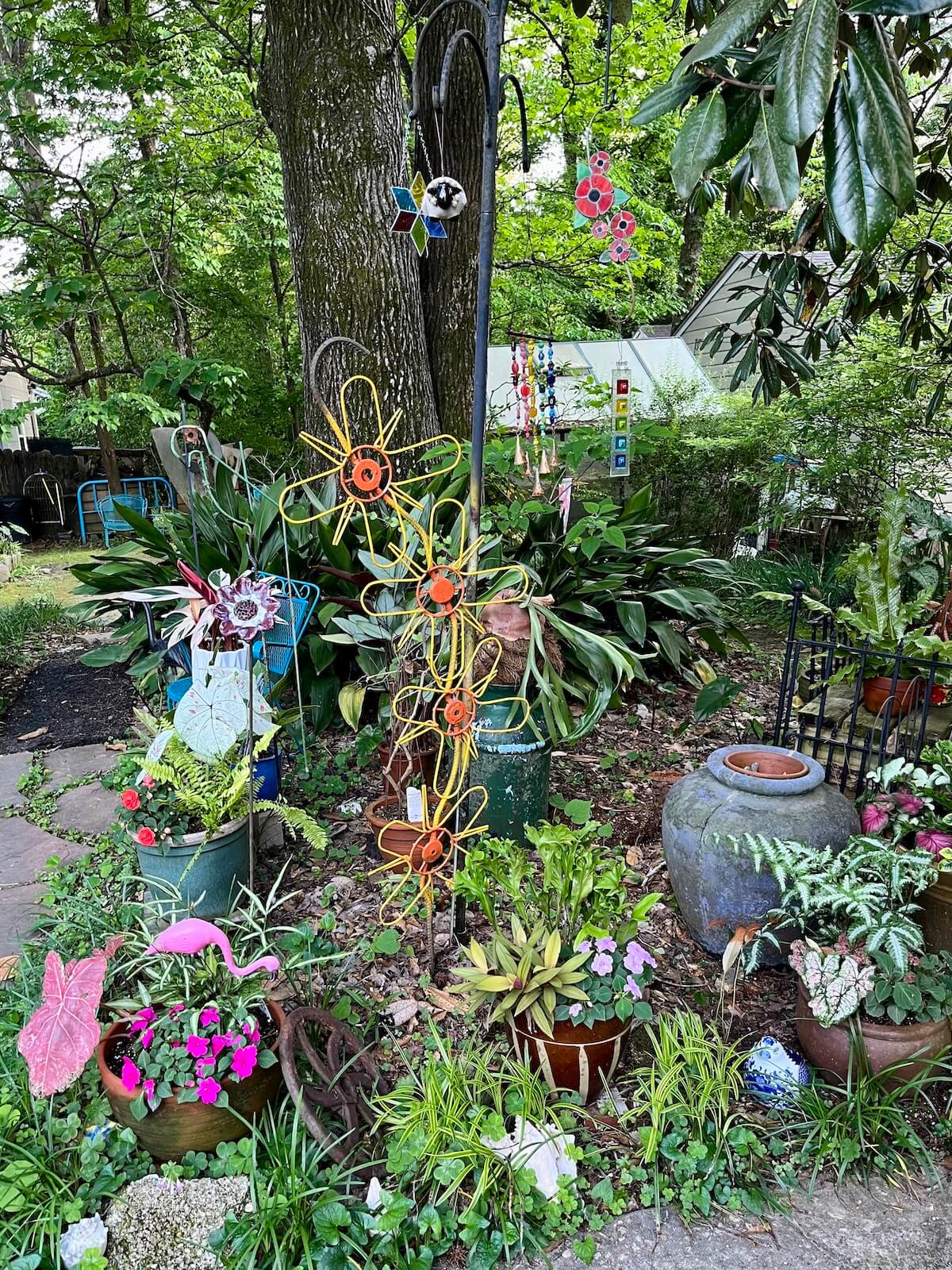
This folk garden is a great example of patchwork planting.
Have you ever seen a patchwork coverlet that you really liked? I remember one in our room some years ago at the Hundred House Hotel in Shropshire. I had planned to share a picture, but by the time I’d cropped It down, it was little more than a blur. Each patch of material was different in colour, design and style, but they all had a floral theme. Some showed magnificent blooms; others were just stems, or foliage, crookedly sliced. While they seemed to have been placed randomly, there was a type of harmony – an overall intention. This garden is like that.
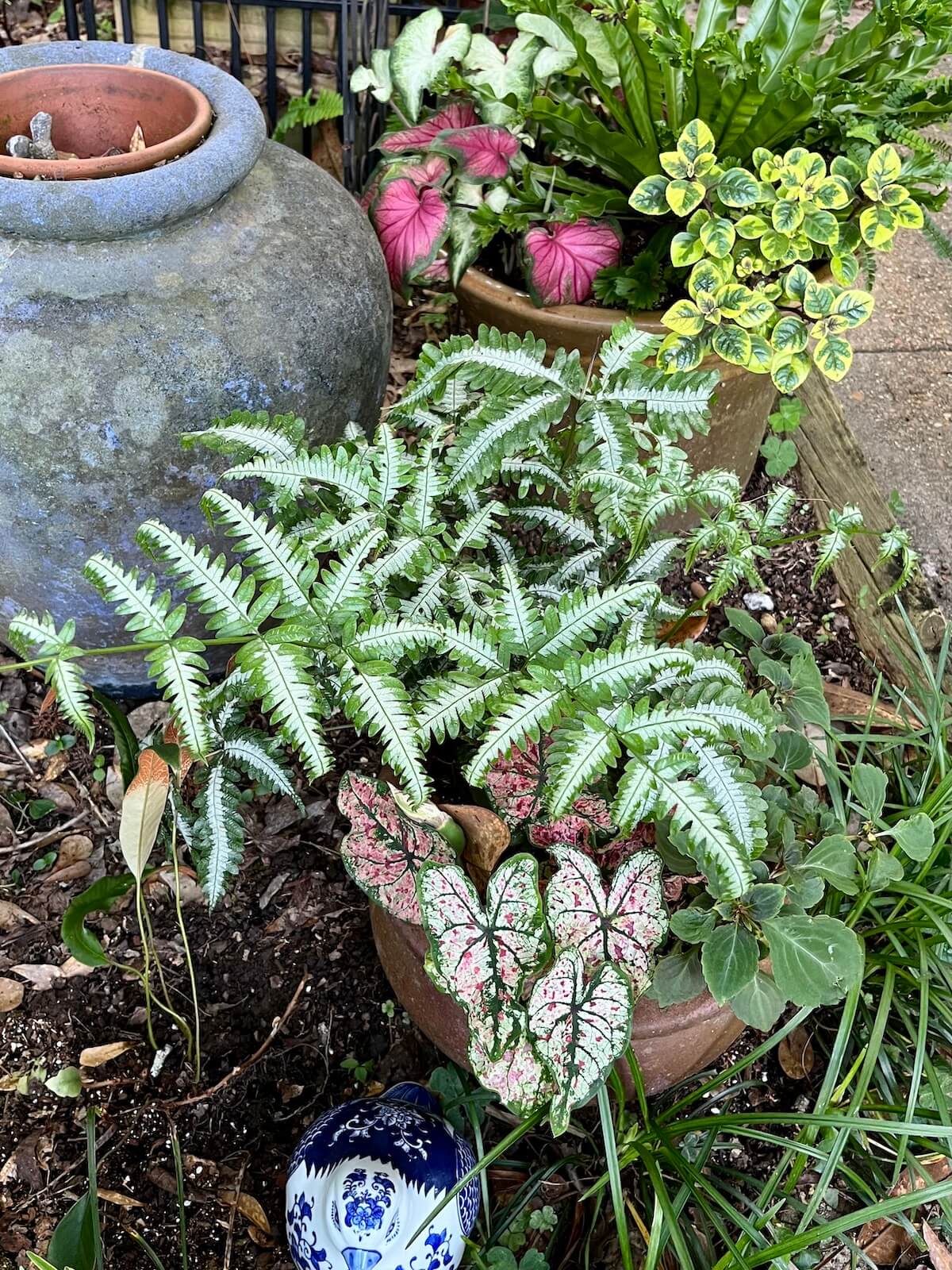
Here, few plants take up much space. Most companionably abut their neighbours, so you might find five plants living in a medium-sized container, let alone in a square yard or metre of land.
It may be the only way to get them all in, but I get the feeling it’s the way Becky likes to see them, so each plant can highlight something different about their neighbour.
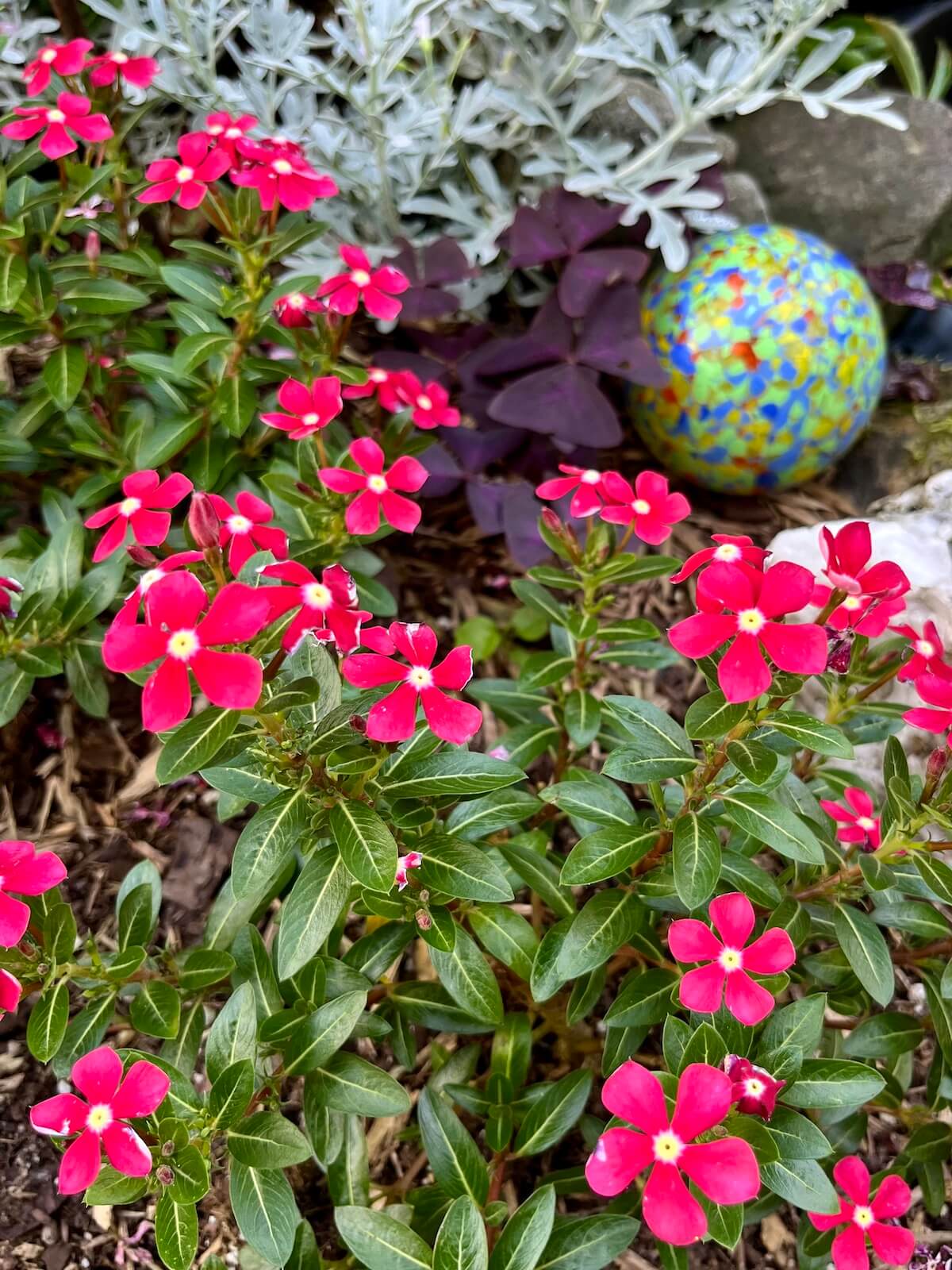
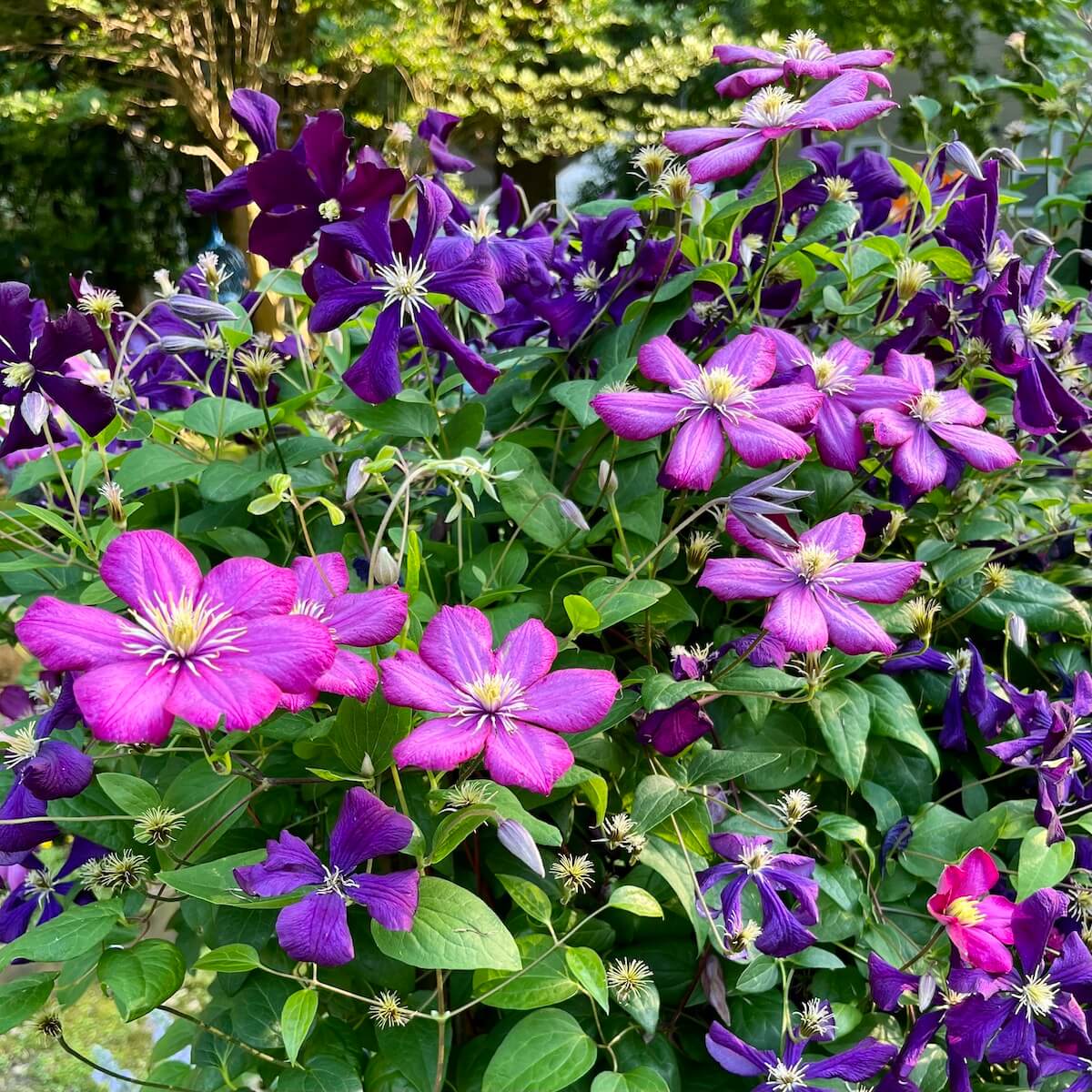
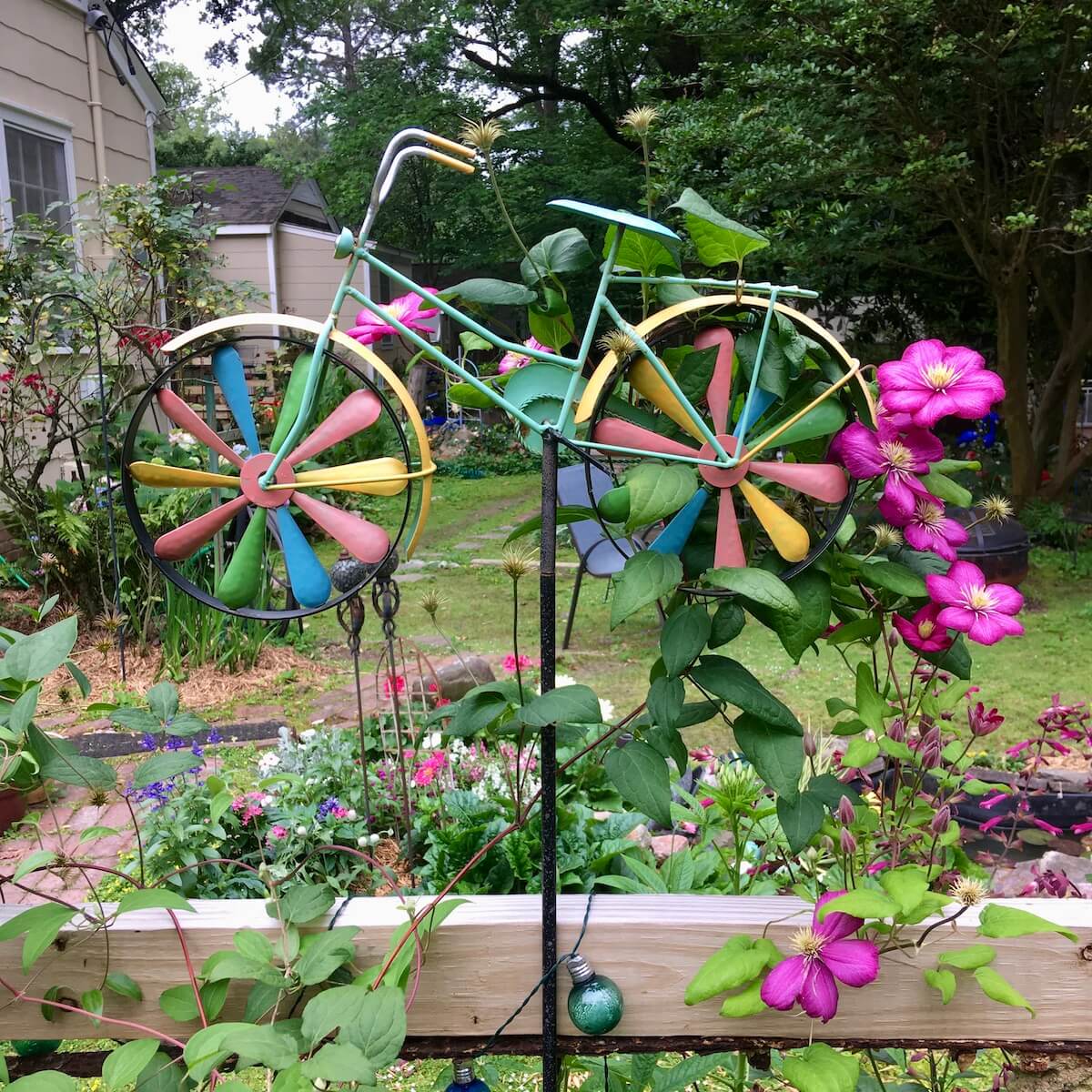
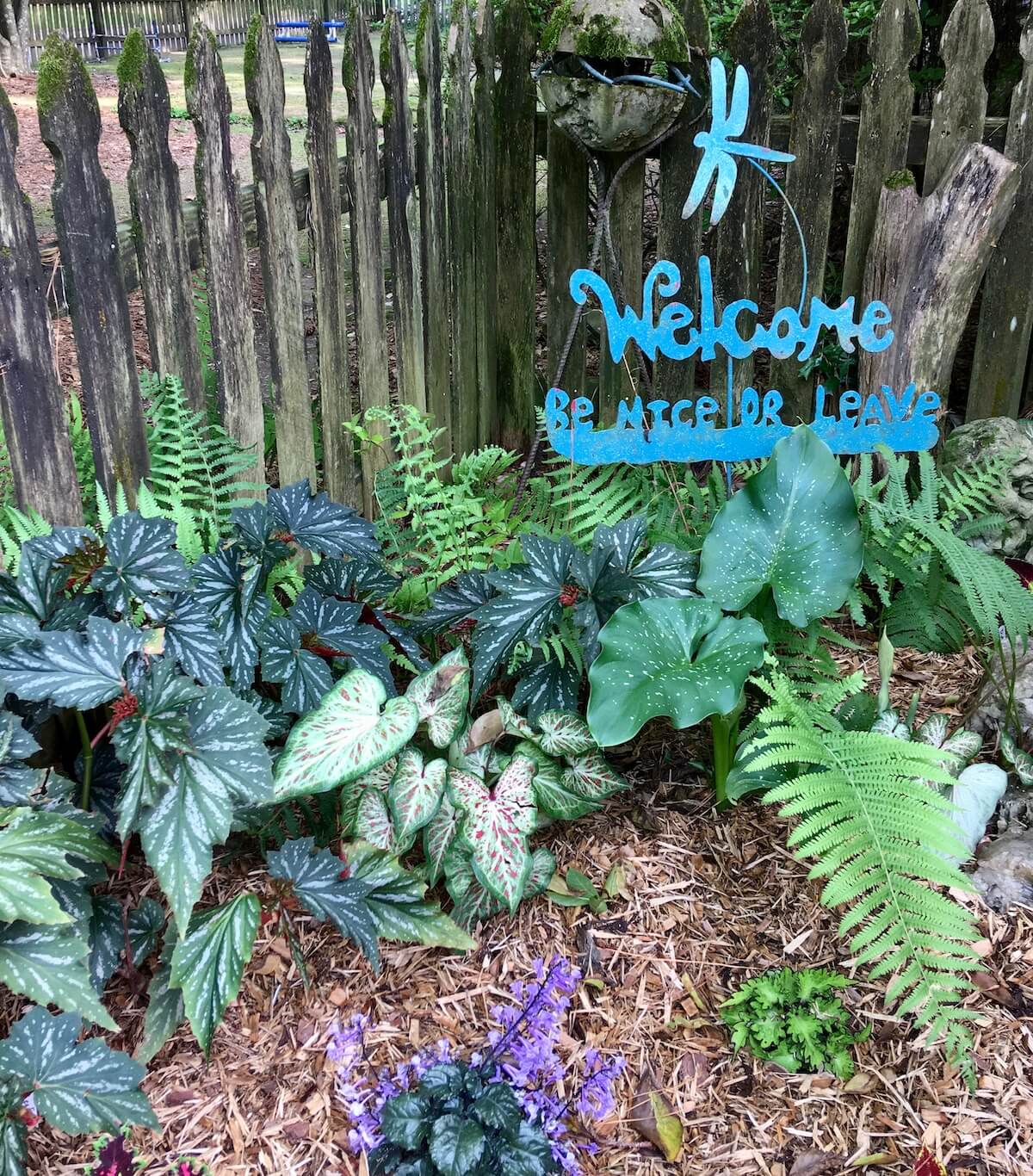
I hope my pictures manage to convey some of the playfulness and joy there is in this garden. Garden signs express sound principles too: ‘Organic garden’, ‘Peace’, ‘Welcome to my garden’, ‘Be nice or leave!’.


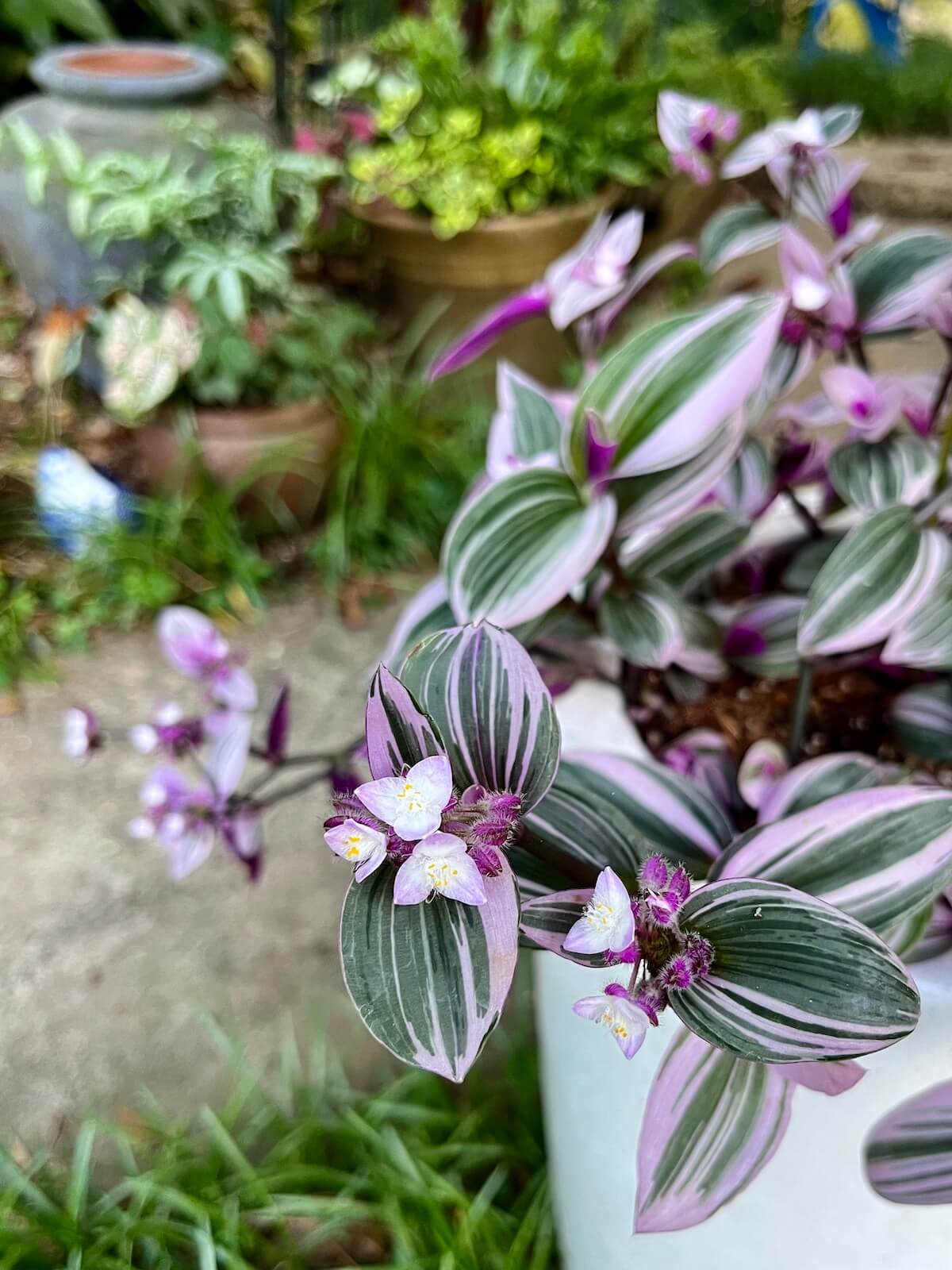
Becky loves to meet people she can talk Plant to – the ones who might find as much pleasure as she does in some of her new acquisitions or who can wrangle over their botanical names.
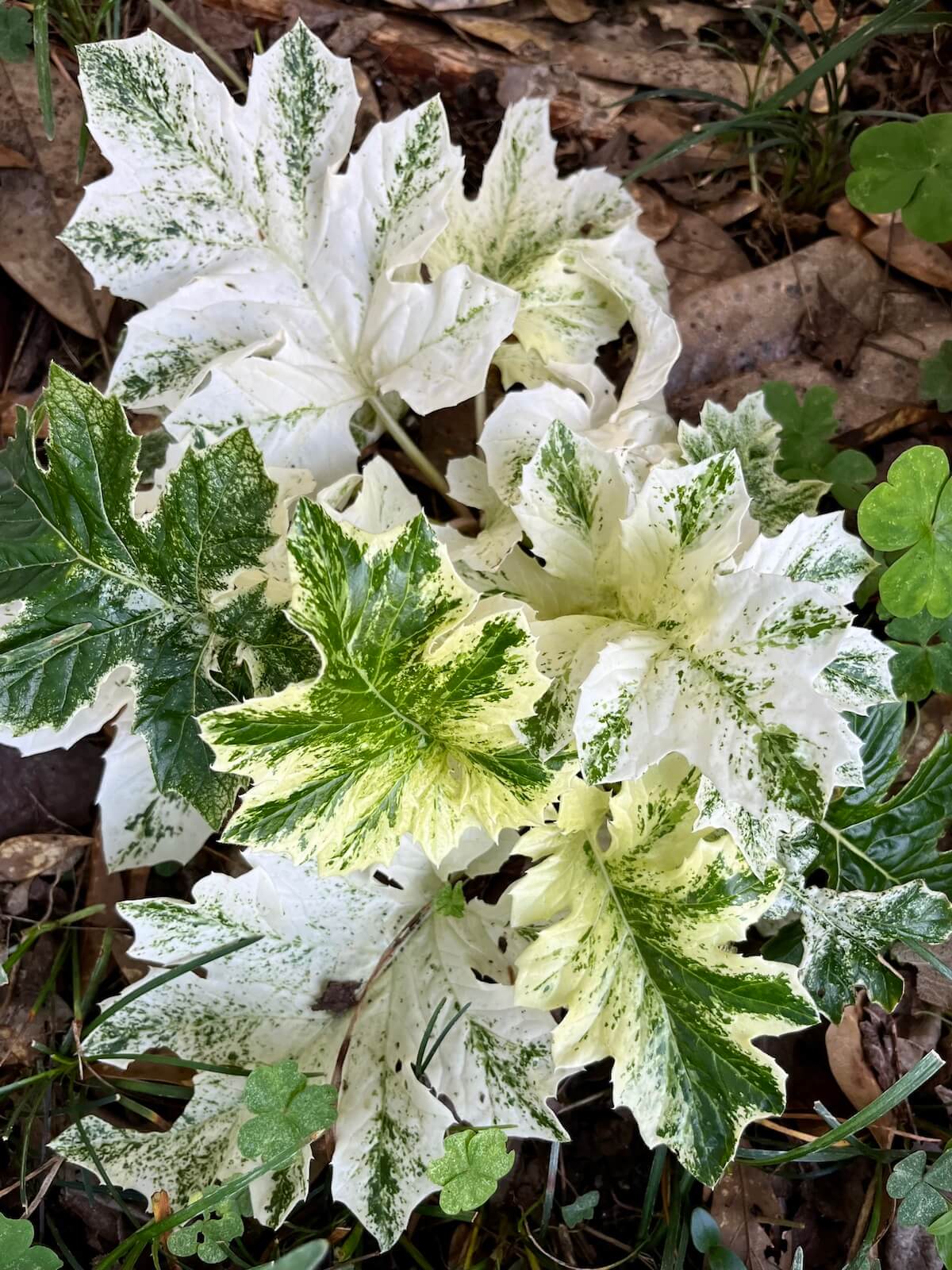
Last time we visited, she was excited to have finally got hold of an almost-white Acanthus.
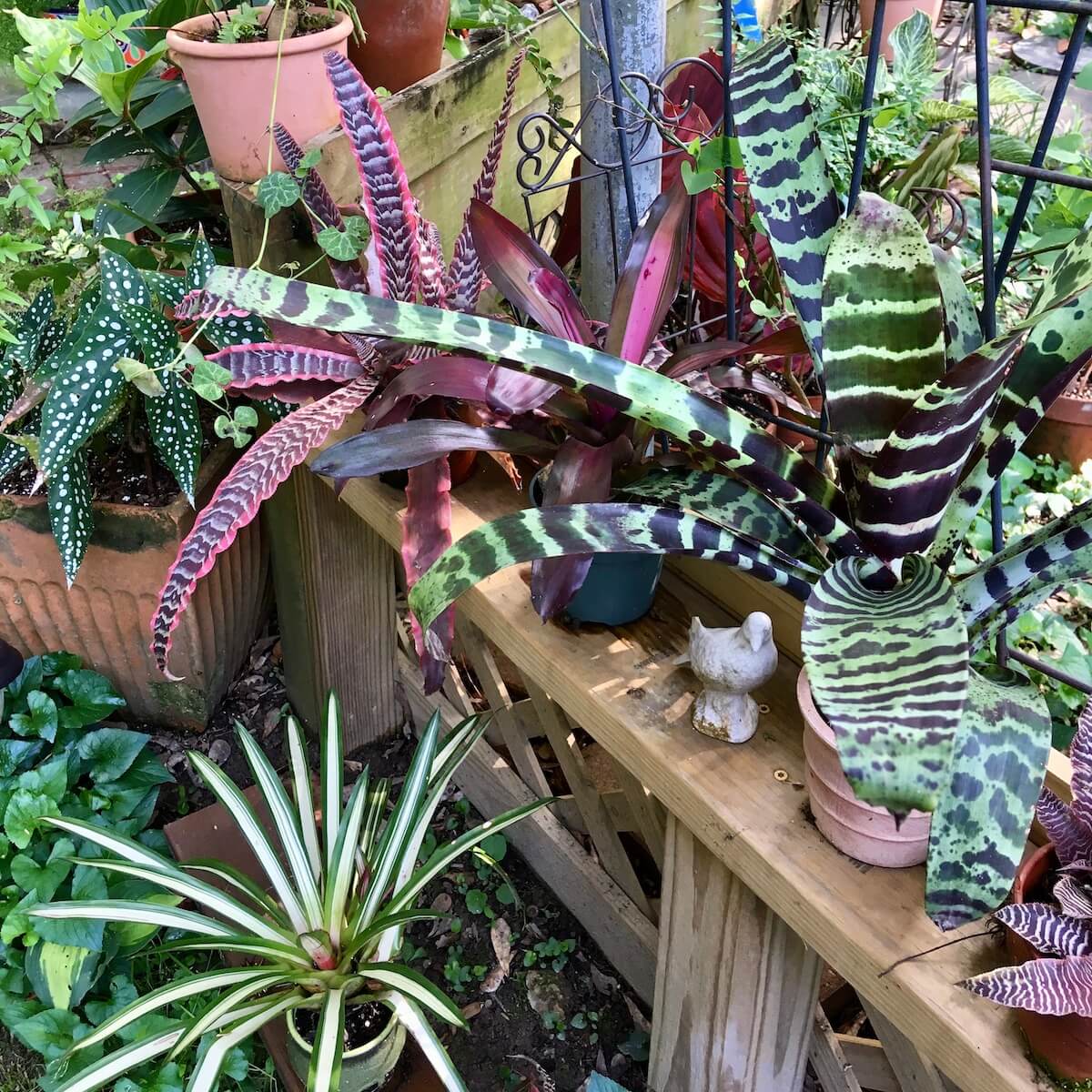
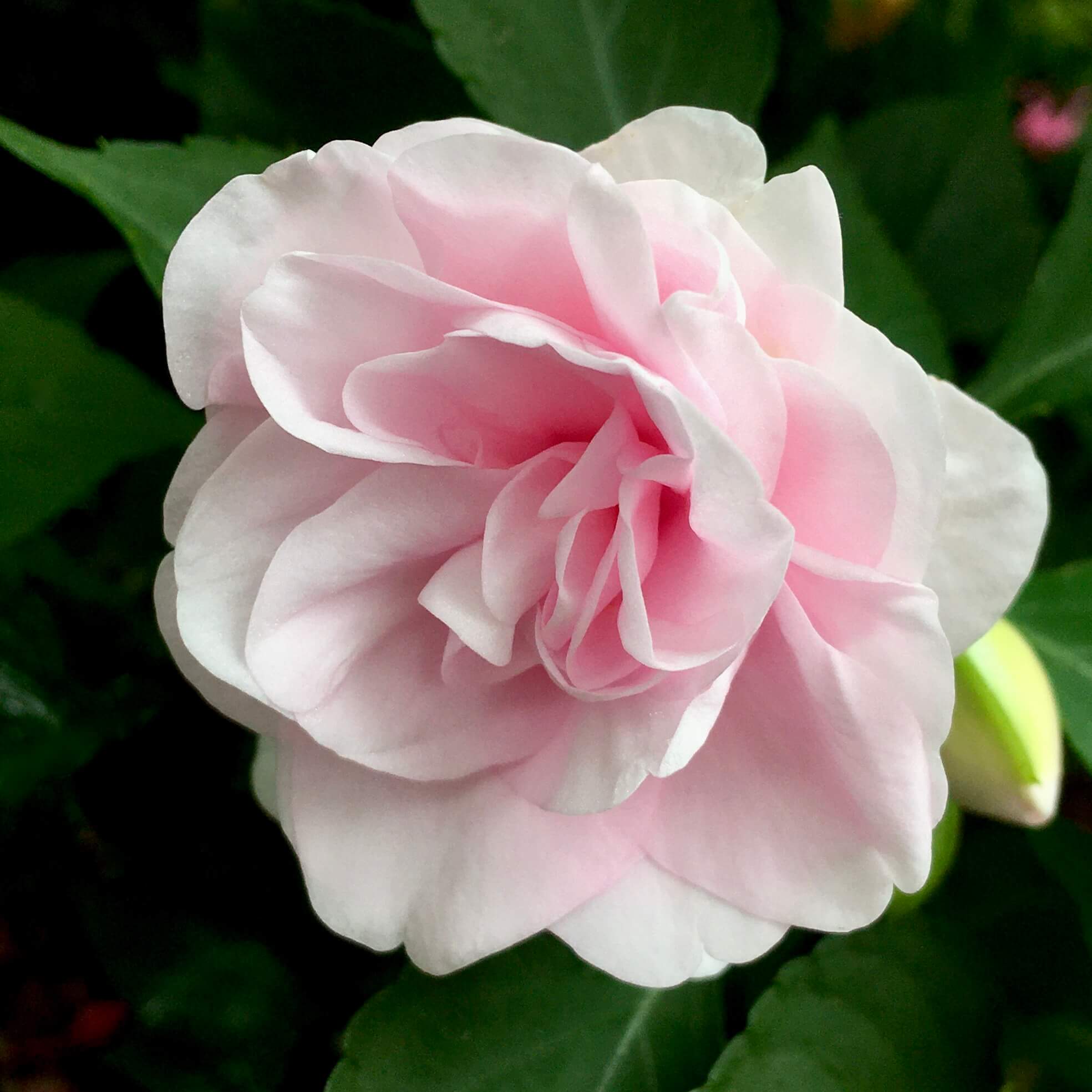
Double Impatiens (busy Lizzies) usually remind me of rosebud-sized roses, but this one seems to be channeling an inner camellia.
There are lots of native (to Mississippi) plants too.


As these pictures were taken on different visits, I’m not sure if there are two possums, hanging by their tails, or one that has undergone a radical make-over. If so, the blue nails have been repainted a bold red-pink.
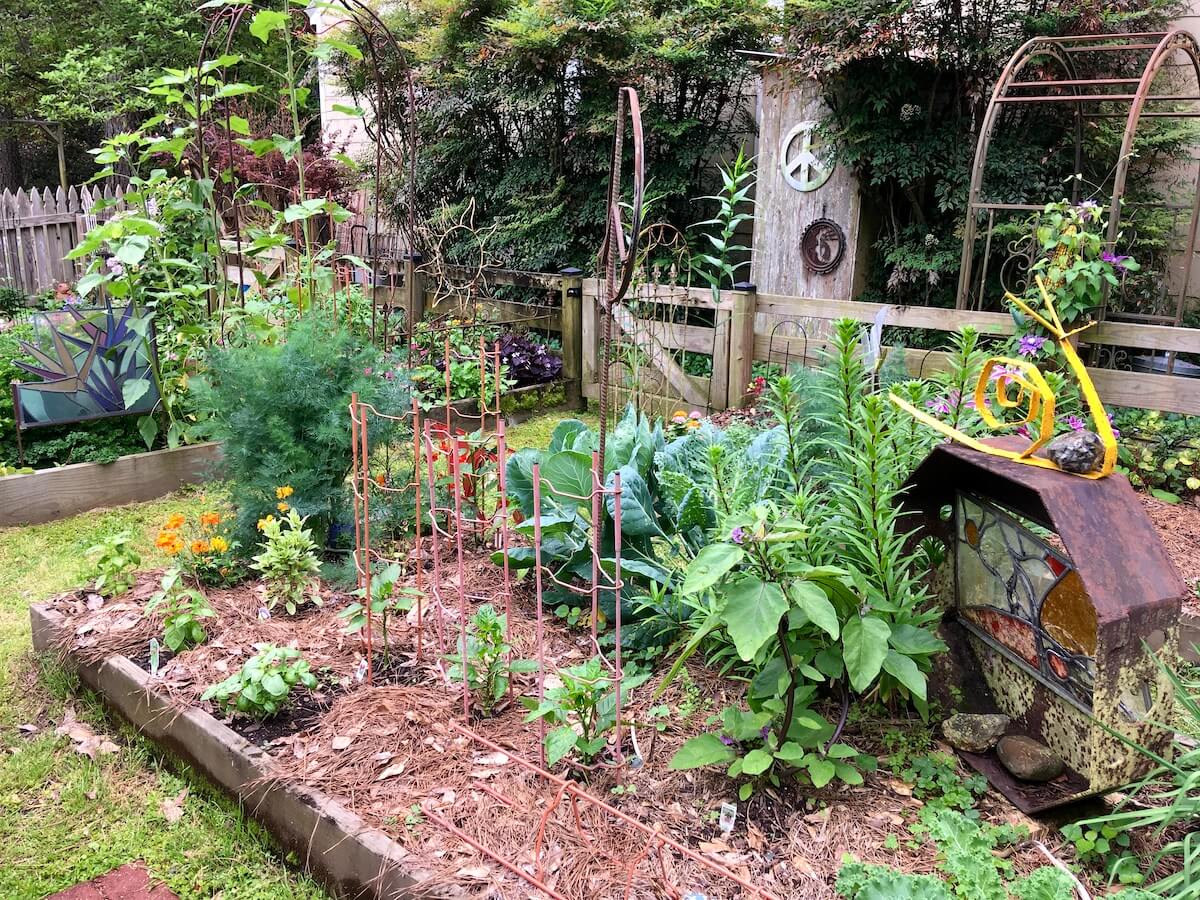
While Becky takes care of the flowering plants that are my main focus here, Don looks after the fruits and vegetables, including some very prolific blueberry bushes.
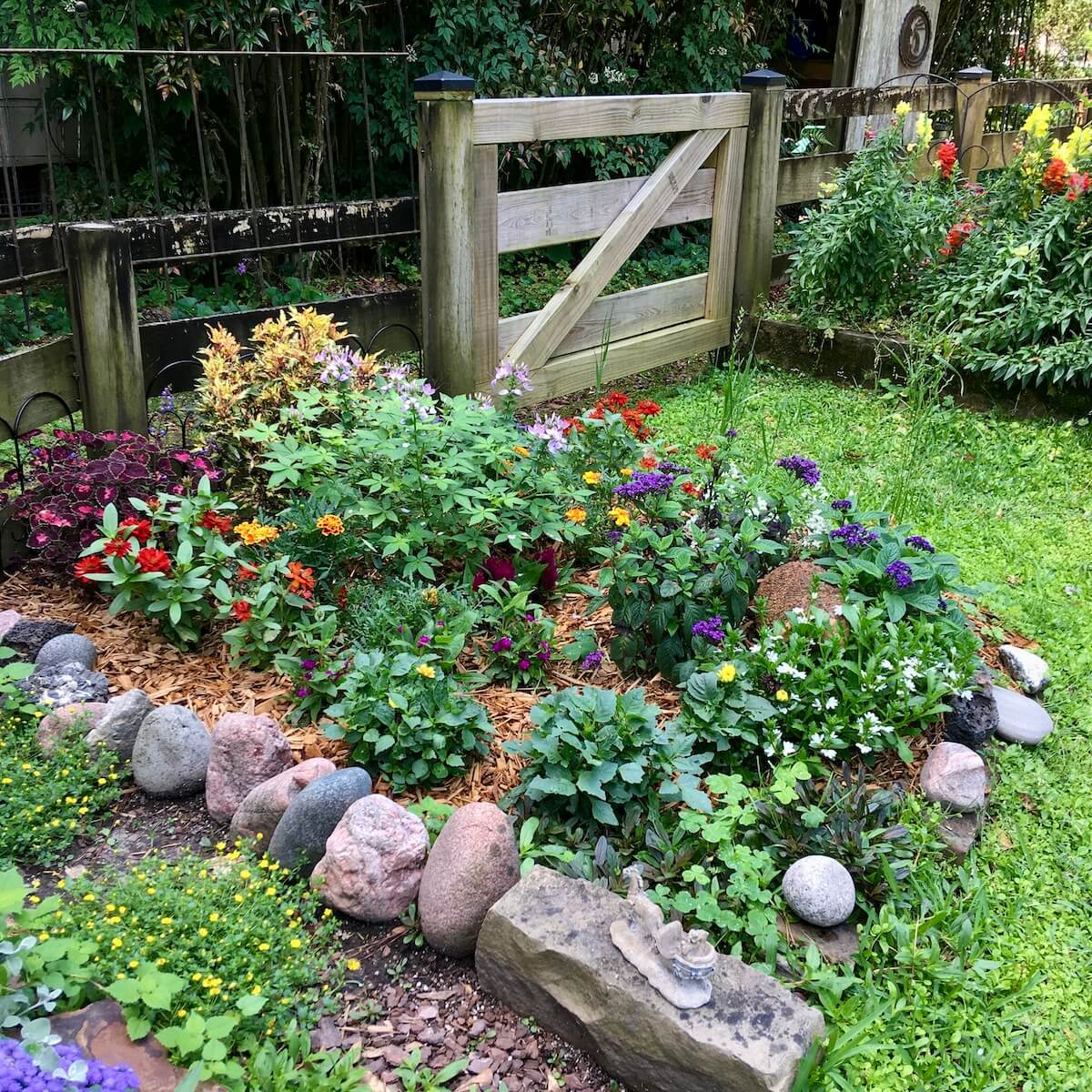
Nature lovers might find their collection of patterned or engraved stones, pebbles and rocks almost as fascinating as the plants. Above, they edge a flower bed, but visitors will also find them under plants, along walls, by the pond, and in pots.


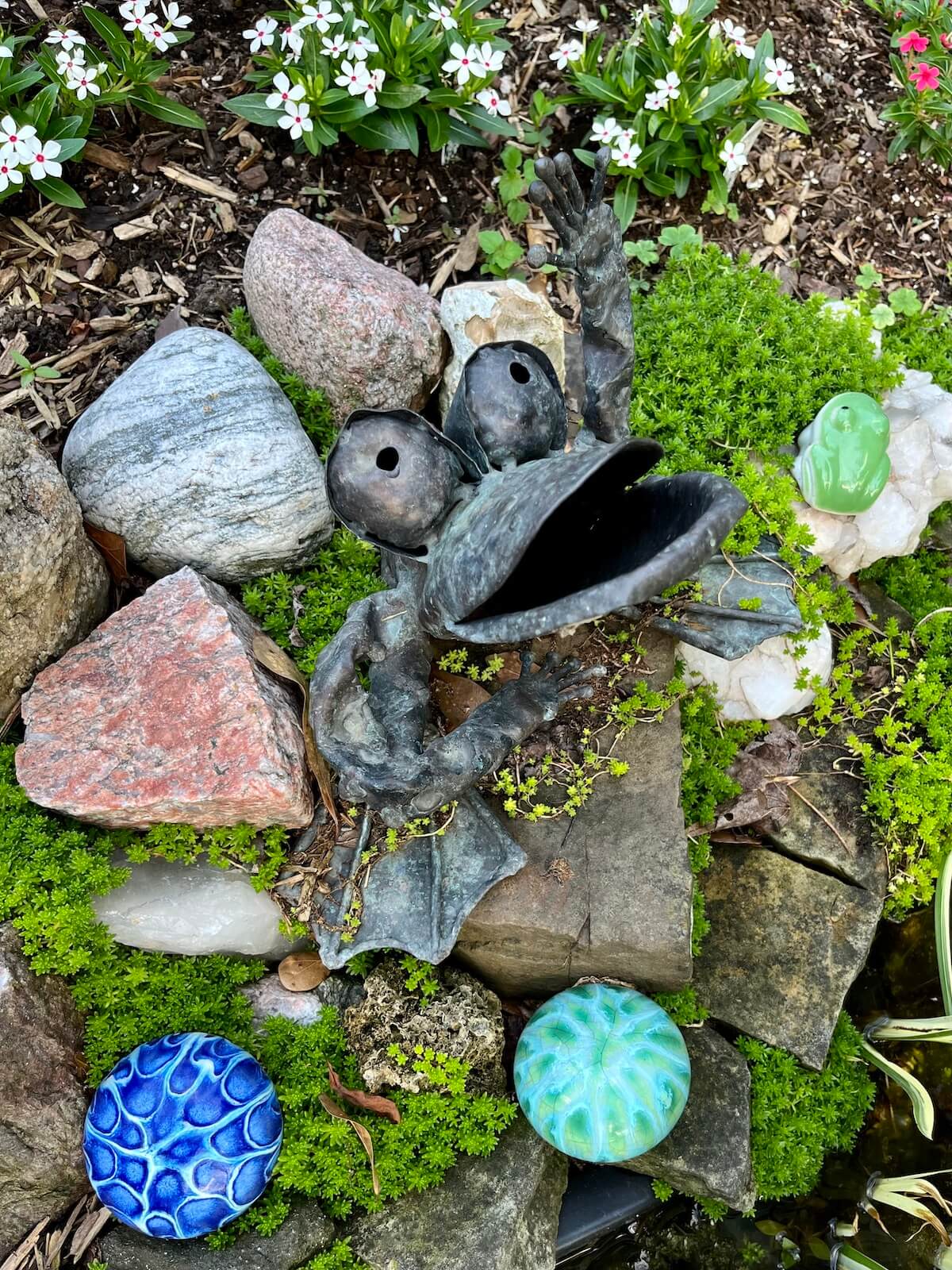
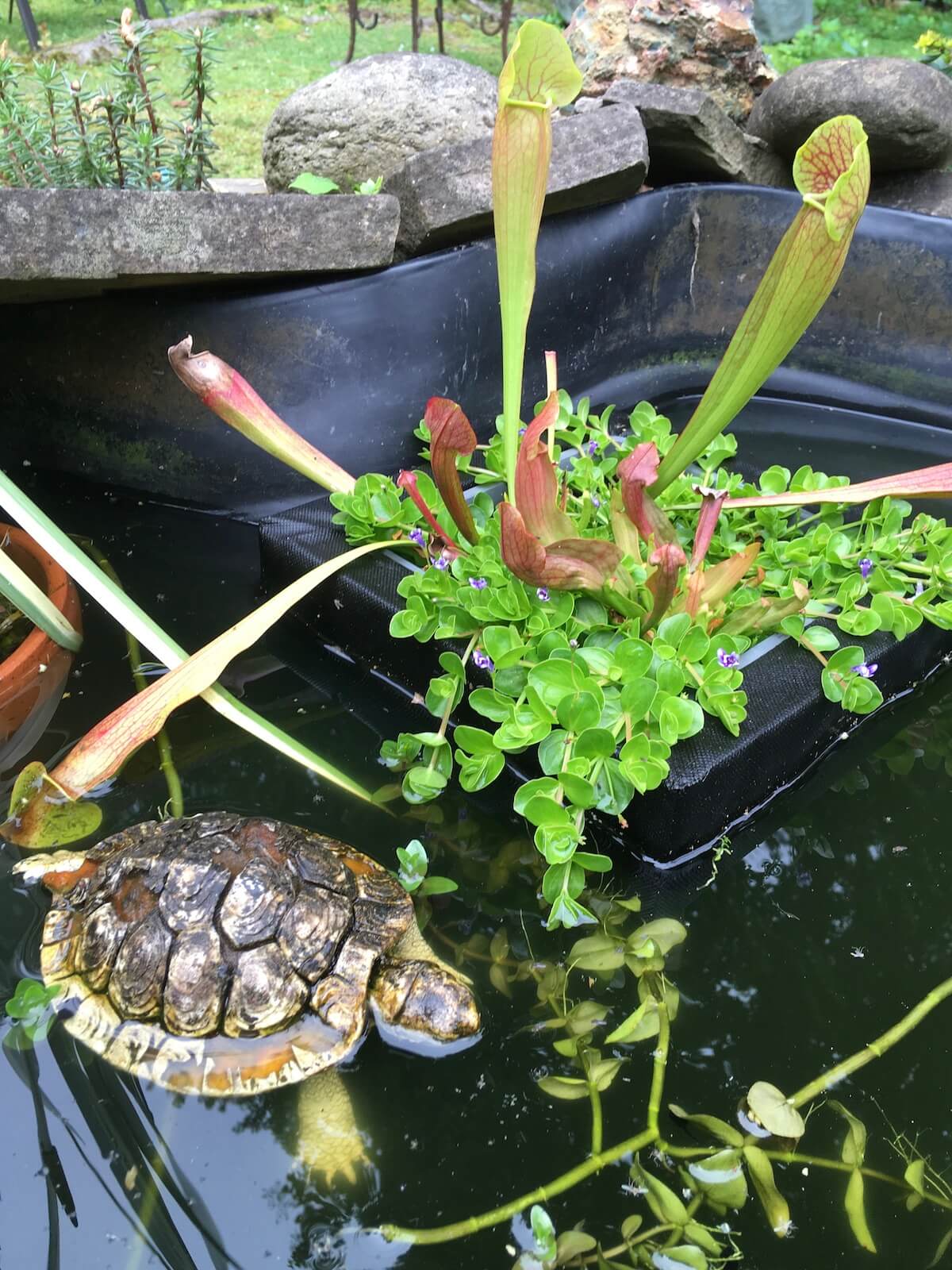
I’m sure Becky spends quite some time keeping the plants in balance by splitting and moving them and perhaps passing pieces of some of the more vigorous ones along to friends. It may help that when miniatures spread, it rarely causes a problem!
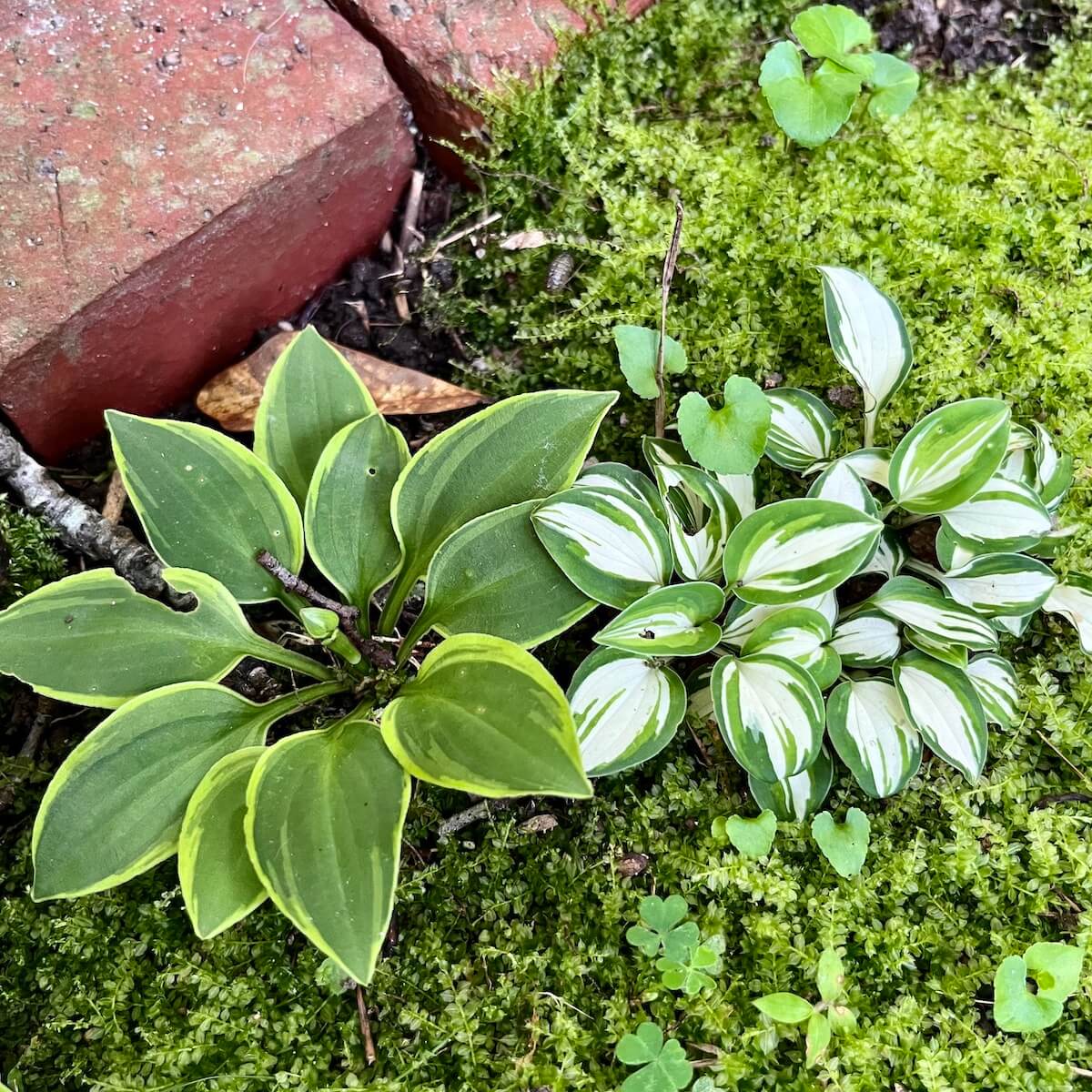
The tiniest hosta has leaves not much bigger than a fingernail.
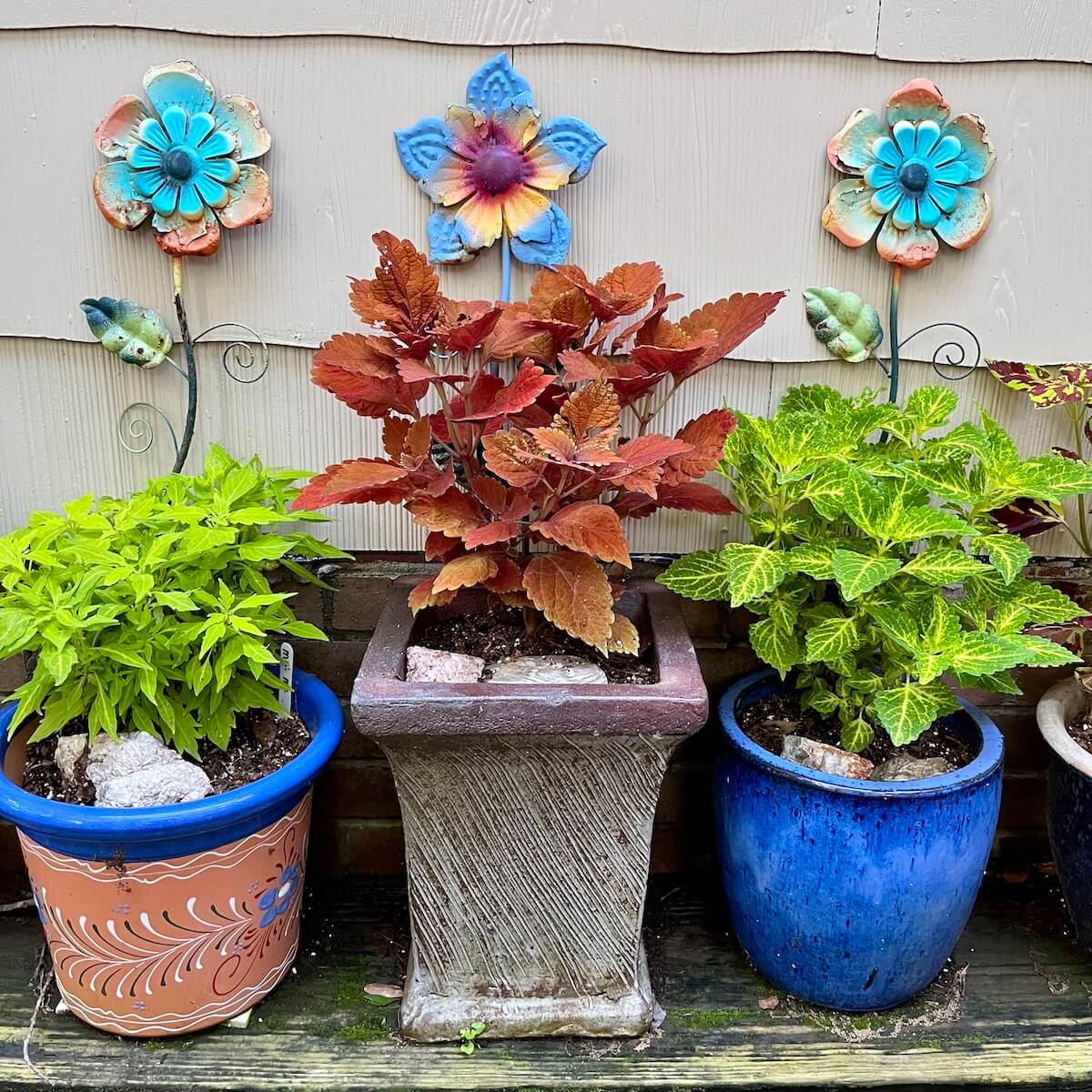
As Becky observes, the garden could easily become a lot of work – too much – so she has resolved to make sure she’s having fun. (Fancy spreading 70 bags of bark, anyone? No?)
Working in a garden centre gives her access to some of the more choice or unusual plants. When some alternatively coloured plastic flamingoes hadn’t flown out of the store as well as the buyer had hoped and there were quite a few left over, Becky gladly picked some up.
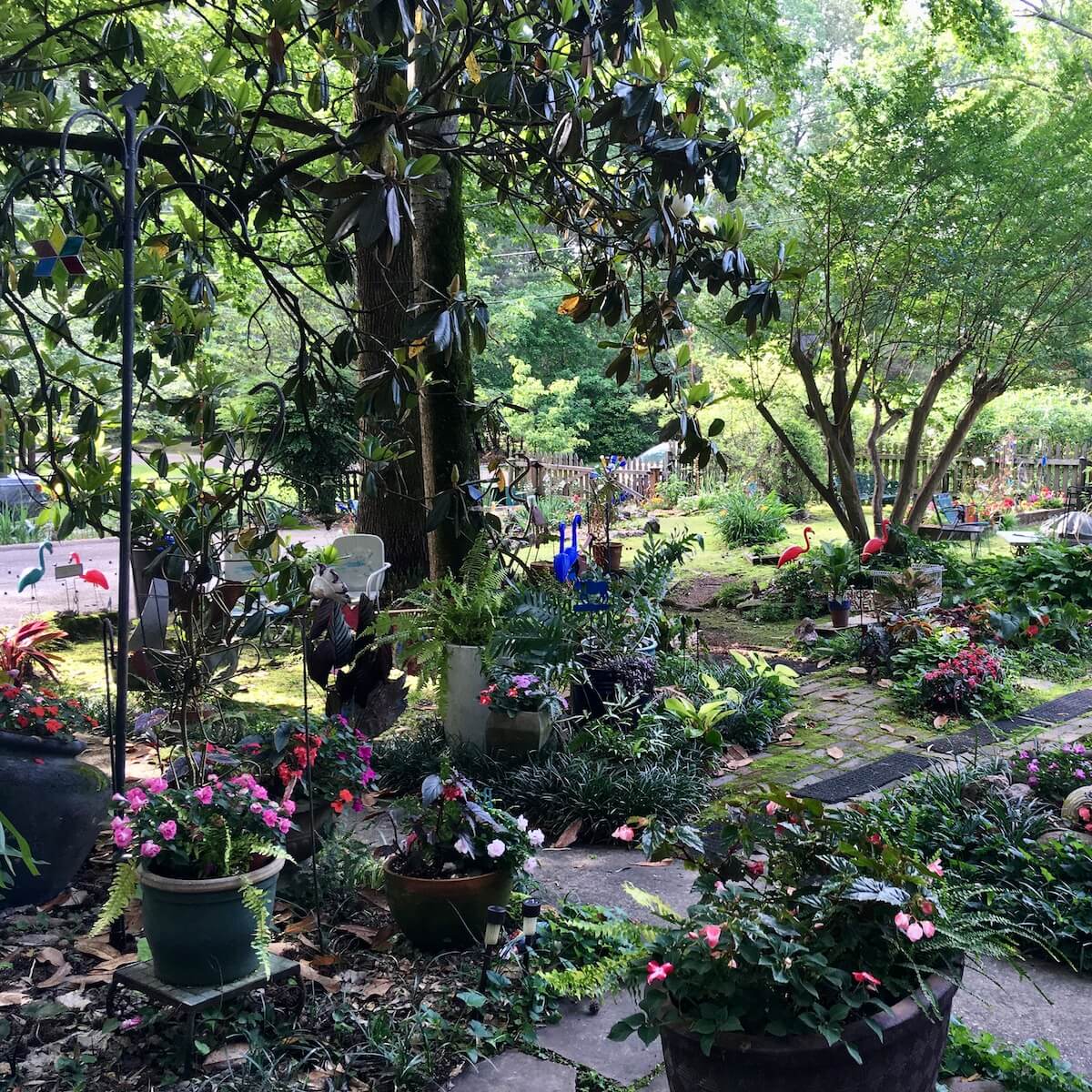
And yes, of course, there’s more than a hint of compulsion on display that other keen gardeners may recognise. It’s not easy to resist getting that new, prized plant we are going to have to find room for.
But it all demonstrates how people can make or gather together a remarkable body of work simply by following what pleases them and by keeping going, adding a bit here and there.
A bit like blogging, don’t you think?
As I wanted to include lots of pictures here, some are in the form of slide shows that you can hover over and scroll through (the black edged ones). I’m hoping this works for most readers.
 Susan Rushton
So much to see! I can see why you can’t put down your camera. I love your comparison of the garden to a poem – so apt.
I can see why that might resonate with you.
I love Iris the best but all of your flower shots are amazing.
Thanks, Teresa. It’s always a treat to visit this garden.