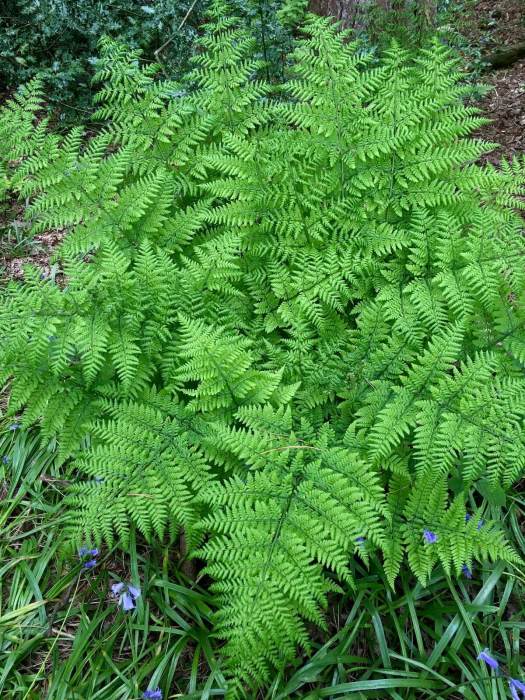
Once, my sweetheart and I were coatless in the middle of Sunnyhurst Wood when a sudden downpour threatened to drench us. A young girl and boy appeared out of nowhere, shyly offering each of us the largest bracken frond they could find to pick, gesturing that that we should use them as makeshift umbrellas.
We accepted, thanked the children (who, satisfied, ran off to their parents) and carried the fronds over our heads as if they offered a magical form of protection, which they did – the kindness of young strangers.
I suppose drippier umbrellas have been used by smilier people, but we had a good try for the world record.
Good old ferns. They are so common where I live that it would not be surprising if I never saw them. (I’m using ‘saw’ in the sense of ’noticed’.)
It’s a tribute to their poise and perkiness that I so often find myself standing before a clump, entranced by its sway.
When we do pay attention, these ancient plants tap into our instinct for pattern. We can trace movement around clearly defined planes created by a central rib plus an array of secondary ones.
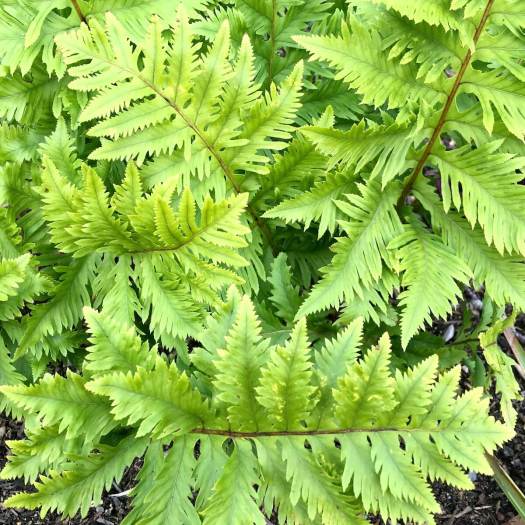
Some forms gently cup or ruffle. Segments ordered in descending size taper into waves and curls as if with some knowledge of physics we (make that I) lack. Each segment harmonises with its neighbours to harvest available light, whether the fern finds itself in an open field or in a shady dell.
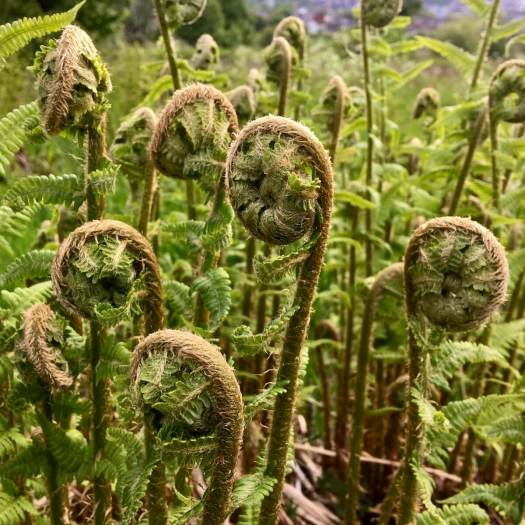
We witness fiddleheads in the act of unfurling.

Fronds spill out and around like green fountains.

Many delicately bend at the tips.
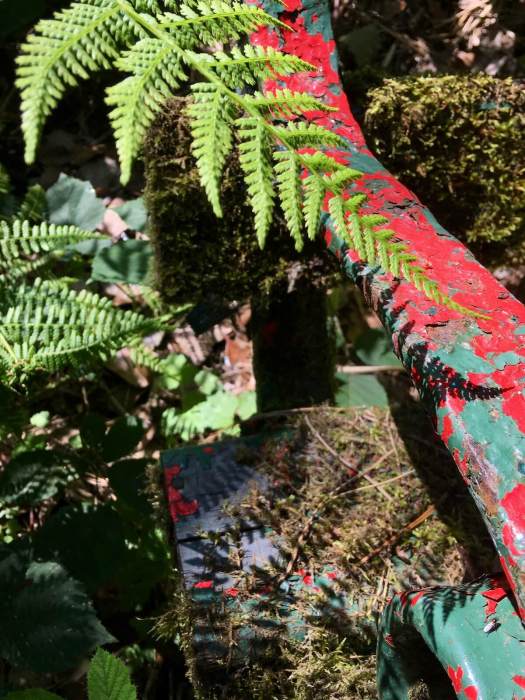
Their shadows can be alluring too. Ferns don’t flower except in folklore where spotting one in bloom would have been like winning the national lottery today, except with a lifetime happiness guarantee.
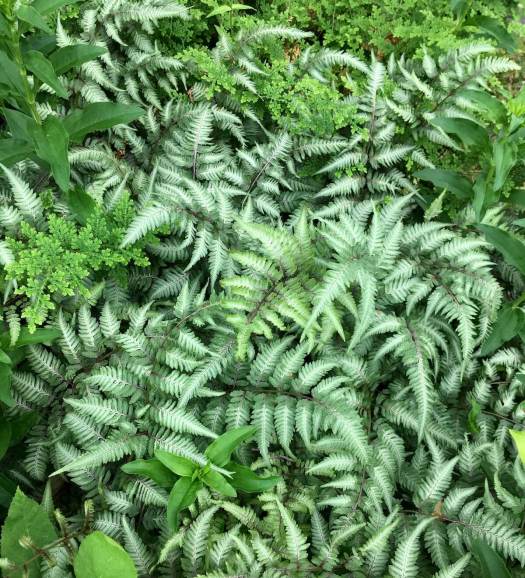
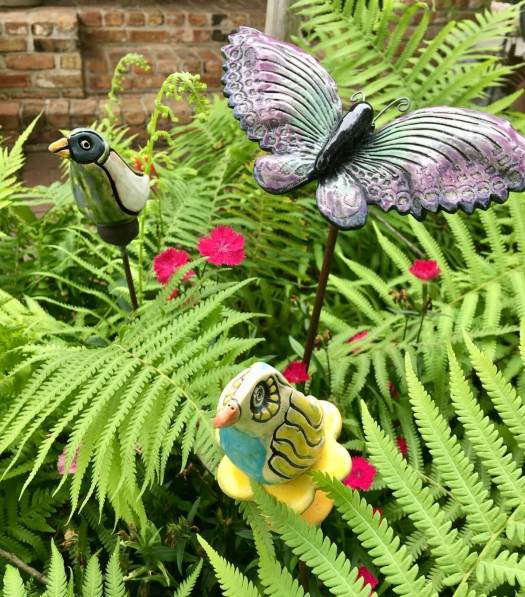
Ferns combine well with flowering plants and garden art, providing elegant lines and filmy green screens, so I wanted to share pictures of them in garden settings. The three below were taken in private gardens in my sweetheart’s neighborhood of Fondren in Mississippi.


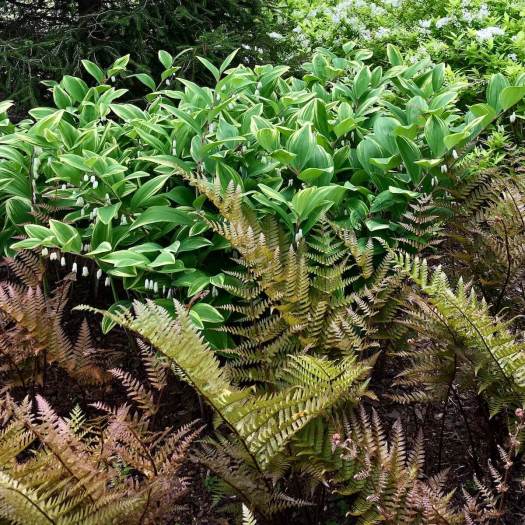
Breeders have selected out interesting forms where bolder colours accentuate their lines. I love the painted ferns, although it can be a struggle to pick out the differences between them at flower shows.


Plant collectors have moved specimens around the world.

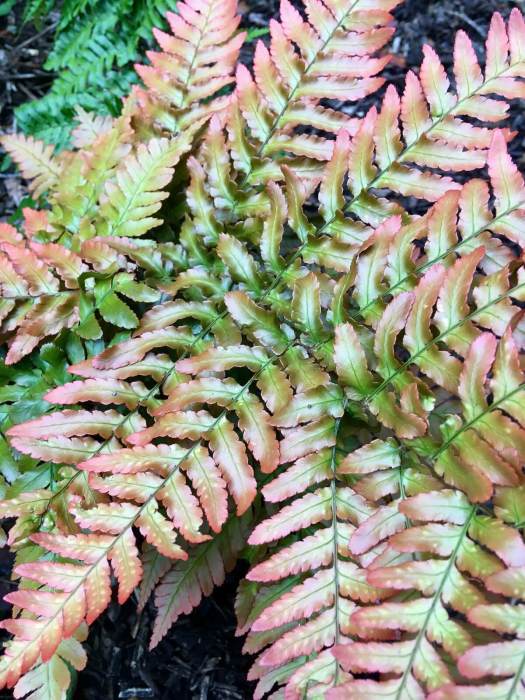
It may be an exaggeration to claim ferns offer year-round interest, but their outlines can persist after many perennials have collapsed for the year.
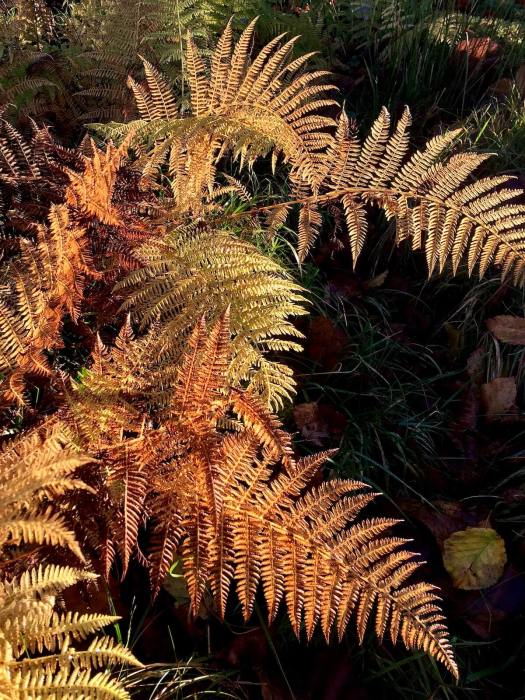

While some ferns are tender or deciduous, others are evergreen and hardy as they come.


I’ll end with the 2023 version of a shot I attempt every year, amazed over again that the baldness of winter has fully returned to leafy, elfin greenery. Every ingredient in this scene is simple and wild, assuming the meadow counts. I love seeing this particular combination, even though the balsam is persecuted. I’m not sure how I feel about that – a post on the subject may be due.
Shared for Denzil’s Nature Challenge: Ferns.
 Susan Rushton
Fabulous collection Susan 🙂