In Phantastes by George MacDonald, a country maiden warns the hero, Anodos, to shun the Ash and the Alder, but says he can ‘trust the Oak, and the Elm, and the great Beech.’ Sure enough, Anodos meets a Beech tree with a voice ‘like a solution of all musical sounds’ who longs to be a woman. She invites him to cut lengths from her hair, and uses them to create a protective girdle of beech leaves for his magical journey.
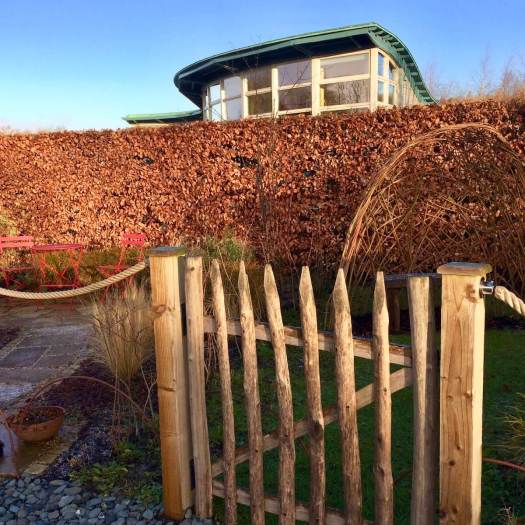
All fantasies have elements of truth. Beech marks our boundaries, provides windbreaks, backdrops and privacy screening for the gardener; food for wildlife; and nesting places for birds.
European Beech (Fagus sylvatica) can live for 250 years or more. Grown as a tree it can reach 45m (148ft). Since Beech clips well, it can be kept at almost any height, making it one of the most popular hedging plants in the world.
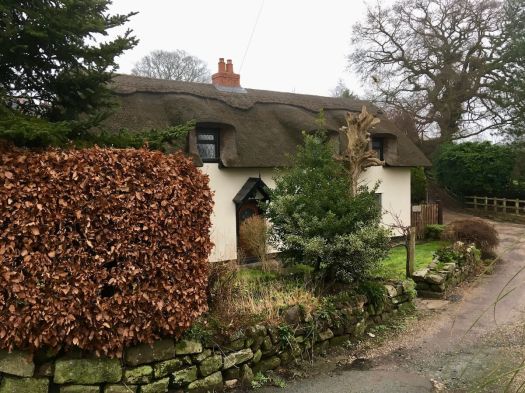
Beech is increasingly used as deciduous topiary, so you may see it clipped in columns, serpentine or wiggly hedges, panels, domes, beehives, cubes, mushroom shapes, balls or even sliced lollypops on a stick.
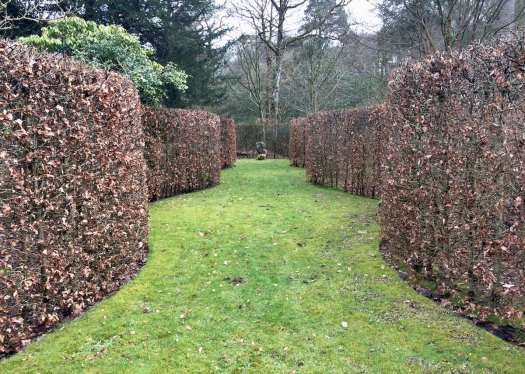
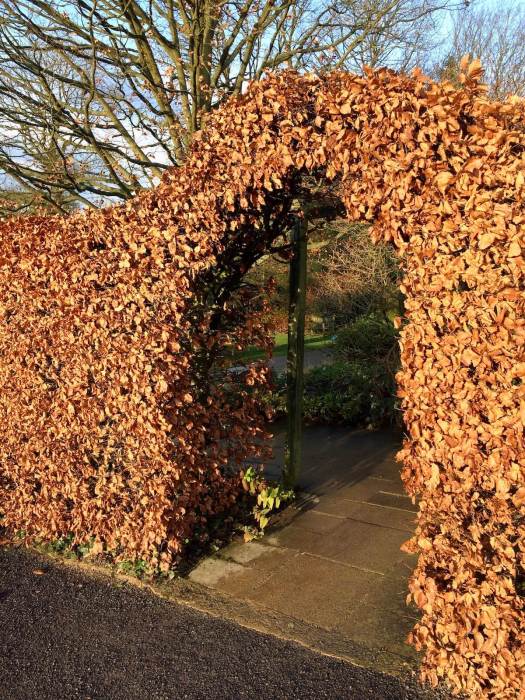
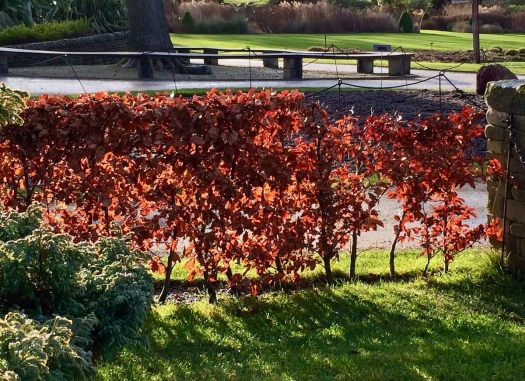
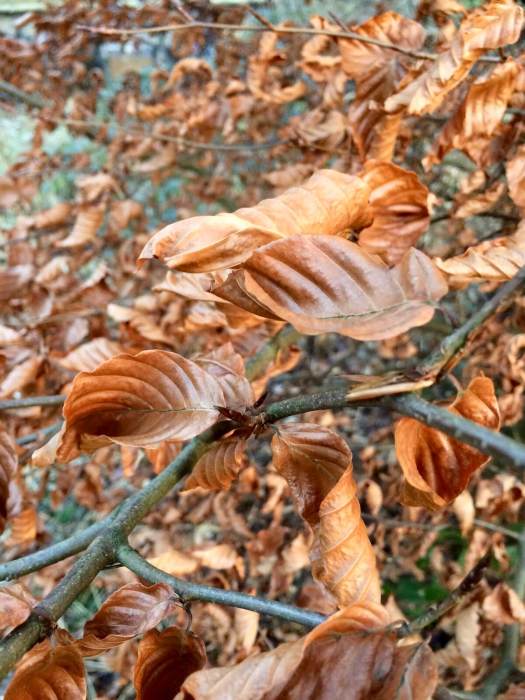
In winter, the plants retain their bronze-brown leaves in patches after they have dried, giving an ethereal, partly transparent look. Eventually the old leaves will give way to fresh spring growth, but until then, their colour livens up winter woods and gardens.
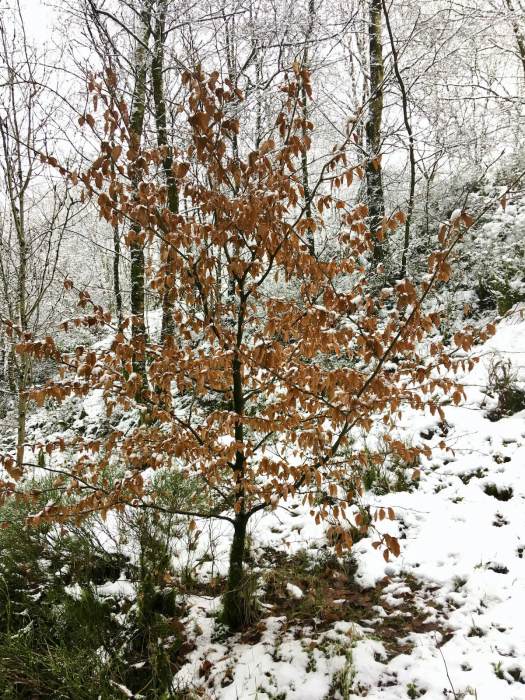
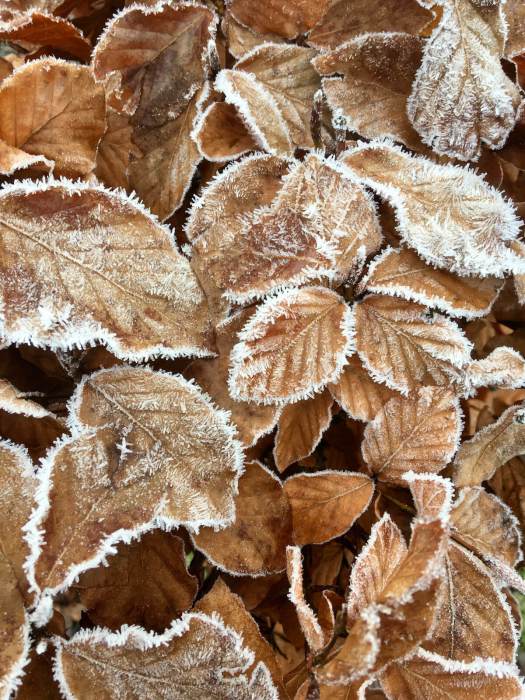
Shared as part of Jude’s Life in Colour: Brown.
 Susan Rushton
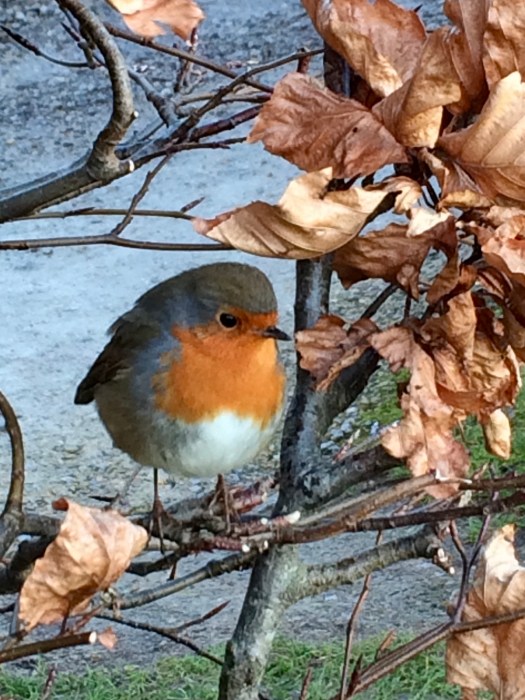
I always love a glade of beech trees, but this time, I think the robin steals the show. Nicely framed by the beech leaves of course.
I’m sure if the robin hadn’t wanted her picture taking, I’d not have got it. It’s not as if I’d had a zoom lens to take her by surprise.
They do like an audience.
About beeches I know nothing, so this was all new to me — and so very beautiful. Brown can be a cozy warm color, and I can’t help noting how like the color of toffee in that first photo. Or maybe caramel. I’ll grant it doesn’t take much to remind me of dessert, but these browns ARE quite buttery. That little bird looks suspiciously like the bluebird that perched on my deck last year. I’d like to think it’s the exact same one. Lovely images!
Both have the classic, round-tummied bird shape. American robins always seem gawky compared to our little things.
Ours are not only gawky-looking but they frown incessantly. Most unpleasant. I’ll take your version any day.
Not Christmas card material, then.
All lovely shots. The second wins my prize for originality
I hope it’s a really good prize. 🙂
🙂
I didn’t realise how diverse a beech can be! I adore the frosted leaves photo, and is that a robin in the third photo? I have never seen a robin, but my mother used to tell me how much she loved seeing robins flitting around the gardens in Cheshire, before my family emigrated to Australia.
Yes, well guessed! Robins are such brave, friendly birds, more anxious not to miss anything we might be unearthing than to avoid us.
Beech trees are so majestic, and you can’t beat the leaves when the sun shines through them. A fine tribute to the species, Susan.
I’m glad you liked it, Tish.
All so very beautiful
You can’t avoid them capturing your attention at this time of year.
Very true words 💖
Even in winter those well-manicured hedged look amazing, great shots of brown.
There’s a trick in the timing of the pruning.
Yes, there is and not being too enthusiastic with the clippers.
A wonderful collection! The last image is extra special and my favorite.
The frost seems to be sketching out the edges.
Thanks for sharing!
My pleasure!