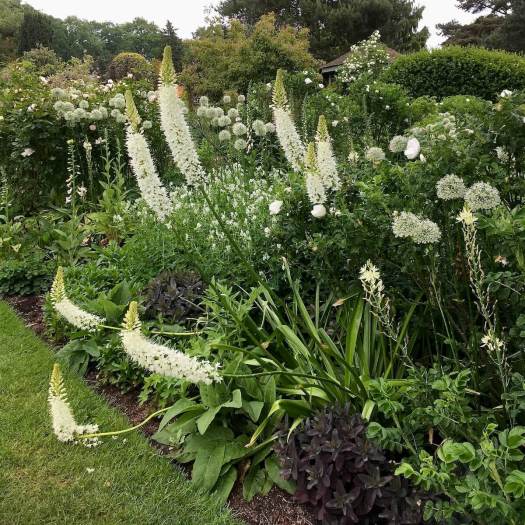
We’re not supposed to ascribe human characteristics to anything else, but I can’t help it. Somebody planted white foxtail lilies (eremurus) with alliums to provide height in a white flower border. The alliums are growing as the designer intended – upwards, but the foxtail lilies are demonstrating how they got their name. I’m fully aware that the light is drawing them in that direction, but that doesn’t stop my mind from doing its thing. The alliums are clustering in groups to gawp at and gossip about the wayward foxtail lilies.
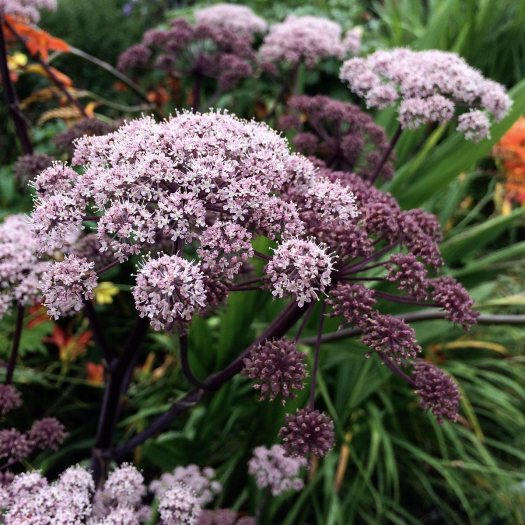
And while I’m thinking about clusters of flowers, what must it be like to be a floret in an umbel? These flowers live in harmony and share resources. Each floret is an opportunity. They are not in competition, fanning out just as much as they need to reach their potential. Together they are architectural and impressive; alone, each is simple, sweet, perfect.
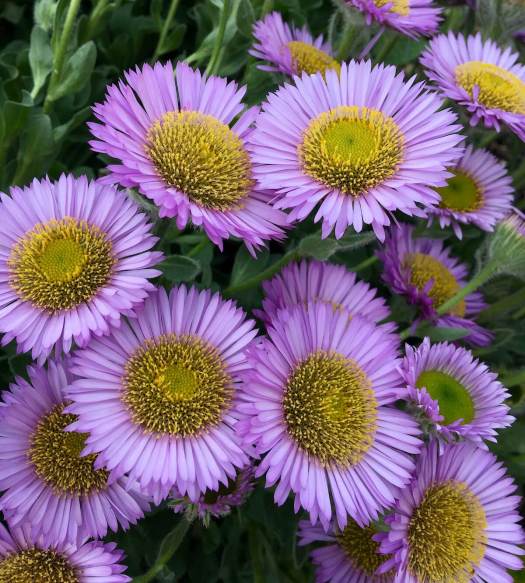
Erigeron flowers are happy to overlap: we’d say they are affectionate, were anthropomorphising allowed. They have no concerns about personal space and don’t feel the need to look in the same direction.
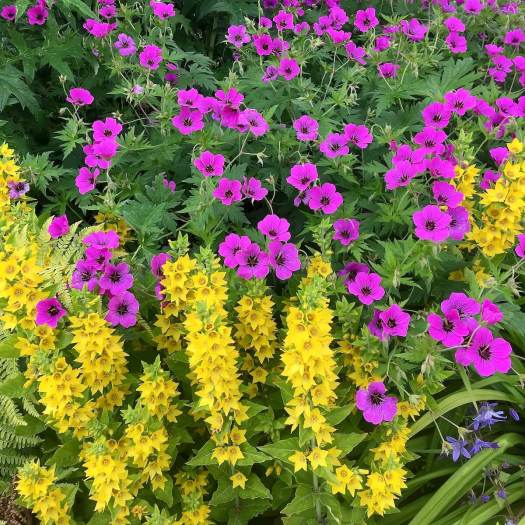
Of course plants do compete. To my mind, these geraniums are in the cheap seats at the theatre or a concert, but some are unwilling to let the loosestrife enjoy their advantage. It takes me back to seeing New Wave bands live when your elbows sometimes had to be out to afford a deterrent to anyone jumping too vigorously around you, especially if you had ventured down to the front. Those were the days!
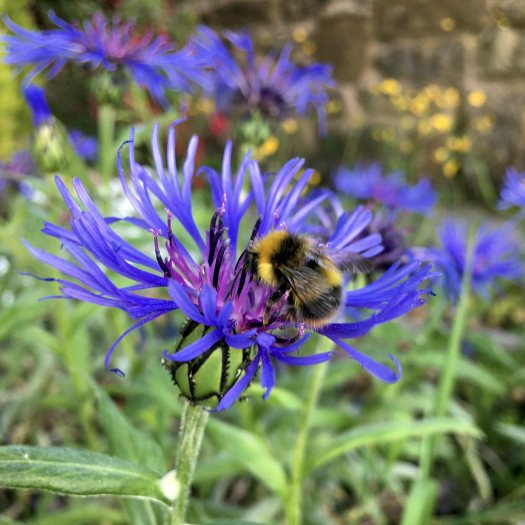
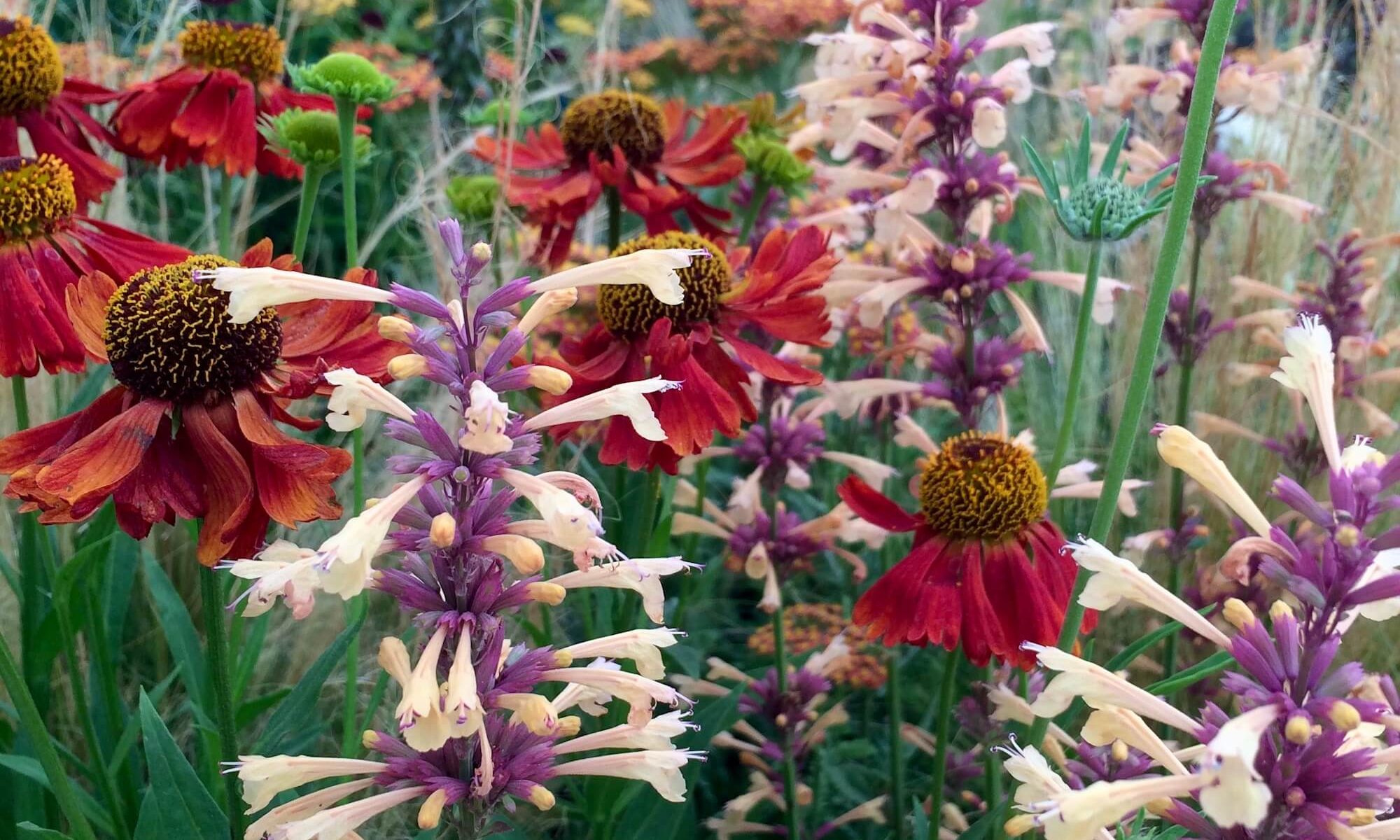
And does the flower know when it is foraged by something furry, and swung by the weight of the bee?
We know that the leaves of the sensitive plant (Mimosa pudica) curl up when they are touched, but may not consider that every plant is sensitive to touch and vibrations. Yet it’s true. While plants might not be tickled by bees (let’s hope for their sake they are not) scientists have shown that plants can respond to the activity of pollinators by rapidly increasing the sweetness of their nectar. Making nectar is an investment for a plant: varying its sweetness is a way of conserving resources.
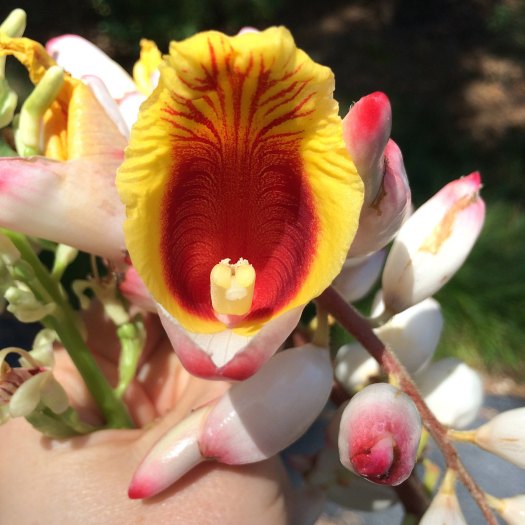
I’ll leave you with a striking flower with undeniably character. You may have a different perspective, but I find it hard to see this one as anything but a demanding little monster.
Shared for SquarePerspectives.
 Susan Rushton
That last photo is indeed hard to see as anything else but a demanding little monster. A delightfully different post.
Some people have suggested a singer, but I am sticking to my less charitable approach.
Yup! Agreed.
Nicely done. The last one is particularly good.
I imagine this was very like Nugget and Mrs Nugget’s view earlier in the year.
Exactly 🙂
I’m with you all the way, Susan. In my imagination, everything is suffused with an animating life force. Beautiful photos! Let the flowers and the bees commune.
It’s a good way to see things. 🙂
Lovely photos! And the one at the end looks kind of angry to me 😂
You wouldn’t want to put your finger too near it, would you?
I love this! We are being held back from full understanding by our anthropocentric definitions of everything in regard to Nature (like thinking flowers can’s “hear” because we define hearing as having ears – lol!).
Thanks for helping break down the barrier.
I loved the article you linked to. A fair amount is being written on this subject now, scientifically, but the groundbreaking book, The Secret Life of Plants, started it all in the 1970s. ❤
(I write "groundbreaking" but we humans have always known at some level that we were surrounded by intelligent life!)
I agree wholeheartedly. I’ve recently read What A Plant Knows, which I enjoyed, and I have the feeling plants know even more than we know they know.
Well, this certainly shows what a different page I’m on: to me that last photo looks like a big soul-satisfying yawn! I must be a whole lot older than everyone else here! Nonetheless, I love the subject matter, as you knew I would. I wonder if anthropomorphizing is a natural evolution of the sense of spirits, gods, sprites, etc. in all things. The sharing of life. I do love your interpretation of the florets, who understand how to be individuals and still fit beautifully with the whole. And gawping alliums! Exactly! The image with the bee is so delicate that it’s hard not to imagine the giggle (from the tickle, of course). What a lovely, imaginative post! Thank you!
(I just noticed that I used “who” to refer to the florets. What? Me anthropomorphize?)
ooh yes a yawn, I can see exactly that!
Thank you!
It’s a slippery slope!
Debie suggested an opera singer and you, the yawn, but I am sticking with my initial assessment. Trumpet vines look like thousands of hungry mouths to me.
I’m sure you’re right that it is linked to our earliest beliefs, but I do wish our culture had more of a feeling for nature. Reading about plant intelligence, it is chilling to realise that research centres around how we can trick plants to perform in ways that suit us. At the same time, I do appreciate that science has made it possible to feed more people than ever before.
Fun post, Susan. I try not to anthropomorphize either, but sometimes…
I confess I don’t really try. 🙂
This is a great perspective with which to view the plants in your garden (which are magnificent). I’m looking at the few flowers that I have and wondering about them as ‘people’. 😀
My pictures are rarely from my own garden which is tiny by most people’s standards.
I’m sure it will be tiny, but fabulous!
Very beautiful, Susan. Gorgeous flowers
Thank you!
This is such a delightful post. Such fun and so much beauty
I am feeling slightly nervous though. I have come here straight from what could be described as the shadow of a triffid, and so to see all these characteristics of flowers I have in my garden I am worried about what might happen later!!
Good luck! I hope there are no unexpected changes in the triffid’s shadow – you would not want it to suddenly loom, I imagine.
😁
Well I guess I didn’t know we aren’t supposed to anthropomorphize as I do with everything!😁
But my take on the last one—she’s an opera singer of course!
Thanks for this wonderfulLy fun post, more please!
You certainly do. If so, she’s got a fine pair of tonsils, but I fear she may be honking it out.
Intriguing post and I see you aware of botanical names. I have given up trying to educate the gardeners I know most them are scared botanical names
I use a mix. I love the folk names too – the more expressive, the better.
That about what I do