Variations on a Theme: Forget-me-not, Heartleaf or Green Alkanet?

Why is it that we like to identify plants? To check whether it is safe or to eat or not, perhaps, or as a first step in working out how to buy one. To check if it is generally regarded by tastemakers as a weed or as a fit plant for a garden. But there’s also a great satisfaction in being able to name a plant just because we can. We feel closer to things we can name.

In April and early May, walking through fields and woods and peeking into gardens, we’ll often see plants with tiny, blue flowers that lift our spirits. They can be solitary, but more often, they are spreading.

Their pure blue flowers are classic forget-me-not style, the simplest of flower shapes with a starry look. Tiny, open flowers about as big as our smallest fingernail contain five rounded petals around a yellow, orange or white centre. But is it a forget-me-not? Perhaps it is, perhaps not.
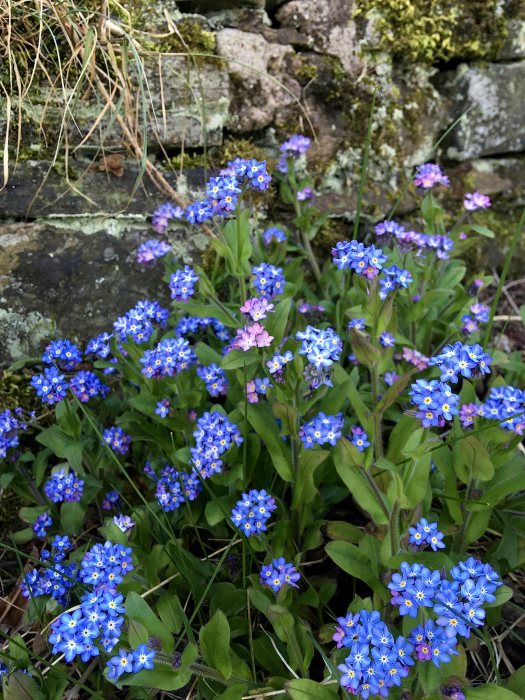
Myosotis (forget-me-not) with a few pink flowers
Myosotis (true forget-me-not) with a few pink flowers

Continue reading “Variations on a Theme: Forget-me-not, Heartleaf or Green Alkanet?”

Green Flowers: Sanicula epipactis

Sanicula epipactis - a woodland plant with yellow flowers and a collar of green bracts

The word ‘verdant’ seems designed for this herbaceous perennial woodlander. Not quite all green, it has yellow flowers that emerge in winter and persist for some time amongst a mound of leaves. Beth Chatto’s website calls Sanicula epipactis ‘an endearing little plant’; I’ll add that the flowers form a cheerful congregation.

They are tiny, clustered ankle high in button-sized domes, surrounded by a collar of lime green bracts. Later, leaves push up between them, gradually unfurling as their stems lengthen. Continue reading “Green Flowers: Sanicula epipactis”

The Giant Houseplant Takeover: A Review With Pictures

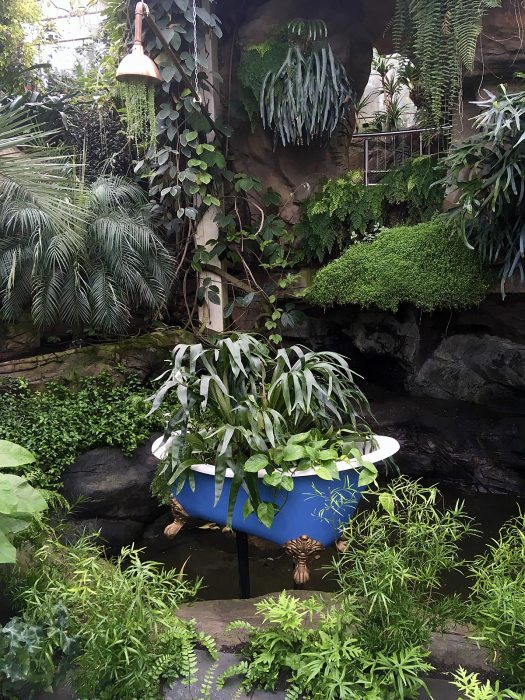
Bath and shower in a tall room hung with plants
An outdoor bathroom, but indoors

RHS Garden Wisley’s houseplant exhibition is kooky and wry: an elaborate conceit. A Victorian house has been abandoned to the houseplants which, in the absence of humans, have made themselves at home.

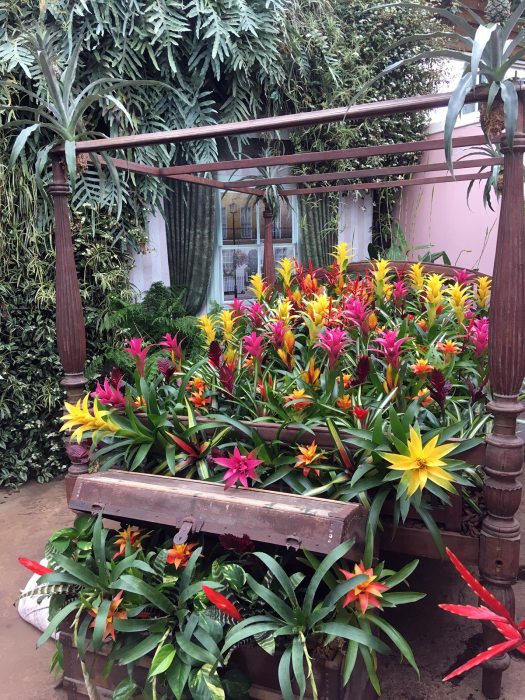
Four-poster bed with colourful flowering bromeliads
Bromeliads fill the bed, trunk and leafy plants tumble down the walls

An abundance of greenery may convey a derelict feel as visitors enter, but it soon becomes clear that everything is carefully arranged and tended. We’re visiting the best-behaved invasive houseplants in the history of mankind. My own ‘triffid’ is much less mannerly. Continue reading “The Giant Houseplant Takeover: A Review With Pictures”

Green Flowers: Hellebores

Helleborus argutifolius has pale green flowers
Helleborus argutifolius

Green flowers are not always as subtle as they might appear – some of them are very striking. Today I’m sharing pictures of some of my favourite green hellebores.

Helleborus argutifolius produces one sturdy stem thickly clustered with flowers and buds a few shades lighter than the darker green leaves, and with golden stamens. The flowers persist for weeks or even months as with all hellebores, eventually forming equally striking seed heads, pollinators permitting. Like Helleborus foetidus (below) this is widely grown in the UK and can be found in many winter gardens.

Helleborus foetidus with dark foliage
Helleborus foetidus

This particular Helleborus foetidus has dark, purple tinged foliage and pretty purple lines around the edges of the petals (or sepals). At a guess, it is part of the Wester Flisk group. H. foetidus is an architectural plant, not because of its height, but because of the stems of elegant, tiered buds that hang like bells above deep, palmate foliage. Continue reading “Green Flowers: Hellebores”

Sheffield PlantSwap: Putting People And Plants Together

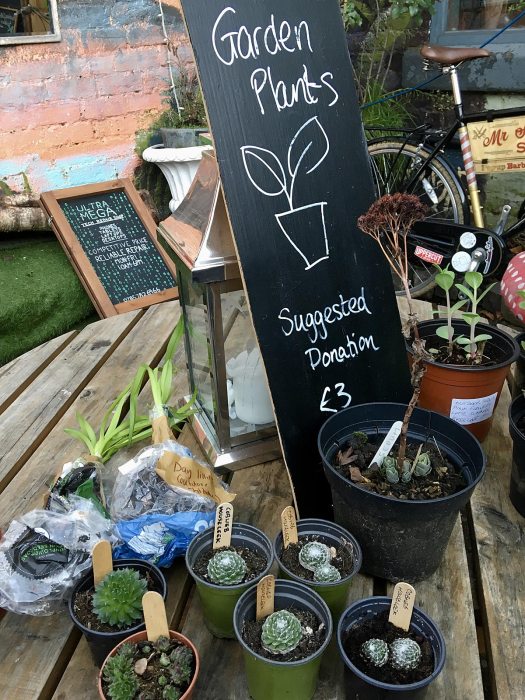
Garden Plants - Suggested donation £3

My sweetheart has a thing about plant swaps. There are few things more likely to get him all misty eyed, other than a sweet puppy (his term for any dog of any age not in full-on attack mode) or a cowboy film where the guy gets the gal.

The first time I went to a plant swap, I was randomly allocated the plant I had taken. That swap had been a lengthy affair and while there were plenty of great plants on offer, the likelihood of anyone getting the one they secretly hoped for seemed slim.

The Sheffield PlantSwap last Sunday was quite a different beast. Best friends Fay Kenworthy and Sarah Rousseau established it to help local people grow more plants without breaking the bank. They explained they didn’t know that much about plants when they started off and would have been intimidated by a garden club, but could see there was a need to get plants and people together. Continue reading “Sheffield PlantSwap: Putting People And Plants Together”