From The Alpine House at Harlow Carr Gardens: Ten Tiny Treasures

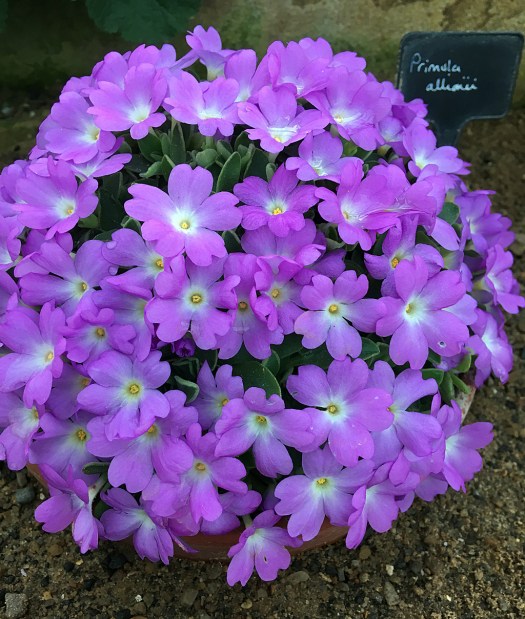
A small primula covered in a mound of flowers
Primula allionii

The northernmost of the Royal Horticultural Society’s gardens, Harlow Carr, has so much to see that most repeat visitors must feel torn about where to go first. Not me – the Alpine House draws me in like a magnet. It’s show time there, whatever stage of the year. The gardeners tend a stock of plants behind the scenes, picking out tiny treasures when they are at, or around, their best for their turn in the Alpine house spotlight. This week our treats included several primulas, some flowering so madly that their leaves were hidden, others wearing their leaves with pride.
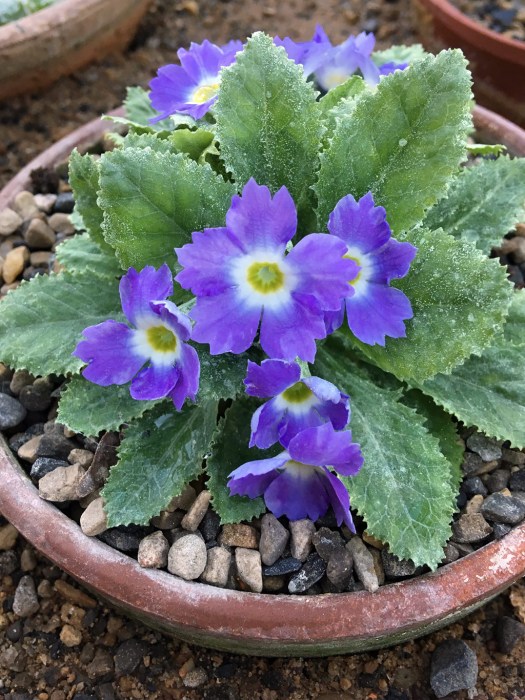
Lavender coloured primula with toothed, mealy leaves
Primula ‘Tantallon’

Some of the plants in the Alpine greenhouse are inside because they need protection from cold, wind or rain; others would grow outside just fine. Common species plants are treated as carefully as rare or special cultivars, all raised up on broad, sweeping benches so we can admire them at close quarters. Plants are grown in traditional clay pots, sunk into a mixture of sand and sharp grit to help keep the roots cool and stop them drying out too quickly. Continue reading “From The Alpine House at Harlow Carr Gardens: Ten Tiny Treasures”

Painterly Alstroemerias

White, yellow, pink, purple and orange flowers

I once grew a batch of the ‘ordinary’ orange alstroemerias from seed. They did well, very well, dispersing by any means at their disposal. I should have anticipated that having grown them from seed, they might continue to grow from seed by their own devices.

Modern varieties are bred to have purer colours, to be less invasive, hardier and to repeat flower more prolifically. These alstroemerias were exhibited by Alstroemeria Direct at RHS Tatton Park Flower Show.  Continue reading “Painterly Alstroemerias”

Winter Walk Around Bodnant Garden in Wales

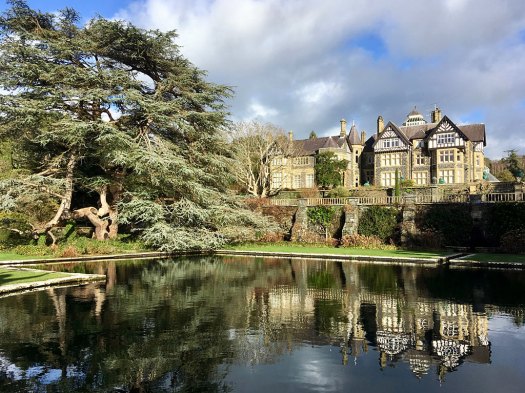
Bodnant House dwarfed by a large cedar tree

Only last week I was bemoaning the lack of a Tardis to transport me to a snow-covered Bodnant Garden, near Tal-y-Cafn, Conwy, Wales. The universe did not send me a Tardis, but it did the next best thing. A friend asked us to check out the place his family came from – Dolgellau – and Bodnant just happened to be on our way home.

While the snow in the garden had long gone, heavy white shawls on the Snowdonia mountain range opposite gave Bodnant a wintry feeling. The 130 acres of garden give plenty of scope for walking: you really need some form of season ticket* to make the most of it all. Continue reading “Winter Walk Around Bodnant Garden in Wales”

In Praise Of Winter Gardens, Plus A Tip Or Two

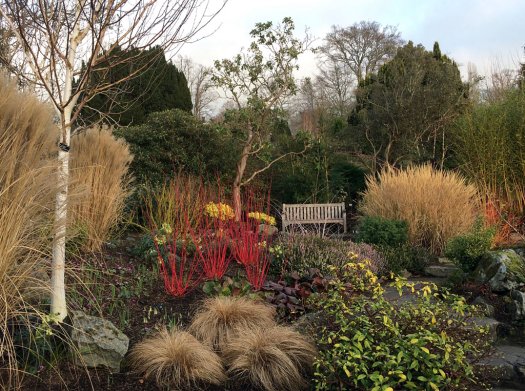
Wooden bench amongst winter plants and grasses
Bodnant Garden’s colourful winter garden

I’m a big fan of winter gardens that make the most of plants that look good when herbaceous borders are expanses of mulch-covered dirt. Trees with white trunks such as this Betula utilis var jacquemontii (Himalayan birch) often feature, together with evergreens, light-reflecting grasses, red stemmed Cornus (dogwood), Skimmia, Hamamelis (witch hazel), flowering heather, hellebores, Bergenia, Cyclamen and winter flowering bulbs.

Plants like this seem to shrug off winter weather, but the current cold spell means that the hardiness of plants of all types is being tested in many UK and American gardens.

Some gardeners go to great lengths to keep tender plants alive, wrapping their pots up, covering them with some form of plant blanket, or moving them indoors. Others will only plant what grows. Many of us are somewhere in-between, willing to offer our plant treasures a helping hand if conditions are unusually bad, provided we know what to do.

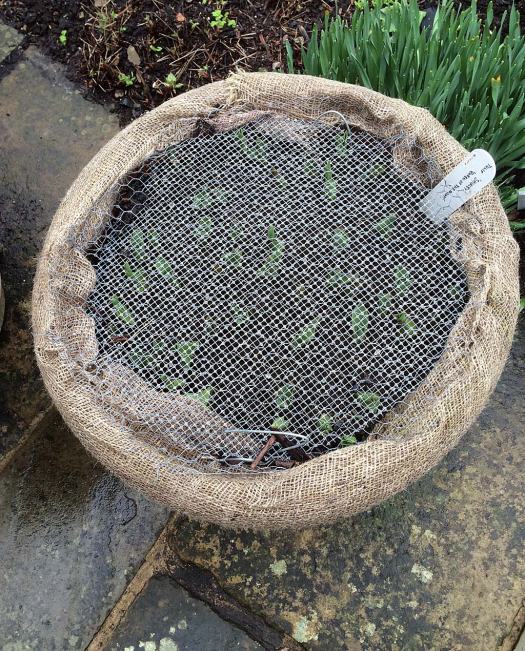
Overhead view of a pot protected from the frost
A pot of bulbs wrapped in burlap, with a double layer of netting to deter squirrels

Continue reading “In Praise Of Winter Gardens, Plus A Tip Or Two”