“Whatever our differences in culture or external appearances, there is more that unites us than divides us.”
Halima Cassell
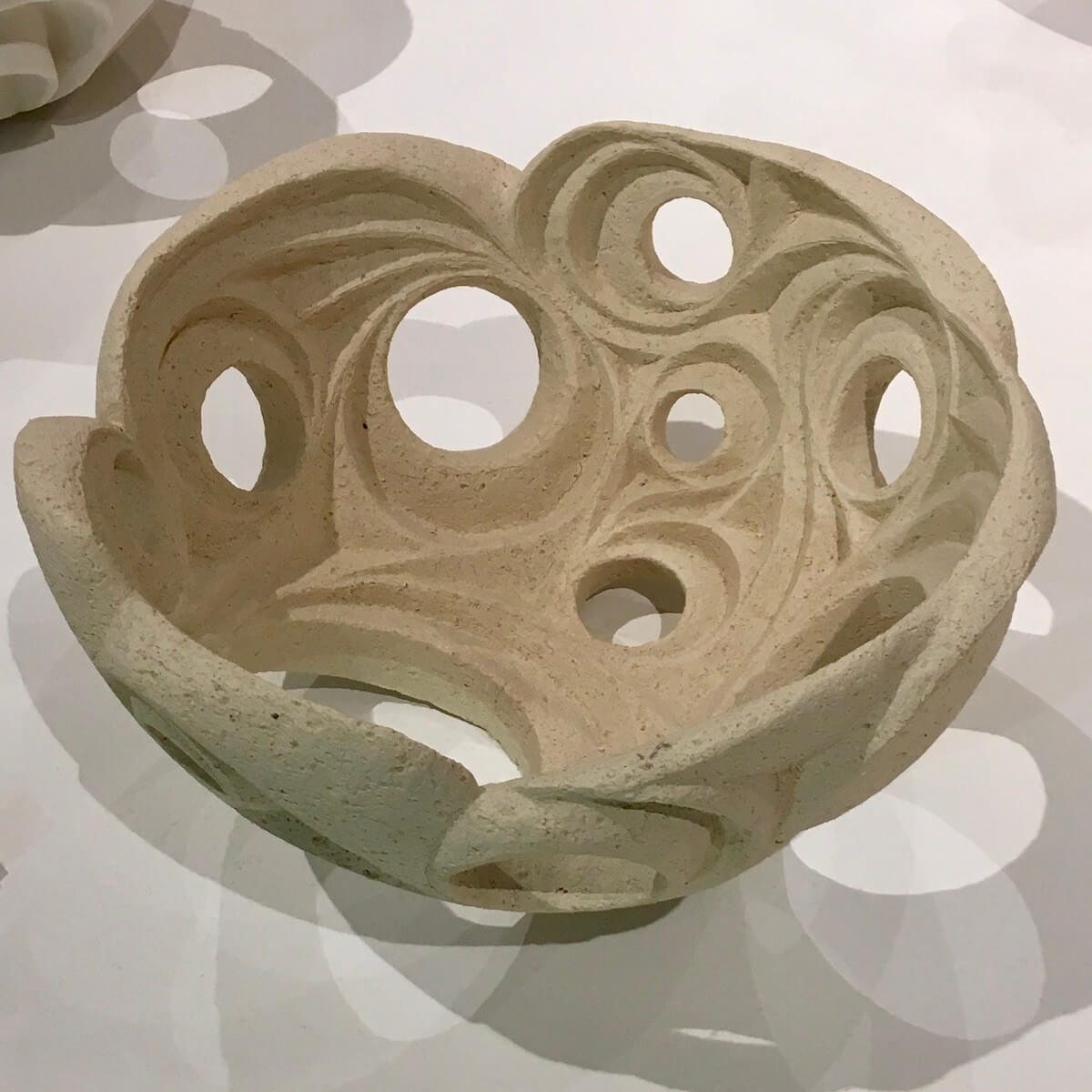
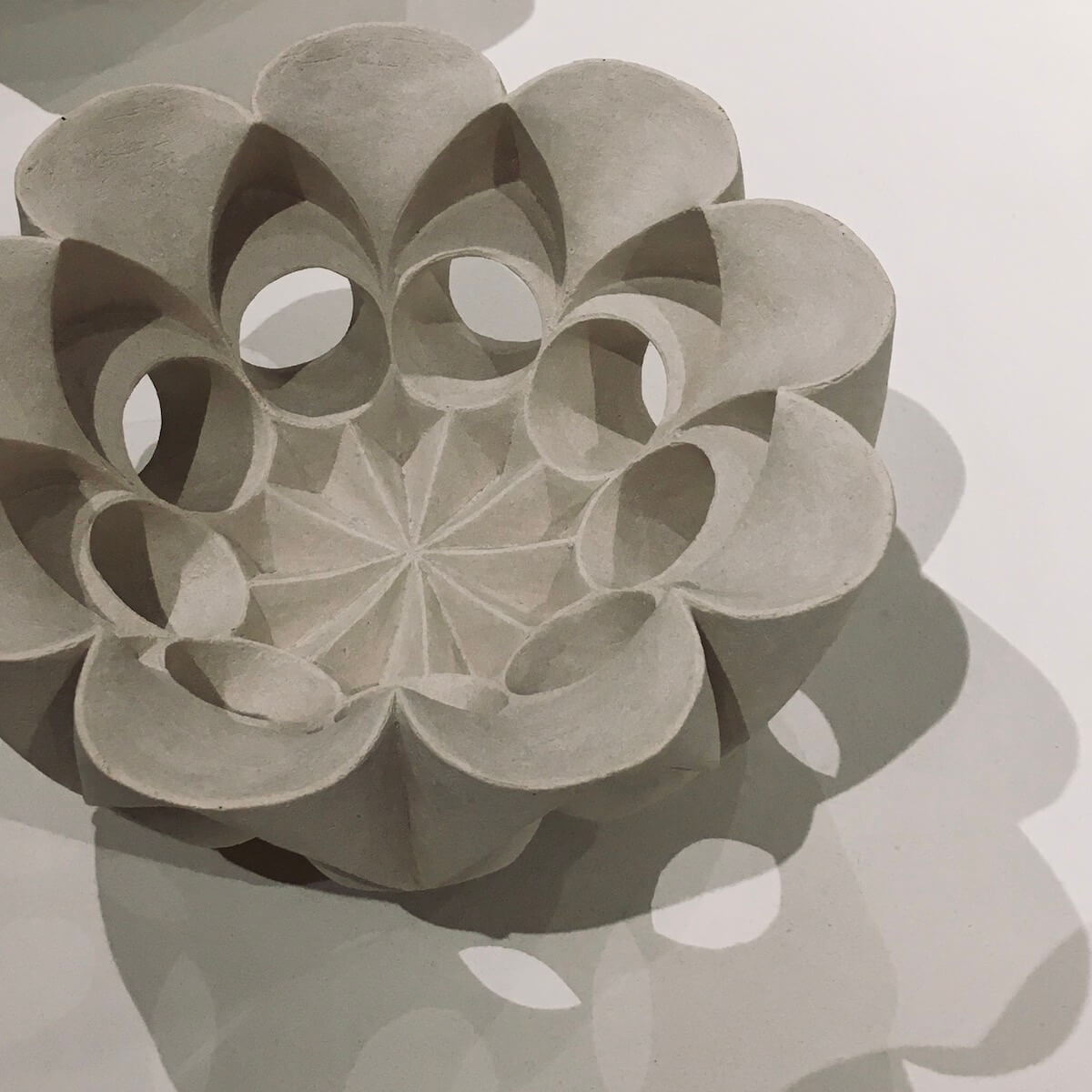
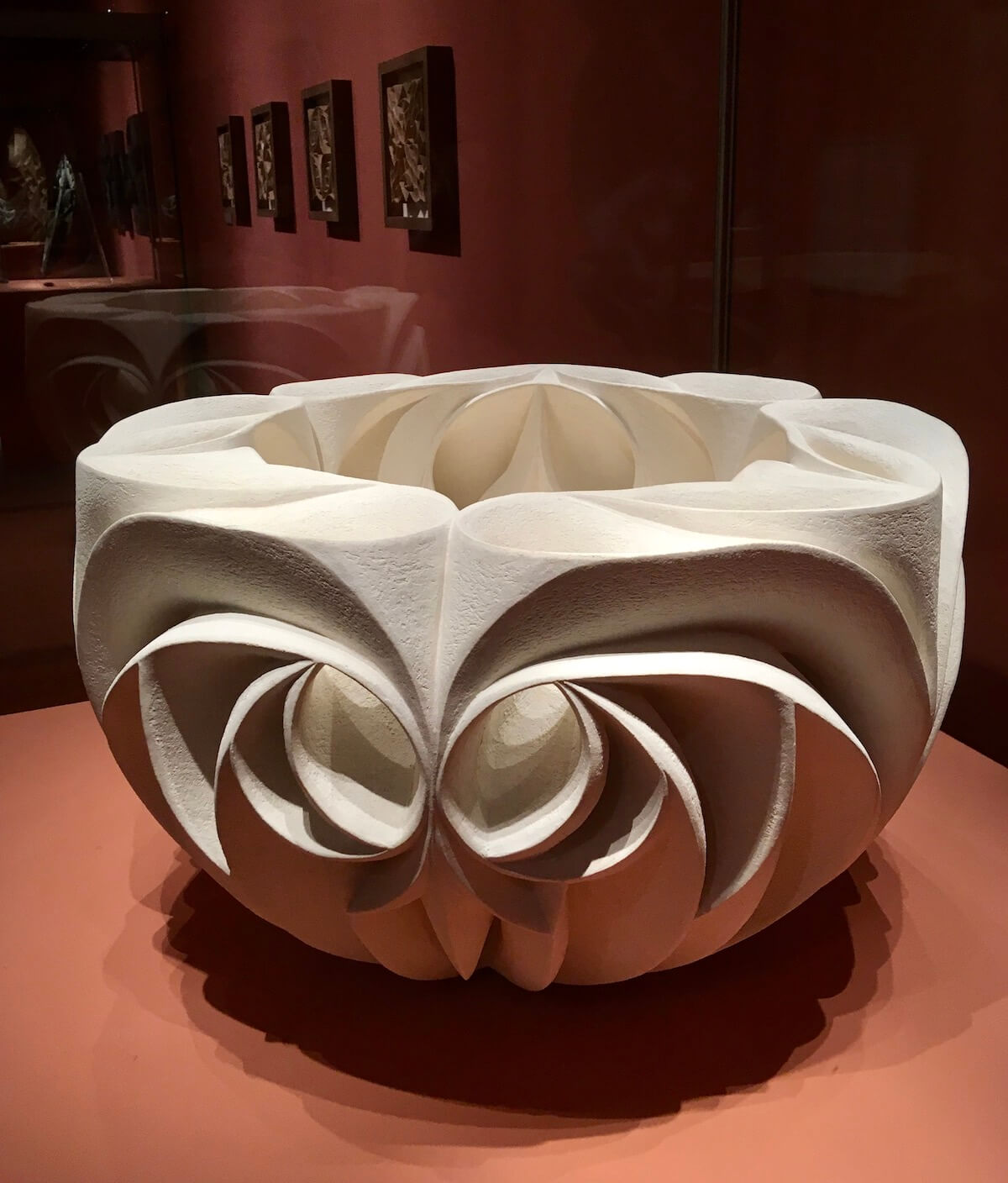
I vividly remember gazing, transfixed, before a display of hand-carved, pierced stoneware a few years ago in Manchester Art Gallery. Spot lighting highlighted the contours of the designs and cast overlapping shadows around for added effect.
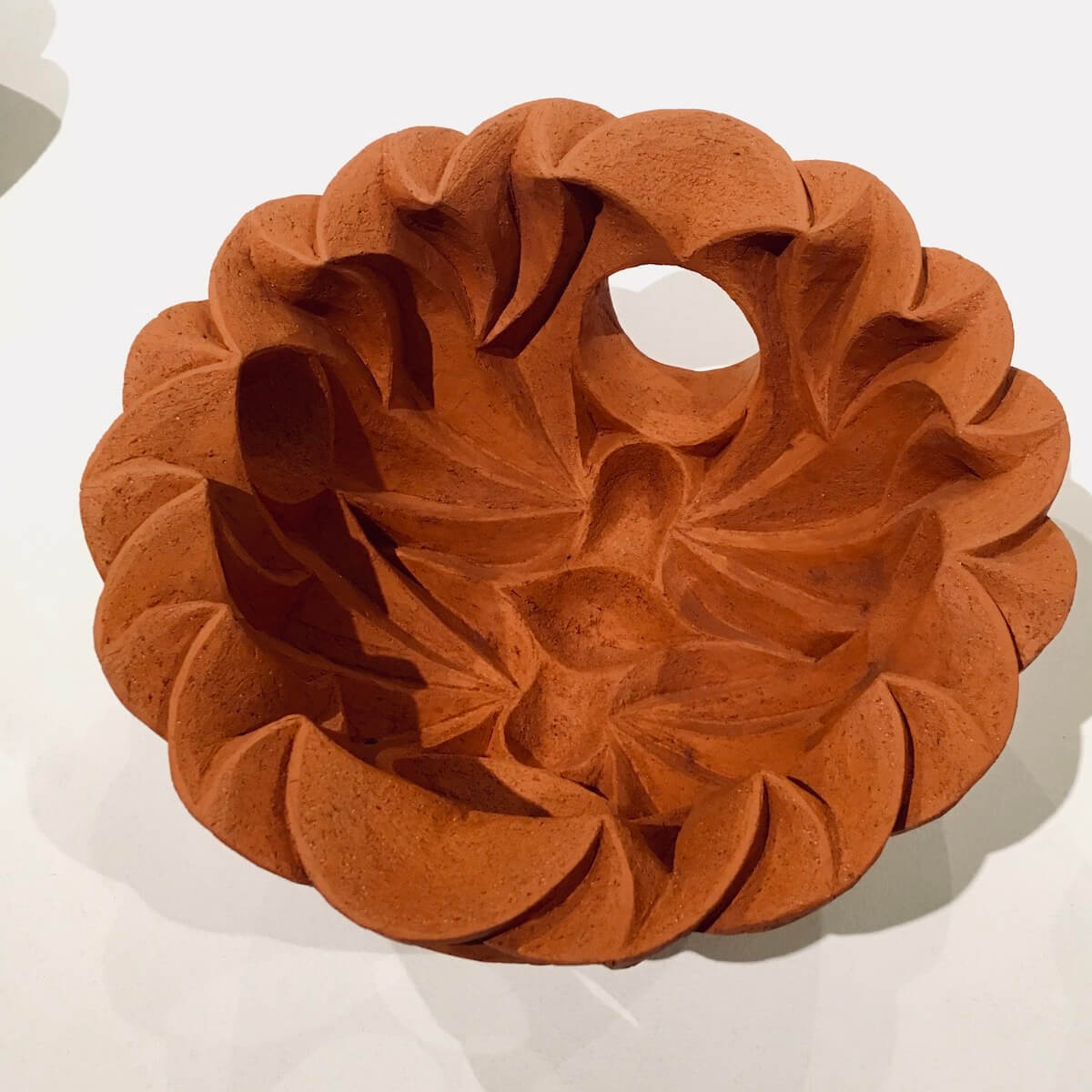
The terracotta bowl (above) has no strictness for its undoubted calculation. Balanced waves around the edges almost seem folded fabric, for all their heft.
I marvelled at the artist’s ability to imagine in three dimensions and combine patterns so boldly, deftly and delicately. My mind may not work that way, but it certainly likes to play with the lines and forms someone else has so brilliantly created.
Born in Kashmir, Hamila was raised in my home county of Lancashire. Her experience of sometimes being made to feel displaced in the two places she feels deeply connected to gives her the urge to show how traditional ideas can beautifully include rather than exclude.
She coaxes different clays in natural, earthy colours into patterns inspired by decorative elements from cultures spreading across many locations and ages, somehow reinvented to swirl companionably together. Notes from the exhibition highlighted Celtic, Moorish, Neo-Gothic, and African patterns as well as natural elements, such as feathers.
Visit Hamila Cassell’s website for more wonders including prints, outdoor sculptures and even a range of wallpaper. I’ve linked to a thistle head design for anyone who has been missing a floral fix from me. More to come!
Shared for Becky’s GeometricJanuary challenge.
 Susan Rushton
Wow, I want to reach out and touch them.
They are tactile, for the mind as well as the hands.
Those are very beautiful! Thank you for sharing them via your photos, also beautiful.
I appreciate your kindness.
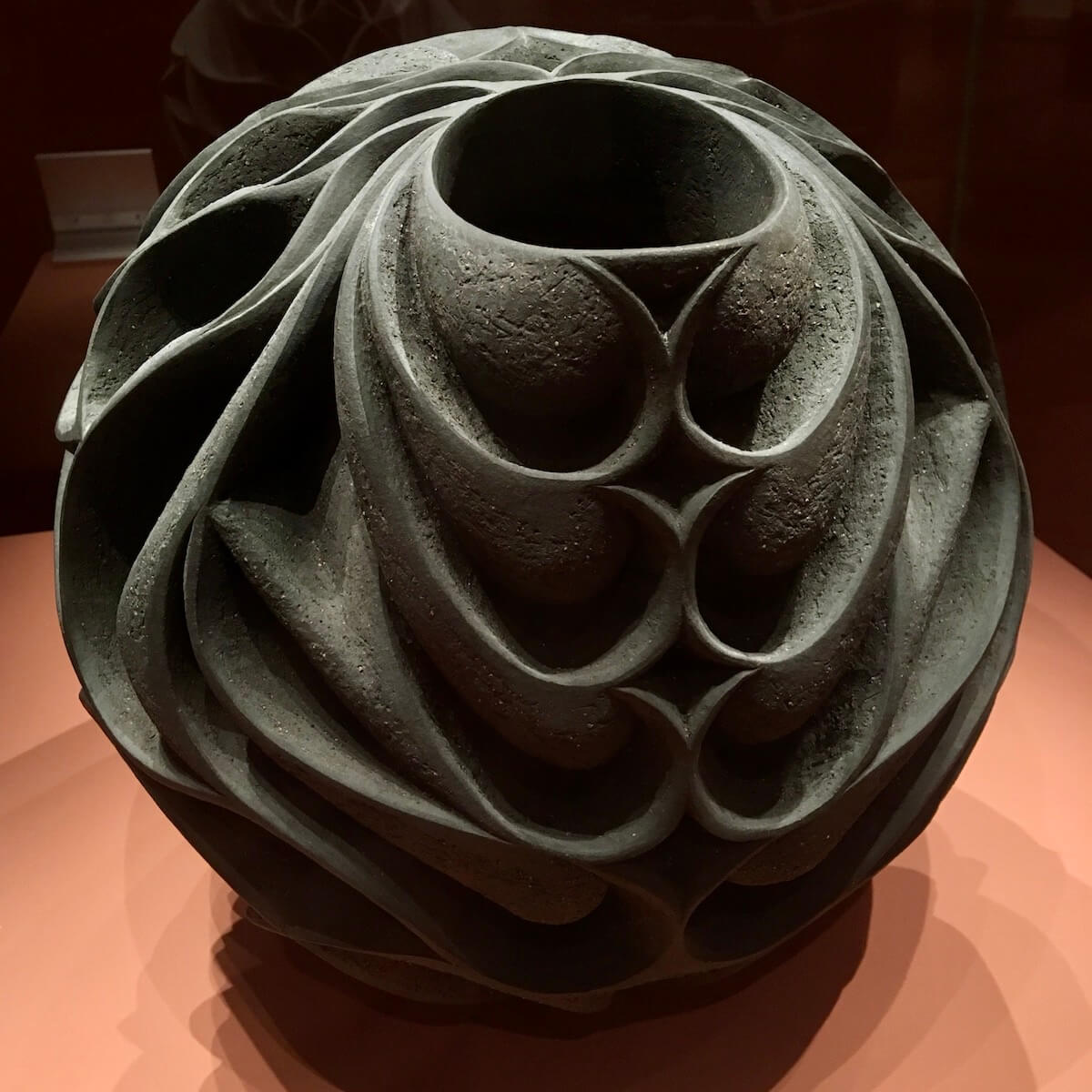
In the last photograph I see a face. Do you know whether Halima Cassell intended it as such, or is it an instance of pareidolia? Her website leads me to believe the piece is named “Trinity” [https://www.halimacassell.com/piece/5e20846817501/Trinity].
It actually looks like an owl to me, although I restrained myself from mentioning that when writing the post. We play our part in how the suggestibility of art unravels.
I saw a wide face, which I have no trouble imagining as a stylized one from an owl.